
 3
Contents
- What Is the Difference Between Hong Kong and Mainland China? Defining Key Terminology
- What Types of Companies Can Be Registered in Hong Kong and Mainland China?
- What Is the Corporate Structure of Companies in Hong Kong and Mainland China?
- What Is the Company Incorporation Process in Hong Kong and Mainland China?
- What Are the Company Incorporation Timelines in Hong Kong and Mainland China?
- What Does Ongoing Administration Involve for Hong Kong and Mainland China Companies?
- Which Jurisdiction Should You Choose: Hong Kong or Mainland China?
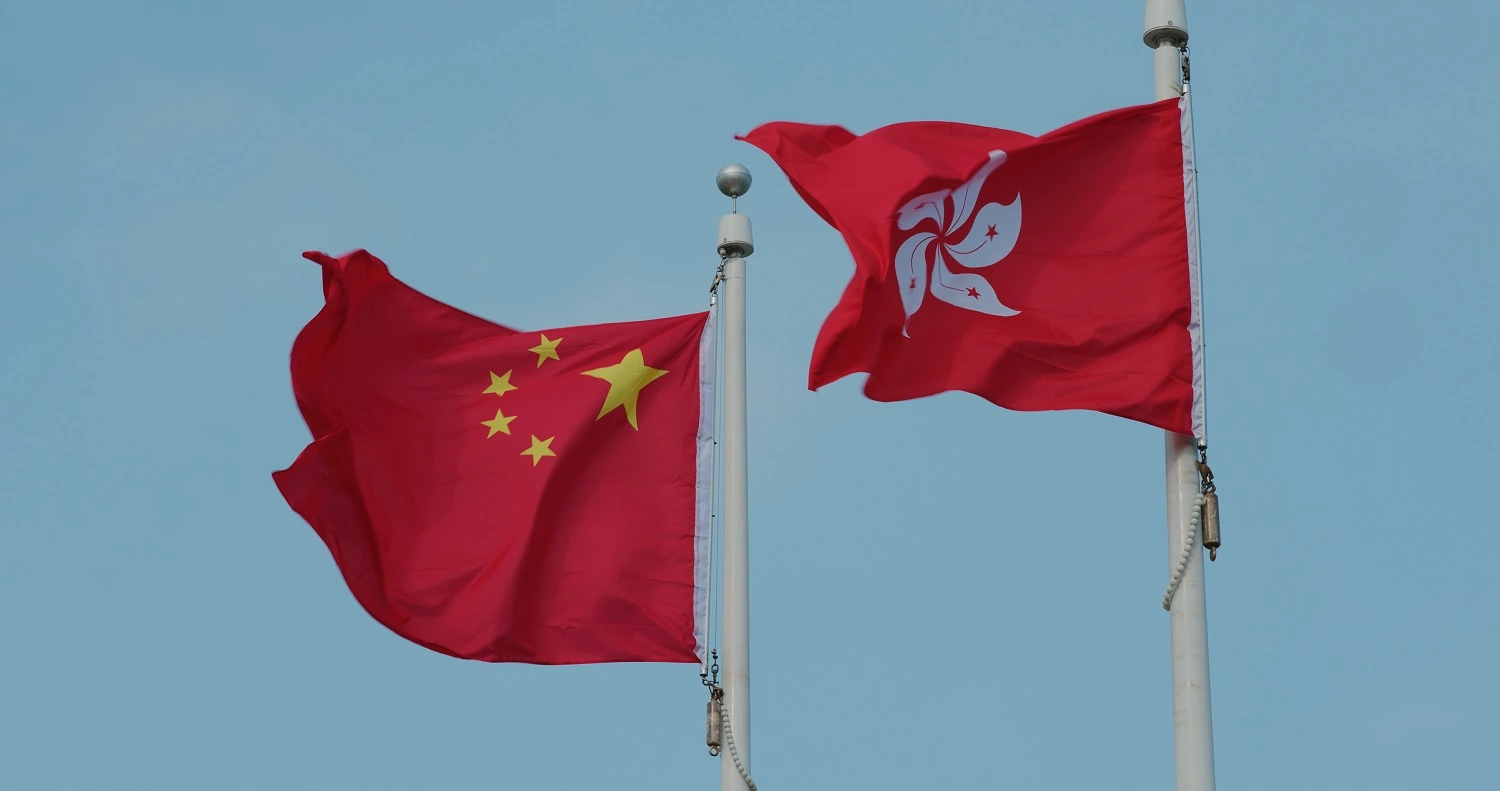
What Is the Difference Between Hong Kong and Mainland China? Defining Key Terminology
Before comparing Hong Kong and Mainland China across core incorporation criteria, it is essential to clarify key terminology. Throughout this article, we use the term "jurisdiction". In a broad sense, a jurisdiction refers to the legal authority to adjudicate legal matters and evaluate facts, as well as the specific territory over which that authority applies. We use the term "jurisdiction" strictly in this context.
While both Mainland China and Hong Kong are parts of the same state – the People's Republic of China (PRC) – their corporate, tax, and foreign exchange regulations differ substantially. Mainland China typically encompasses 22 provinces, 5 autonomous regions, and 4 direct-administered municipalities within the PRC. Taiwan, along with the Special Administrative Regions (SARs) of Hong Kong and Macao, are excluded from Mainland China.
Hong Kong maintains an independent legal framework distinct from Mainland Chinese legislation. While the Chinese central government retains authority over foreign affairs and defense, Hong Kong exercises a high degree of autonomy in all other areas. Unlike Mainland China's civil law system, Hong Kong's legal system is rooted in English common law. Hong Kong's special administrative status is guaranteed until July 1, 2047 (though an extension for another 50 years or a different term remains possible, the matter has not yet been formally decided).
What Types of Companies Can Be Registered in Hong Kong and Mainland China?
Hong Kong
Under the Hong Kong Companies Ordinance (Cap. 622), applicants can incorporate the following types of companies:
- Public companies limited by shares
- Private companies limited by shares
- Public unlimited companies with a share capital
- Private unlimited companies with a share capital
- Companies limited by guarantee without a share capital
Other legal structures are also available in Hong Kong, including:
- Partnerships governed by the Partnership Ordinance (Cap. 38)
- Sole proprietorships
- Trusts
- Branches and representative offices
However, the most widely used corporate structure is the private company limited by shares.
Mainland China
While Mainland China offers various corporate vehicles, foreign investors primarily utilize the following structures:
- Wholly Foreign-Owned Enterprise (WFOE) – a legal entity 100% owned by foreign shareholders.
- Representative Office (RO) – a non-legal entity prohibited from conducting direct profit-generating commercial activities, used strictly for market research, promoting the parent company's goods or services, networking, and negotiating on the parent company's behalf.
- Joint Venture (JV) – a legal entity jointly owned by Chinese and foreign partners.
- Foreign-Invested Partnership Enterprise (FIPE) – a partnership structure enabling two or more partners to share profits, losses, and liabilities.
Further details on the first two structures are available in our jurisdiction profile.
The Foreign-Invested Partnership Enterprise (FIPE) structure became available to foreign investors in China on March 1, 2010. Unlike a Joint Venture, which requires at least one Chinese partner, an FIPE may be established exclusively by foreign partners (or jointly with Chinese partners).
Under Article 2 of the Administrative Provisions on the Registration of Foreign-Invested Partnership Enterprises, a foreign-invested partnership enterprise is defined as a partnership established within China by two or more foreign enterprises or individuals, or by a foreign enterprise or individual together with a Chinese individual, legal entity, or other organization.
The Wholly Foreign-Owned Enterprise (WFOE) remains the primary corporate vehicle chosen by foreign investors for doing business in Mainland China. Representative Offices (ROs) are also widely utilized to conduct preliminary market research before committing substantial capital to a Chinese venture.
What Is the Corporate Structure of Companies in Hong Kong and Mainland China?
Hong Kong
As noted earlier, Hong Kong's legal system is rooted in English common law – reflecting its 155-year history as a British colony from 1842 to 1997. Consequently, the baseline corporate structure of a Hong Kong company is straightforward:
- Director (no residency requirements apply).
- Shareholder (no residency requirements apply).
- Local Company Secretary (must be a Hong Kong resident).
Mainland China
The baseline corporate structure of a Wholly Foreign-Owned Enterprise (WFOE) includes the following roles:
- Shareholder – a sole shareholder of a WFOE may hold any nationality except PRC citizenship (i.e., must be a foreign national or entity). Where there are multiple shareholders, at least 25% of the registered capital must be held by foreign investors for the entity to qualify as a foreign-invested enterprise.
- Board of Directors – must consist of at least three members, though a single executive director may be appointed instead in certain cases (no statutory residency requirements apply to board members or an executive director).
- Legal Representative – a single natural person legally authorized to act on behalf of, bind, and represent a Chinese company in all external, civil, and regulatory matters.
- Chief Financial Officer (CFO) – typically oversees corporate finances and serves as an authorized signatory on the company's bank account.
Even in its simplest form, a Mainland Chinese corporate structure is noticeably more complex than that of a Hong Kong company, resulting in higher ongoing maintenance and compliance costs.
What Is the Company Incorporation Process in Hong Kong and Mainland China?
We outline the incorporation procedure in broad terms below, as specific requirements depend on the proposed corporate structure, planned business activities, and other operational factors.
I.
The incorporation process for both a Hong Kong entity and a Mainland China company begins identically – by gathering documents and submitting corporate data to the corporate service provider managing the registration. However, the scope of required information differs slightly:
- Hong Kong company registration typically requires proposed company names (several options), details on the corporate structure and share capital, and an overview of planned business activities and target operating countries (this represents baseline information, though specific regulated activities may require additional disclosures).
- Mainland China WFOE registration requires all of the above plus a detailed description of the business model, locations of suppliers and clients, and specific categories of goods to be imported, exported, or distributed – a granular business scope is mandatory because a WFOE's approved activities are explicitly recorded in its Business License and Articles of Association.
At this initial stage, the service provider conducts compliance and due diligence checks on all individuals in the corporate structure and the proposed business activities, alongside a company name check for uniqueness and statutory compliance.
Company incorporation in any jurisdiction – not just Hong Kong or Mainland China – begins with this foundational step.
II.
The core registration stage follows:
- Drafting and executing the constitutional and incorporation documents.
- Filing the incorporation application and supporting documentation with the local corporate registry.
- Issuing the final corporate document kit and company seals upon registration approval.
For Hong Kong companies, preparing the registration package is generally straightforward. Most filings are completed electronically, and document certification is primarily required to compile the company's KYC file – a workflow that established Hong Kong corporate service providers handle routinely.
Incorporating a Mainland China company involves stricter formalities, though procedures have improved significantly following China's accession to the 1961 Hague Apostille Convention (abolishing the requirement of legalization for foreign public documents)*. Previously, within the PRC, the Convention applied only to Hong Kong and Macao, meaning documents issued in those SARs could be authenticated via apostille – a far simpler and less expensive process than consular legalization. Consequently, incorporating a WFOE in Mainland China previously required full consular legalization at a Chinese embassy or consulate for all documents of foreign individuals and corporate shareholders. This significantly extended incorporation timelines – often adding several weeks depending on the jurisdiction – and increased overall setup costs. While documents originating from non-signatory states still require consular legalization, documents issued in Convention member states now require only an apostille.
*China acceded to the Hague Apostille Convention on March 8, 2023, and the Convention entered into force in Mainland China on November 7, 2023.
Historically, consular legalization requirements were a primary reason investors structured Mainland Chinese entities using a Hong Kong corporate shareholder, as document authentication in Hong Kong was significantly faster than in most other jurisdictions. Investors would first incorporate a Hong Kong company and immediately authenticate its corporate document kit to establish a WFOE in Mainland China.
While the apostille regime has streamlined this stage, another practical nuance remains: during WFOE registration, Chinese government authorities or local notaries may deem apostilled or legalized copies insufficient and request original passports of individuals, original corporate documents of legal entities in the structure, or even an in-person appearance by directors. For this reason, even though foreign nationals of any citizenship may legally serve as WFOE directors, incorporating the company with a local Chinese resident director (who can be replaced post-registration if desired) is strongly recommended. This approach simplifies incorporation in two key ways:
- It eliminates the need to apostille or legalize the director's personal documents, as well as the logistical delays and security risks of couriering an original passport internationally.
- A local director can promptly attend government offices in person when required, handling official communications conducted exclusively in Mandarin Chinese.
III.
While Stage II completes the incorporation process in Hong Kong, a Mainland China WFOE requires additional post-registration filings.
Because foreign investors most commonly establish Mainland Chinese entities for import-export operations (such as wholesale goods trading), a newly incorporated WFOE must register with China's foreign trade authorities and obtain an Import-Export License (certain regulated goods may also require specialized sector permits).
IV.
The subsequent stage is opening a corporate bank account. As banking onboarding sits outside the formal incorporation procedure, our specialists can provide tailored guidance and full support for opening accounts in both Hong Kong and Mainland China during a dedicated consultation.
What Are the Company Incorporation Timelines in Hong Kong and Mainland China?
Hong Kong
Incorporating a Hong Kong company takes approximately 1 to 5 business days from the date documents are filed with the registry. Following incorporation, preparing the final corporate document kit typically requires several additional business days, depending on government processing workloads.
Mainland China
Establishing a Wholly Foreign-Owned Enterprise (WFOE) requires a minimum of 10 business days from the date of submission in China. Registering the enterprise with foreign trade authorities and obtaining an Import-Export License takes an additional 15 to 20 business days.
These timelines represent the best-case minimum. If Chinese authorities request supplementary information or documentation during review, total incorporation timelines can extend significantly. As noted earlier, despite the absence of statutory restrictions on foreign directors, limiting non-residents to shareholder roles is widely recommended in practice – ensuring that local Chinese residents handle in-person government visits, Mandarin Chinese communications, and original document presentations whenever required.
What Does Ongoing Administration Involve for Hong Kong and Mainland China Companies?
Both Hong Kong and Mainland China entities are subject to statutory accounting and reporting obligations, though the compliance burden differs substantially.
A Hong Kong company submits a Profits Tax Return and audited financial statements on an annual basis. Conversely, a Mainland China company faces far stricter reporting frequencies, filing various tax and regulatory returns on a monthly, quarterly, and annual basis.
All Mainland Chinese companies, including WFOEs, must maintain accounting records under Chinese Accounting Standards (CAS). Financial statements for Hong Kong companies are prepared in accordance with Hong Kong Financial Reporting Standards (HKFRS). Notably, both CAS and HKFRS are largely aligned with International Financial Reporting Standards (IFRS).
An annual statutory audit is mandatory for both Hong Kong companies (excluding formally dormant companies) and Mainland China foreign-invested enterprises.
Taxation is another decisive factor. Hong Kong applies a territorial tax system, meaning a Hong Kong company is exempt from Profits Tax if it qualifies for offshore status – conducting no business operations within Hong Kong and deriving no income from Hong Kong-sourced transactions. Provided these conditions are met, a Hong Kong company trading with Mainland Chinese counterparties retains its offshore status and incurs 0% Hong Kong profits tax.
Mainland China offers no comparable territorial tax exemption.
Further details on the corporate tax regimes in both jurisdictions are available on our website:
Additionally, Hong Kong imposes no foreign exchange controls, whereas Mainland China enforces strict foreign exchange regulations that must be factored into WFOE operations and cross-border capital flows.
Which Jurisdiction Should You Choose: Hong Kong or Mainland China?
As outlined above, Hong Kong companies are simpler (and more cost-effective where local economic substance is not required) to incorporate and maintain than Mainland China entities, while carrying a substantially lower tax burden when statutory conditions are met. Nevertheless, international businesses frequently opt for Mainland China incorporation based on several decisive operational factors:
- Intended Business Activities – operating on domestic Chinese e-commerce marketplaces or establishing manufacturing operations within Mainland China requires a locally incorporated Mainland Chinese entity.
- Banking and Payment Logistics – not every Chinese bank will onboard a Hong Kong company, whereas a Mainland China entity typically faces far fewer hurdles when opening accounts with domestic Chinese banks.
- Tax Structuring Considerations – the need to access Double Taxation Agreements (DTAs) or claim Value-Added Tax (VAT) refunds often makes a Mainland Chinese company the necessary vehicle.
Because every commercial structure involves distinct operational and regulatory variables, we recommend consulting corporate and tax specialists prior to incorporation to select the optimal jurisdiction and structure all tax and compliance parameters in advance.

Add a comment