GSL / International Taxation / Hong Kong

Tax Planning and Optimization in Hong Kong

Tax planning and wealth optimization in Hong Kong leverage a low fiscal burden and streamlined administrative frameworks, offering corporate tax rates between 8.25% and 16.5% alongside a territorial tax framework that fully exempts offshore profits from taxation. The jurisdiction imposes no VAT, no capital gains tax, and no withholding taxes on dividends or interest, while operating with no foreign exchange controls and no CFC rules to deliver an optimal environment for international corporate structures.

Core Taxes

Corporate Tax
16,5%
Personal Income Tax
2-17%
Capital Gains Tax
None
VAT
None
Withholding Tax on Dividends and Interest
None

Key Features of the Tax System

Taxation Principle

Territorial

CFC Rules

None

Foreign Exchange Control

None

National Currency

Hong Kong Dollar (HKD)

Corporate Tax Residency Criteria

No statutory definitions

Tax Authority

Inland Revenue Department
(IRD)

Tax Authority

Inland Revenue Department IRD

Tax administration in Hong Kong is executed by the Inland Revenue Department (IRD), which oversees the collection of primary direct taxes, including profits tax, salaries tax, and property tax, alongside specialized stamp duties and registration fees.

The IRD also manages statutory business registration, regulatory tax compliance audits, and tax debt collection processes.

Hong Kong enforces a strict territorial principle of taxation, levying tax exclusively on profits derived from or sourced within the jurisdiction. Profits generated from sources entirely outside Hong Kong remain non-taxable.

Tax Residency Criteria

Hong Kong does not enforce a standard statutory definition of a corporate tax resident due to its strict territorial tax framework.

For double taxation treaty (DTA) optimization, a Hong Kong resident entity is defined as a company incorporated within Hong Kong, or a foreign-incorporated entity centrally managed and controlled within the jurisdiction.

Taxation

Corporate Tax

Hong Kong applies a two-tiered profits tax regime. This progressive framework is levied exclusively on profits sourced within or derived from Hong Kong.


Taxpayer Type First HKD 2,000,000 Exceeding Balance
Corporate Entities 8,25% 16,5%
Unincorporated Businesses (Sole Proprietorships, Partnerships, Trusts) 7,5% 15%

For related corporate groups, the preferential two-tiered rates apply to a single designated entity within the group, while all other group entities are taxed at the standard rates on their total profits.

The net taxable corporate tax base can be legally optimized using two core mechanisms: the deduction of current operational expenditure and the utilization of depreciation allowances for long-term capital assets.

Deductible Expenses

Operational expenditures incurred during daily business activities are fully deductible from gross income within the same financial year.

Staffing and Human Resources
  • Salaries, commissions, performance bonuses, and staff allowances
  • Employer pension contributions, including mandatory and voluntary contributions within statutory limits
  • Statutory severance payouts and long-service compensation payments
  • Professional staff training and talent development programs
  • Recruitment agency fees and commissions
Commercial Real Estate and Facilities
  • Corporate office, retail space, or commercial warehouse lease fees
  • Utility expenses, including commercial electricity, water, and business internet connectivity
  • Facility management fees and government rates
  • Property and equipment repairs and maintenance, excluding structural capital improvements
Professional and Legal Advisory
  • Accounting, corporate auditing, and bookkeeping fees
  • Corporate legal services, debt recovery, and contract dispute resolution
  • Business consulting services directly linked to corporate revenue generation
  • Commercial banking fees and transaction processing charges
  • Interest expenses on business loans deployed for generating taxable profits
Operations and Marketing
  • Cost of goods sold (COGS), raw materials, and inventory procurement
  • Advertising, digital marketing strategy, and PR campaigns
  • Client entertainment expenses and corporate events
  • Business travel expenses, including flights, lodging, and local transit for client operations
  • Software subscriptions and operational SaaS tools

Depreciation Allowances

Capital expenditures incurred during the procurement of long-term commercial assets and machinery cannot be deducted as one-time operational expenses. The Inland Revenue Department mandates that the corporate tax base be optimized progressively utilizing fixed depreciation allowances:

Commercial Real Estate
  • Industrial Buildings: 20% initial allowance plus 4% annual allowance over a 25-year structural lifecycle from the commissioning date
  • Commercial Buildings: 4% annual allowance over a 25-year structural lifecycle
  • Commercial Renovation Expenditure: fully deductible on a straight-line basis over 5 years, excluding residential property refurbishments
Machinery and Equipment
  • Manufacturing Assets and IT Infrastructure: eligible for an immediate 100% first-year write-off
  • Environmental Protection Machinery and Eco-Vehicles: eligible for an immediate 100% capital allowance deduction
  • General Plant and Machinery: 60% initial allowance plus subsequent annual pools scaled at 10% – 30% calculated on the reducing balance
  • Commercial Vehicles: 60% initial allowance plus a 30% annual allowance calculated on the reducing balance
Intellectual Property and Intangibles
  • Patents, trademarks, copyrights, and industrial designs are fully deductible over a structural period of 1 to 5 years
Balancing Adjustments on Asset Disposal
  • Upon the sale or disposal of depreciated assets, previously claimed capital allowances may trigger a balancing charge, reinstating those deductions as taxable profits. Specific asset classes remain subject to capital value realignments or direct inclusion of disposal proceeds into corporate revenue.
Tax Losses
  • Tax losses incurred during business operations can be carried forward indefinitely to offset future taxable corporate profits, while carry-back mechanisms are strictly prohibited.
Tax Structuring Advisory

Dividend Income

Dividends distributed by domestic entities are fully exempt from corporate tax.

Dividends derived from foreign entities are classified as offshore-sourced income and remain non-taxable in Hong Kong.

However, for multinational enterprise (MNE) groups, foreign-sourced dividends may be deemed sourced within Hong Kong and subject to corporate tax under specific asset holding conditions (For detailed mechanics, see the “FSIE Regime” section)

Interest Income

Interest income deemed to be derived from or sourced within Hong Kong is subject to corporate tax.

A statutory tax exemption applies to interest income generated from deposits placed with authorized financial institutions within Hong Kong, except where the underlying deposit secures a loan facility for which interest expenses are claimed as a tax deduction.

Offshore-sourced interest income is non-taxable unless the corporate entity belongs to an MNE group subject to the updated Foreign-Sourced Income Exemption framework (For detailed mechanics, see the “FSIE Regime” section).

Royalties

Intellectual property (IP) income is subject to Hong Kong profits tax if the underlying IP rights are granted to a domestic counterparty, or if the intellectual property is officially registered or commercially utilized within Hong Kong.

Royalties are fully tax-exempt if the IP asset is developed and managed entirely offshore and the utilization rights are granted to a foreign counterparty for operations outside Hong Kong.

Foreign-sourced offshore royalties may be deemed taxable under the refined FSIE framework for MNE groups (For detailed mechanics, see the “FSIE Regime“).

Capital Gains

Hong Kong does not impose a distinct standalone capital gains tax on corporate entities.

Capital gains generated during the ordinary course of business (e.g., active trading in securities or disposal of assets as a primary commercial activity) are classified as ordinary trading income and subject to profits tax.

Capital gains arising from long-term capital investments unrelated to routine commercial trading (e.g., a one-off disposal of a long-term capital asset) are generally non-taxable.

Capital gains derived from the disposal of foreign assets are exempt from taxation unless the corporate entity operates as part of an MNE group (For detailed mechanics, see the “FSIE Regime” section).

Withholding Tax

Withholding tax is levied on a Hong Kong entity at the time of payment to foreign counterparties or non-resident partners.

Income Type (Paid to Non-Resident) Subject to Tax Rate
Dividends ✘ No –
Interest ✘ No –
Royalties ✔ Yes from 2,475% to 16,5%
Commercial Performances by Artists and Athletes ✔ Yes 10% / 11%
Trade via Consignees ✔ Yes 0,5% of gross proceeds
Royalties

Withholding requirements apply to payments made to a non-resident IP owner for the use or right to use intellectual property within Hong Kong, or outside Hong Kong if the underlying expenses reduce the taxable profits base in Hong Kong.

Eligible intellectual property (IP) assets encompass:

  • patents, designs, trademarks, copyright materials, layout-designs of integrated circuits, performer’s rights, plant variety rights, secret processes or formulas,
  • cinematograph films, television films, video tapes, sound recordings, associated marketing assets, and
  • assignments of performer’s rights for live performances in Hong Kong.

Rates:

  • Independent Counterparties: 2,475 – 4,95% for corporate entities; 4,5% for individuals
  • Connected Persons (Parent or Subsidiary Structures): 8,25–16,5% for corporate entities; 15% for individuals.

Where a comprehensive double taxation treaty (DTA) is active between Hong Kong and the recipient’s tax jurisdiction, the maximum withholding tax rate on royalties may be structurally reduced.

Commercial Performances by Artists and Athletes

Fees paid to non-resident entertainers and athletes for live performances executed within Hong Kong are subject to withholding tax.

Rates

  • Direct Payouts: 10% when settled directly to the individual entertainer or athlete
  • Agency Corporate Payouts: 11% when routed through a non-resident corporate agent

The tax must be withheld prior to the individual’s departure from Hong Kong. The paying entity is obligated to file Form IR623 and deduct the tax from the gross performance fees.

Trade via Consignees

Withholding requirements apply when a non-resident commercial entity distributes goods in Hong Kong through a domestic consignee acting on behalf of the foreign principal. Because the non-resident lacks a permanent establishment (PE), the local compliance burden shifts entirely to the domestic consignee.

Rate: 0.5% of the gross sales revenue, levied independently of net profit margins

Value Added Tax

Hong Kong imposes zero Value Added Tax (VAT) and zero sales tax.

Social Insurance

Hong Kong does not levy statutory social security or social insurance taxes.

The region operates a mandatory retirement scheme under the Mandatory Provident Fund (MPF) Ordinance. Employers must enroll all resident employees aged 18 to 65 into an authorized MPF scheme, driven by shared monthly contributions from both the employer and the employee.

Statutory thresholds establish minimum income levels for employee exemptions alongside maximum monthly contribution caps for both parties.

Monthly Employee Income Employer Contribution Employee Contribution
Below HKD 7,100 5% of relevant income HKD 0
HKD 7,100 – HKD 30,000 5% of relevant income 5% of relevant income
Above HKD 30,000 HKD 1,500 (statutory cap) HKD 1,500 (statutory cap)

Stamp Duty

Stamp duty is levied on the lease, sale, and transfer of real estate, as well as transactions involving shares of Hong Kong companies. If the transactional value falls below fair market value, the duty is assessed based on the open market valuation.

Rates:

  • Real Estate Leases: 0.25% for lease terms under 1 year; 0.5% for terms between 1 and 3 years; 1% for terms exceeding 3 years, calculated on the total or average annual rent
  • Real Estate Sales: graded from HKD 100 up to 4.25% of the property value
  • Share Transfers: 0.2% of the transactional value.

Tax Incentives and Reliefs

Hong Kong operates targeted preferential regimes designed to foster strategic industry sectors and high-value commercial operations

  • Enhanced R&D Tax Deductions (IP Box)
  • Сomprehensive tax exemptions for both domestic and offshore investment funds
  • Unified tax exemptions for family investment holding vehicles managed by single or multi-family offices
  • Preferential Rates on Investment Income
  • Preferential corporate tax rates on qualifying treasury centres, reinsurance and captive insurance operators, maritime and aviation leasing
  • Patent Bo
  • Tax exemptions on profits derived from qualifying debt instruments (QDI)
  • Statutory profits tax exemptions on interest income generated via qualified commercial banking operations
  • 100% first-year capital expenditure deductions for manufacturing machinery, IT hardware, corporate software, environmental protection facilities, and qualifying eco-vehicles
  • 20% annual allowance distributed on a straight-line basis over 5 years for commercial property renovations

Tax Reporting

Every Hong Kong entity must maintain full corporate and tax compliance, irrespective of annual turnover or active commercial operations.

Corporate statutory obligations require companies to

  • Maintain proper accounting records
  • Compile annual financial statements
  • Submit an annual Profits Tax Return (PTR) to the Inland Revenue Department (IRD)

Tax returns are submitted strictly on an annual basis for the completed financial year. Monthly or quarterly profits tax reporting frameworks are not utilized.

Financial Year and Basis Period

The standard fiscal year in Hong Kong runs from April 1 to March 31 of the following calendar year.

If a company’s financial year-end does not coincide with the standard fiscal year, its profits are assessed based on the basis period ending within that specific fiscal year.

Specialized statutory apportionment rules apply to newly incorporated entities, liquidating companies, or reporting periods spanning shorter or longer than 12 months.

Submission of Profits Tax Return

The Inland Revenue Department (IRD) issues Profits Tax Returns (PTR) on the first working day of April.

The statutory filing deadline is 1 month from the date of issuance.

Entities represented by authorized tax representatives qualify for automatic filing extensions:

  • Financial Year Ending December 31: extended filing deadline up to August 15
  • Financial Year Ending January 1 to March 31: extended filing deadline up to November 15

For newly incorporated entities the first PTR is issued 18 months post-incorporation, carrying a statutory filing window of 4 months.

Settlement of Corporate Tax

Corporate profits tax is structured for settlement across a two-stage payment framework.

The initial transaction comprises 75% of the provisional tax assessed for the current fiscal period plus 100% of the finalized tax balance calculated from the preceding financial year. The secondary installment captures the remaining 25% balance of the tax liability for the current fiscal period.

Tax payment schedules, traditionally mapped between November of the assessment year and April of the subsequent calendar year, are strictly designated by the Commissioner of Inland Revenue (CIR) and detailed inside the official statutory assessment notices.

Forms of Tax Returns

Profits Tax Returns

Corporate and partnership trade profits are processed utilizing specialized profits tax return variants.

The Inland Revenue Department mandates 3 foundational return formats:

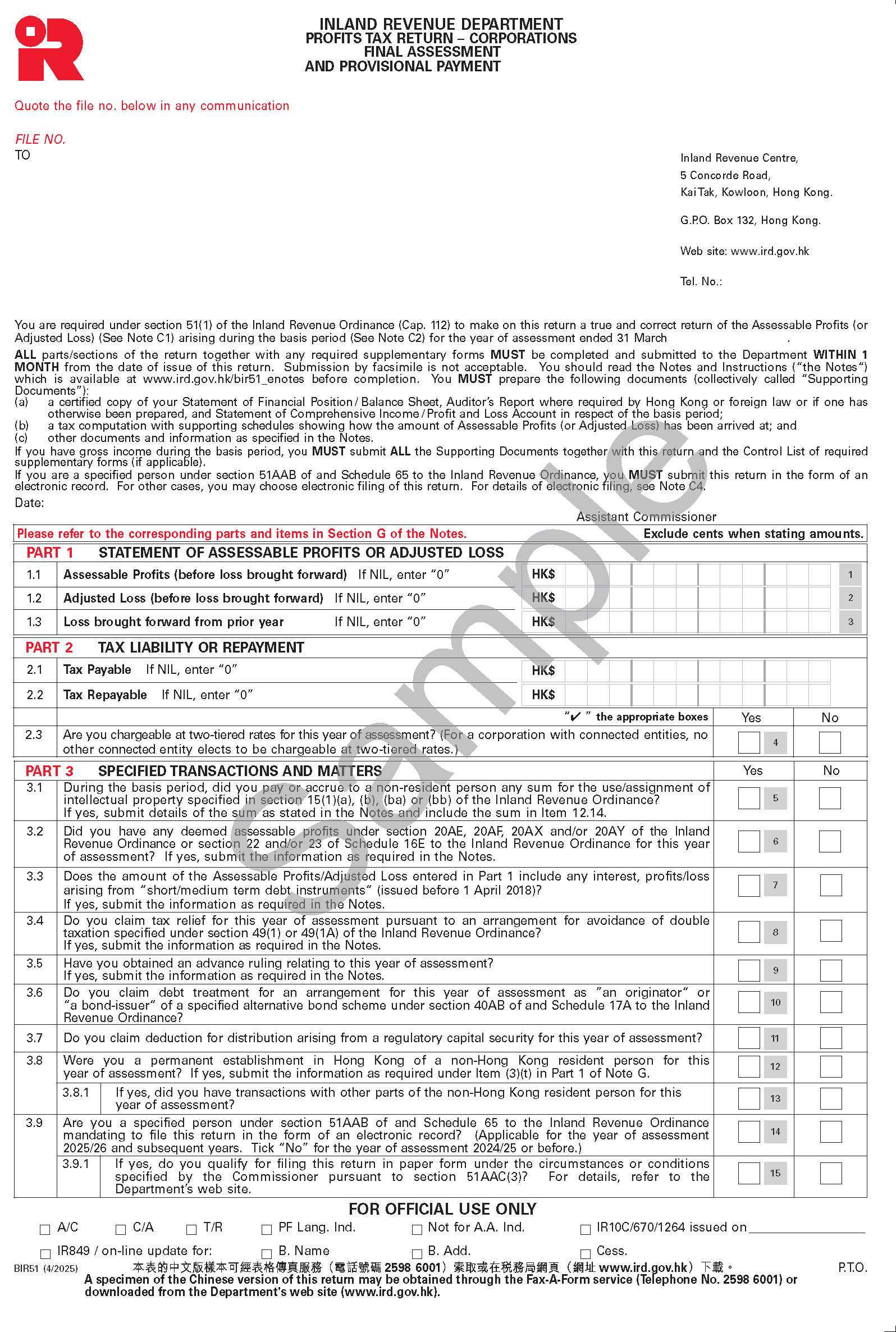
Form BIR51 – the primary profits tax return allocated to corporate entities and incorporated businesses.

Form BIR52 – the standard profits tax return designated for partnerships and unincorporated business structures.

Form BIR54 – the specialized profits tax return for non-resident entities, executed by the domestic paying entity when distributing taxable source income to a non-resident counterparty.

Sole proprietorship operations consolidate their business tax reporting inside the individual tax framework utilizing Form BIR60.

Mandatory Electronic Supplementary Forms

Supplementary tax schedules must be compiled electronically in structured XML format and submitted concurrently as integral attachments to Form BIR51:

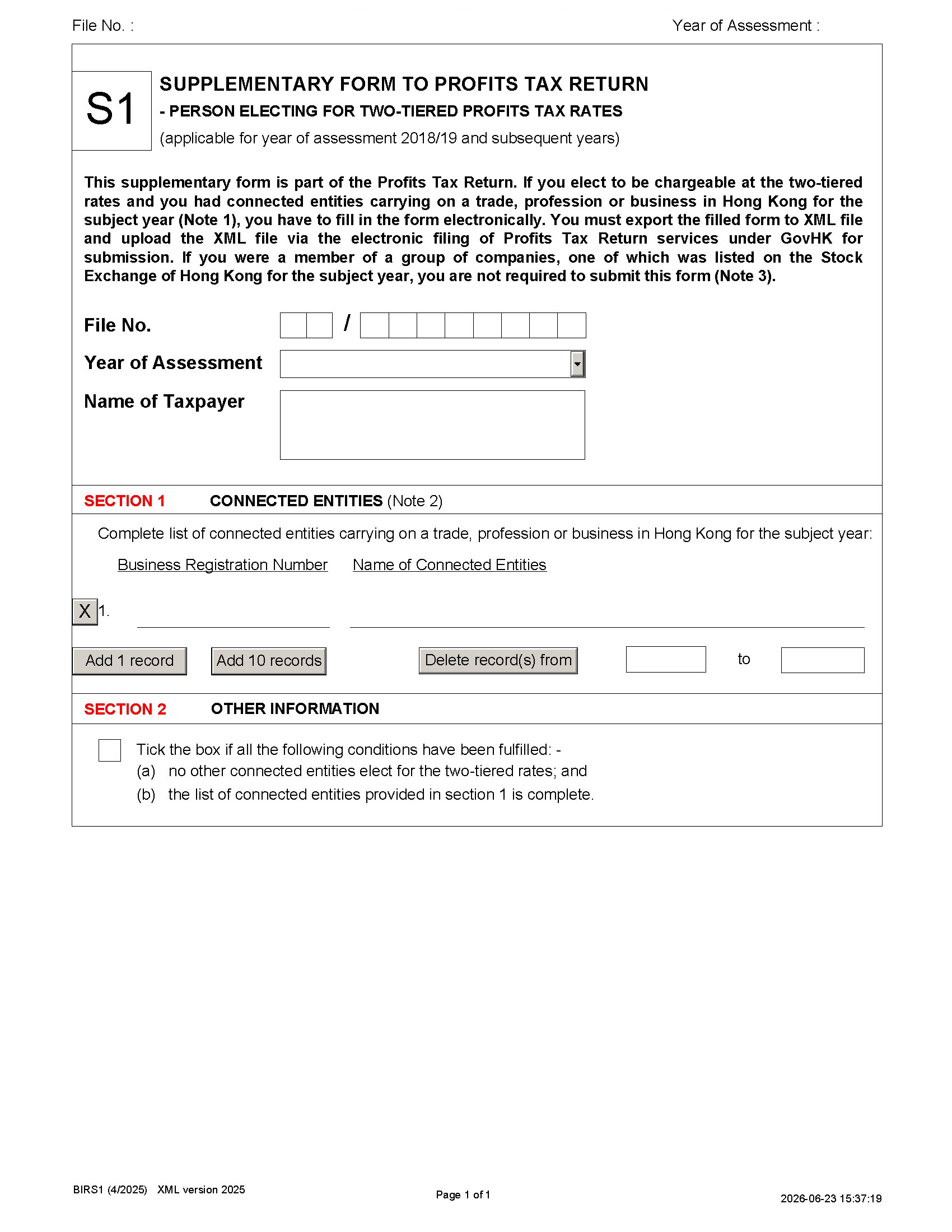
Form S1 – Selection of Two-Tiered Profits Tax Rates for Connected Entities.

Deployed by a designated member of an affiliated corporate group to secure the lower-tier tax threshold.

Form S2 – Transfer Pricing Documentation.

Executed by entities engaged in transactions with connected persons to verify that intra-group cross-border transactions mirror arm’s length principles.

Form S19 – Foreign-Sourced Income Exemption (FSIE) Reporting.

Mandatory for corporate entities receiving offshore passive income (dividends, interest, or royalties) and remitting funds into Hong Kong, verifying statutory compliance for the tax-exempt (0%) framework.

Form S22 – Intellectual Property Tax Concessions.

Completed by corporate bodies generating revenue from intellectual property assets (software, patents, or trademarks) to secure reduced tax scaling under the patent box regime.

Employer’s Returns

Corporate entities acting as employers must submit annual statutory declarations detailing total remuneration paid to their staff architecture:

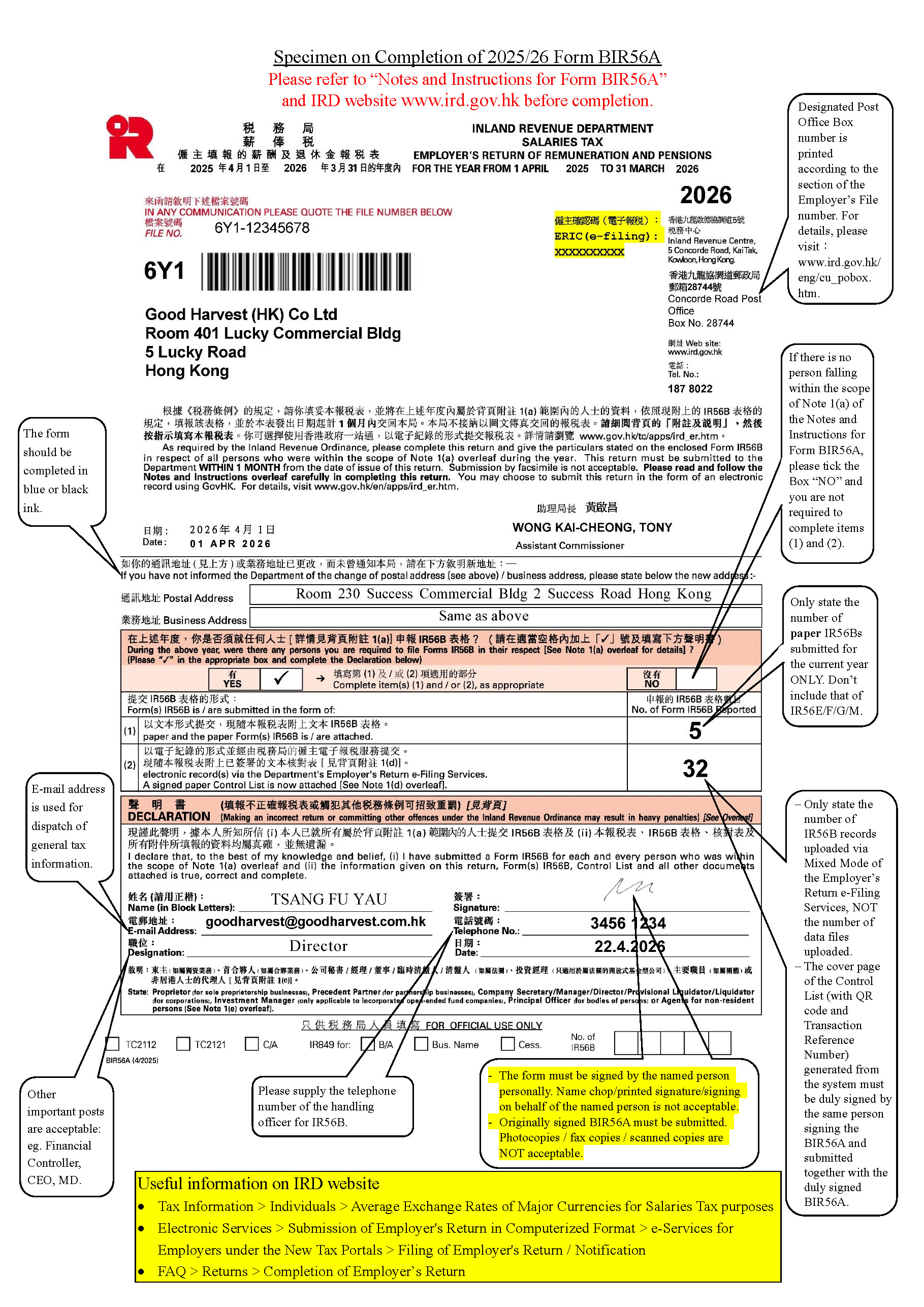
Form BIR56A – is the employer’s consolidated annual summary return.

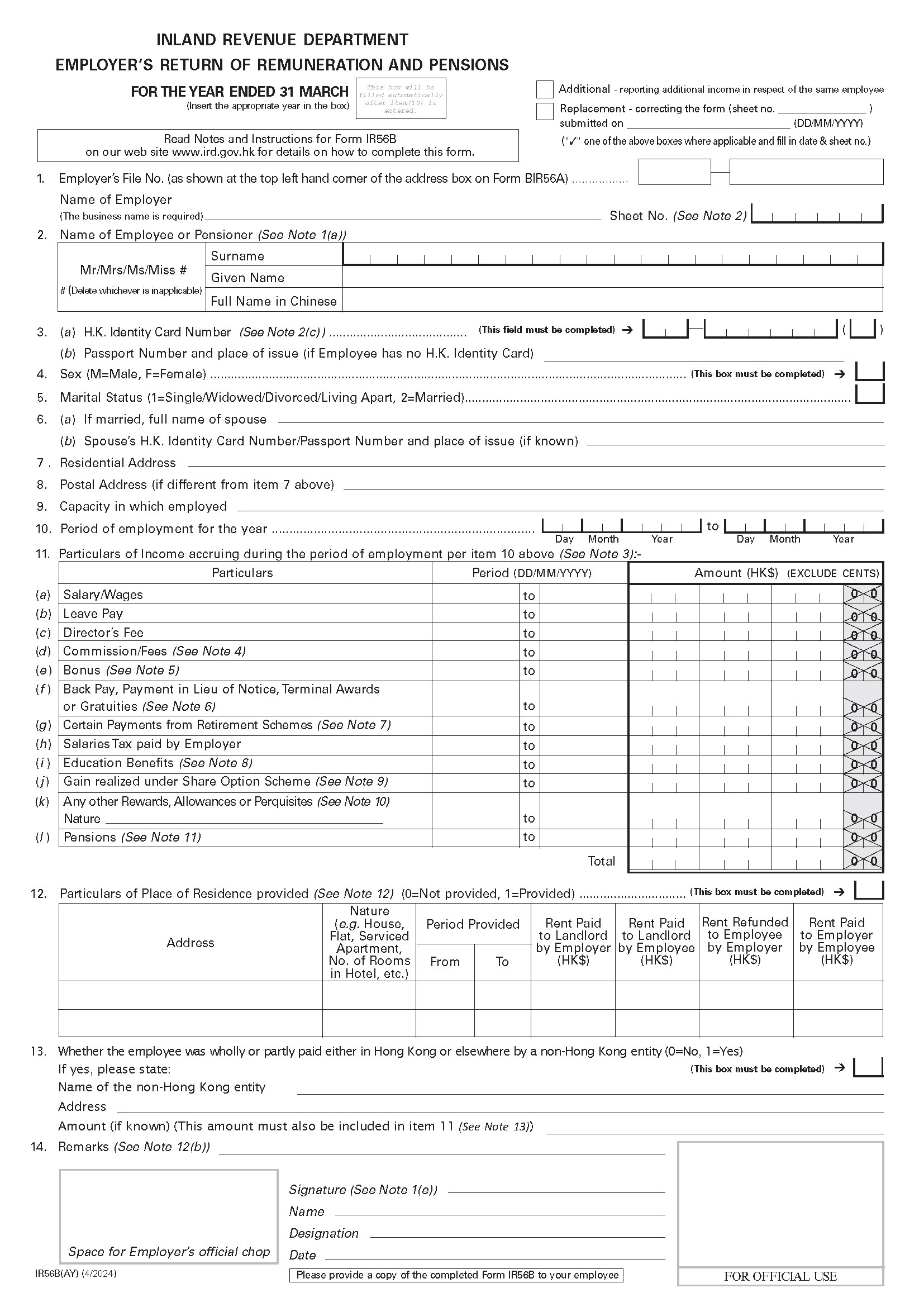
Form IR56B – is the individual employee remuneration statement compiled for each member of the workforce.

Event-Driven Employer Declarations

Form IR56E – notification of new employee recruitment, required within 3 months from the commencement of employment.

Form IR56F / IR56G – statutory notifications triggered upon the termination of an employee or prior to their permanent departure from Hong Kong.

Form IR56M – the annual return detailing fees paid to domestic corporate contractors, freelance operators, and external consultants outside the standard payroll framework.

Property Tax Returns

Property declarations are mandatory for corporate setups acquiring passive rental income from real estate structures positioned within the Hong Kong territory.

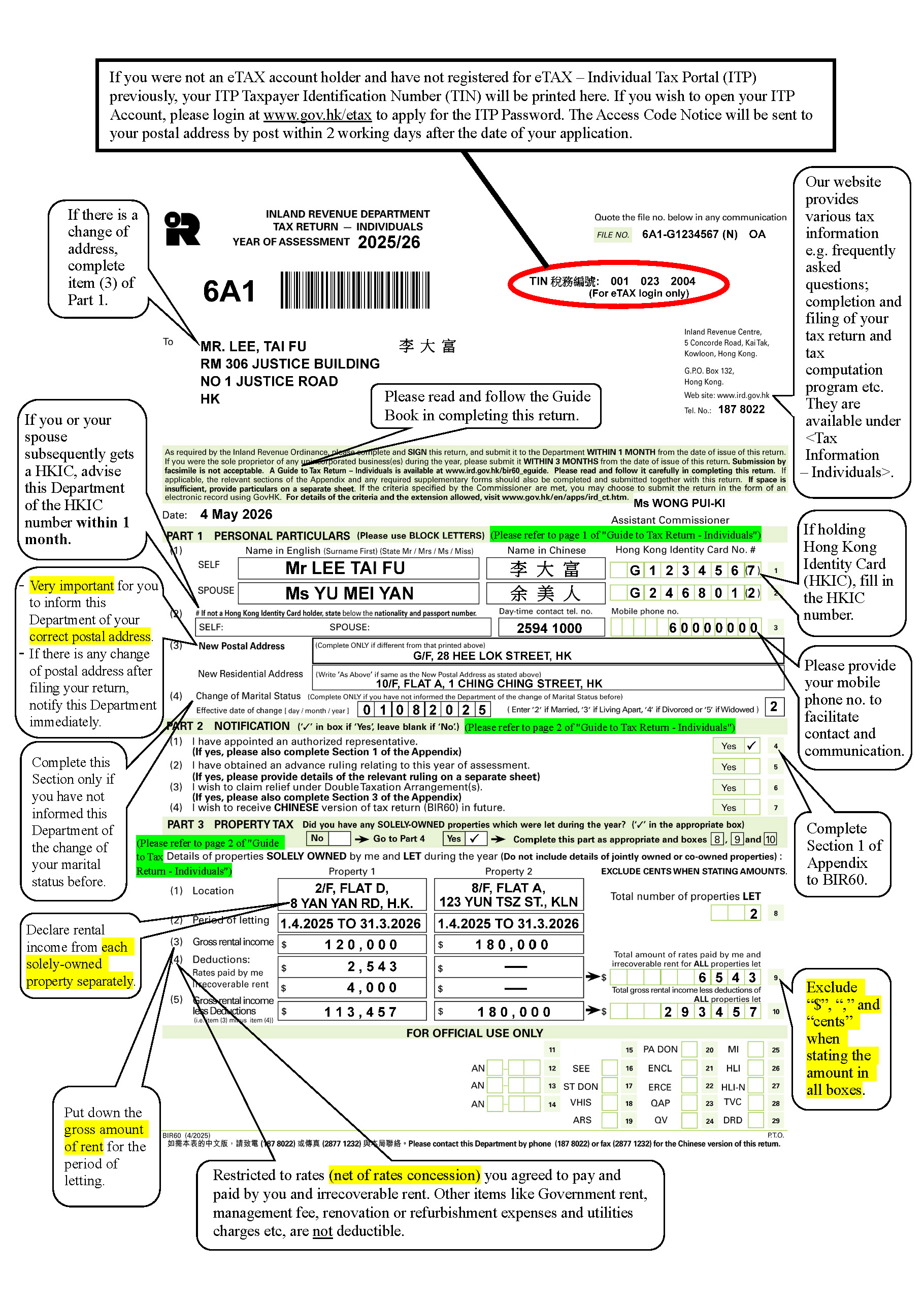
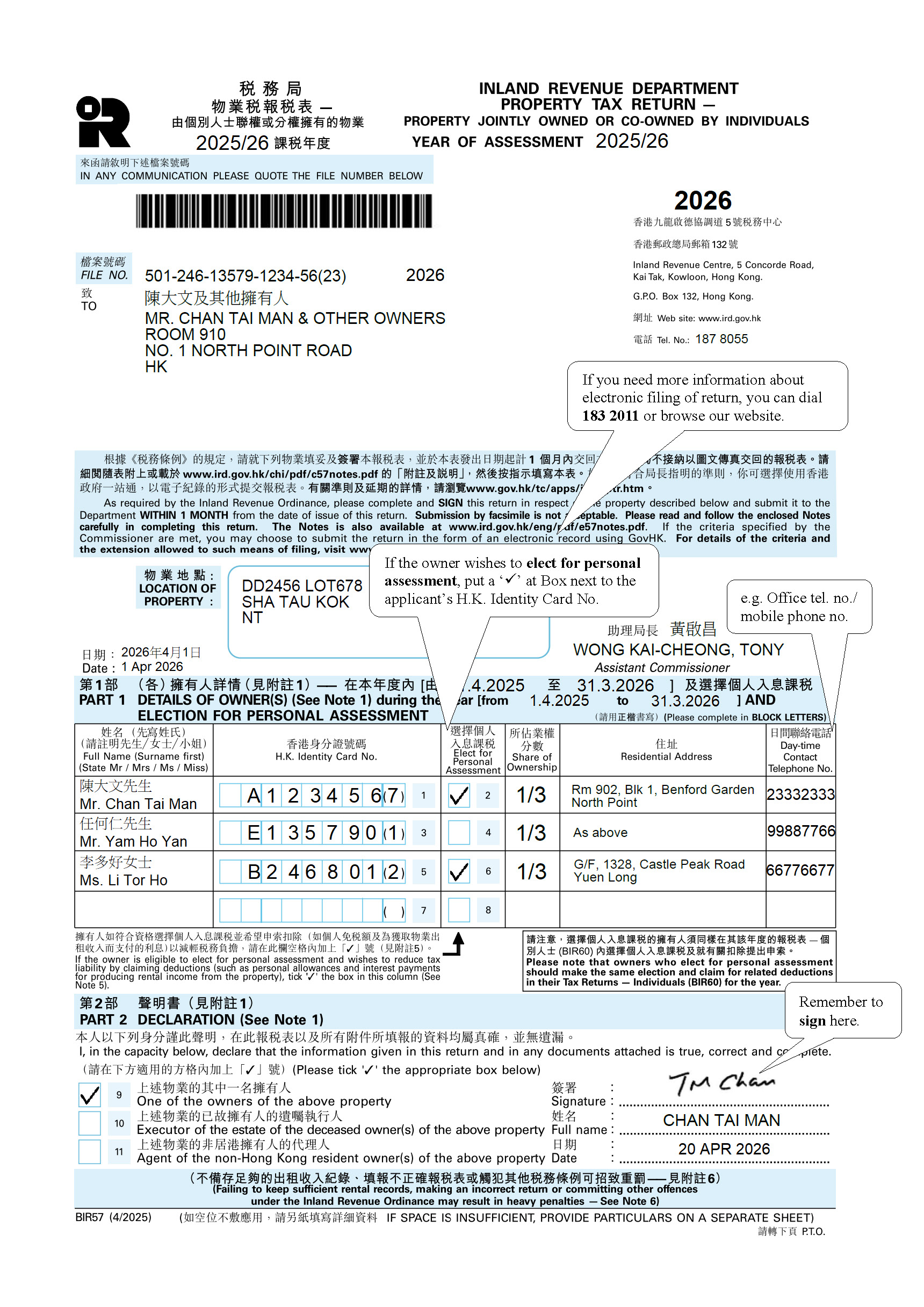
Form BIR57 – property tax returns for real estate held under joint ownership structures with corporate or individual co-owners.

Form BIR58 – the dedicated return format for reporting corporate property rental revenues derived from real estate assets owned by a legal entity.


Accounting, Tax Filing and Audit Service

Preparing and filing financial statements and tax returns and conducting an audit for a Hong Kong company.
1 750 USD

Preparing and filing financial statements and tax returns and conducting an audit for a Hong Kong company. Service offer

Penalties and Liability for Non-Compliance

All statutory tax returns incorporate a binding legal declaration confirming that the disclosed financial information is true, correct, and complete. Understating revenue, concealing profits, or submitting fraudulent data constitutes a severe regulatory infraction.

Violaton Penalties
Submission of an incorrect tax return without reasonable excuse Up to HKD 10,000, additional treble fine (300%) of the understated tax amount
Wilful submission of an incorrect tax return with intent to evade tax Up to HKD 50,000, additional treble fine (300%) of the understated tax amount and imprisonment for up to 3 years
Late submission of a tax return (Delinquency up to 6 months)
  • Delinquency up to 6 months

Graded from HKD 1,200.

  • Delinquency exceeding 6 months

Up to HKD 10,000 plus treble fine (300%) of the assessed tax liability for the basis period

Failure to submit the Annual Employer’s Return (Form IR56B) Graded from HKD 2,400. Escalated scaling for repeat offences and mandatory immediate submission orders
Failure to file the statutory Annual Return with the Registry Up to HKD 50,000. Mandated late filing compliance rectification orders
Failure to maintain proper business and accounting records Up to HKD 100,000. Compulsory record reconstruction and compliance alignment orders

Anti-Avoidance Rules

Foreign-Sourced Income Exemption (FSIE) Regime

Multinational enterprise (MNE) groups executing commercial operations within Hong Kong are subject to the refined Foreign-Sourced Income Exemption (FSIE) framework.

An MNE group is defined as

A corporate structure comprising at least one enterprise or permanent establishment (PE) positioned outside the jurisdiction of its ultimate parent entity, irrespective of asset volume or gross revenue thresholds.

Under this compliance regime, offshore passive income acquired by MNE groups is no longer automatically exempt from corporate tax if it is received or deemed received in Hong Kong (e.g., remitted to a local bank account, deployed to settle domestic corporate liabilities, or used to clear local operational costs).

The FSIE framework regulates 4 categories of foreign-sourced passive income: dividends, interest, royalties, capital gains.

If an MNE group receives foreign passive income falling within the scope of the FSIE framework and fails to substantiate its statutory right to an exemption, the total amount of such remitted income is subject to Hong Kong profits tax at the standard corporate rate of 16.5%.

Tax Exemption Compliance Standards

  • Сorporate entities must demonstrate – robust economic substance within Hong Kong, verified by the employment of qualified local personnel, physical commercial real estate allocation, and adequate operational expenditure.
  • For dividends and equity capital gains, entities may alternatively leverage equity participation metrics by maintaining a minimum 5% equity holding in the foreign investing subsidiary for a continuous period of at least 12 months, subject to a subject-to-tax condition where the underlying foreign profits must be taxed at a nominal rate of not less than 15%.
  • For intellectual property income – Nexus Approach Alignment: the tax-exempt (0%) framework applies exclusively to qualifying income derived from patents and proprietary software assets directly correlated with eligible research and development (R&D) expenditures incurred internally within the Hong Kong territory.

Transfer Pricing

Transfer pricing legislation in Hong Kong is aligned with OECD guidelines and mandates that commercial and financial transactions between connected entities adhere to the arm’s length principle.

If the Inland Revenue Department (IRD) determines that pricing models or consideration metrics between associated parties deviate from open market benchmarks and structurally reduce the local tax base, the authority is legally empowered to adjust corporate profit or loss allocations.

Transfer Pricing Documentation Standards

Hong Kong implements the standardized OECD three-tiered documentation framework, requiring entities to formally substantiate that intra-group cross-border transactions mirror arm’s length conditions:

  • Master File global overview detailing the multinational group structure and overarching transfer pricing policies,
  • Local File targeted report on material transactions executed by the domestic Hong Kong entity with connected persons and
  • Country-by-Country Reporting (CbC) Report.

All required statutory documentation must be compiled within 9 months from the corporate financial year-end, retained for a minimum storage cycle of 7 years, and produced immediately upon regulatory audit requests from the tax authority.

Master File and Local File Statutory Exemptions

Corporate entities qualify for full exemptions from compiling the Master File and the Local File if they meet the structural parameters under either of the following asset and volume thresholds:

  1. Fulfilling at least two out of three criteria: annual gross revenue: ≤ HKD 400,000,000, total corporate assets: ≤ HKD 300,000,000, average workforce headcount: ≤ 100 employees.
  2. Exemptions apply if aggregate intra-group transactional volumes fall below distinct sector caps across specific asset classes and services. If transaction thresholds are breached exclusively within isolated categories, Local File documentation is mandated solely for those specific transaction lines, while the Master File compilation remains strictly mandatory for the corporate group.
Country-by-Country (CbC) Reporting

Country-by-Country reporting protocols target multinational groups generating a consolidated group turnover exceeding EUR 750,000,000 (approximately HKD 6.8 billion) in the immediately preceding financial period.

The primary statutory filing obligation rests with the Ultimate Parent Entity (UPE) of the multinational structure.

A domestic Hong Kong subsidiary operating within the scope of such an MNE group must submit an official CbC Notification to the IRD within 3 months post-financial year-end, explicitly disclosing the filing identity and tax jurisdiction of the UPE or the Surrogate Parent Entity (SPE).

The finalized global CbC Report must be electronically submitted within 12 months from the conclusion of the corresponding financial period.

Controlled Foreign Corporation (CFC)

Hong Kong does not enforce Controlled Foreign Corporation (CFC) regulations.

Thin Capitalization Rules

Hong Kong operates with no thin capitalization rules or fixed debt-to-equity ratio limitations.

However, corporate interest expense deductions are governed by intricate statutory anti-avoidance provisions designed to disallow interest claims on financing structures deployed primarily to erode the Hong Kong profits tax base.

Company Setup and Economic Substance Service

Setting Up a Hong Kong Company with an Operational Office. Economic Substance.
from USD 2 940

Setting Up a Hong Kong Company with an Operational Office. Economic Substance. Service offer

Foreign Exchange Control

Hong Kong operates with no foreign exchange controls.

Case Studies in International Tax Planning

CASE 1

Structuring Foreign-Sourced Dividend Distributions Under the FSIE Regime

Background

Following the enforcement of the updated Foreign-Sourced Income Exemption (FSIE) framework in Hong Kong, a corporate client requested an immediate compliance audit of their current international holding structure and dividend routing mechanisms.

The parent entity, a Hong Kong company executing active local operations through a registered domestic establishment, regularly received foreign-sourced dividends into its onshore Hong Kong corporate bank account from an operating subsidiary incorporated and trading entirely outside Hong Kong.

The Challenge

Evaluate potential profits tax exposures and structural compliance risks triggered by the FSIE regime regarding the remittance of foreign-sourced dividends to the Hong Kong entity.

GSL Solution

The comprehensive compliance audit confirmed a minimal tax exposure for the client, as the corporate asset architecture successfully met the statutory participation exemption benchmarks. The Hong Kong parent entity maintained a continuous equity holding exceeding 5% in the foreign investing subsidiary for a period surpassing 12 months. Furthermore, the underlying foreign subsidiary executed active commercial trade within its home jurisdiction, fulfilling the subject-to-tax condition by settling local corporate tax liabilities on its operational revenue.

CASE 2

Risk Mitigation for Offshore-Sourced Interest Deemed Received in Hong Kong

Background

Proactively managing operational adjustments under the FSIE framework, a corporate client sought advanced fiscal planning for an upcoming international supply chain restructure. The client intended to procure foreign raw materials to support the manufacturing and commercial trading activities of their Hong Kong entity. The financial model assumed that raw material invoices would be settled from an offshore corporate bank account positioned outside Hong Kong, which had previously accumulated interest income derived entirely from foreign financial sources.

The Challenge

Determine whether utilizing offshore accumulated interest to settle trade payables linked to domestic commercial operations would trigger a corporate profits tax liability in Hong Kong under FSIE receipt-based rules.

GSL Solution

The strategic assessment concluded that deploying offshore interest income to liquidate trade liabilities arising from onshore business activities constitutes a “deemed receipt” of funds within Hong Kong under statutory FSIE definitions. To eliminate the risk of retroactive tax assessments, the client was advised to establish a robust economic substance footprint within Hong Kong tailored specifically to their operational scale. Implementation roadmaps were delivered to ensure the corporate headquarters successfully integrated qualified local personnel and adequate domestic operational expenditures.

CASE 3

Structural Analysis of Foreign Dividend Deployment for Real Estate Procurement

Background

An international corporate client planned to acquire commercial real estate positioned within a foreign jurisdiction (Jurisdiction F). The capital allocation for the property transaction was structured to utilize offshore dividend distributions accumulated and held directly within a corporate bank account maintained in Jurisdiction F by a Hong Kong parent company (the HK entity).

The Challenge

Evaluate potential profits tax liabilities and implement risk-mitigation strategies for foreign-sourced dividend distributions under the statutory receipt-based rules of the FSIE framework.

GSL Solution

The review identified a significant tax exposure under the FSIE regime. Because the targeted offshore real estate asset was intended to support the ongoing trade, professional, and commercial operations of the corporate group within the Hong Kong territory, the transaction constituted a deemed remittance. The client could not immediately satisfy the statutory economic substance requirement or the participation exemption parameters, triggering a profits tax liability. Structural re-engineering of the acquisition path was recommended to preserve the tax-exempt status of the offshore funds.

FAQ

Is the income derived from foreign business operations taxable in Hong Kong?

No. Hong Kong operates under a territorial tax principle, levying profits tax exclusively on revenues derived from or sourced within the jurisdiction.

For corporate entities executing international trade or operating entirely outside the region, this framework provides a significant fiscal advantage: foreign-sourced income is non-taxable in Hong Kong, irrespective of the tax residency status of the legal entity or its ultimate beneficial owners.

How does the Inland Revenue Department determine the geographical source of corporate profits?

Tax liability is assessed based on the physical location of the revenue-generating activities rather than the place of corporate incorporation, rendering statutory tax residency status secondary. Profits are taxable if the operational source is positioned within the Hong Kong territory.

To determine the exact source of profits, the Inland Revenue Department (IRD) evaluates the following operational components:

  • Contracts and Negotiations: the physical location where commercial terms are negotiated, finalized, and executed.
  • Human Resources and Operations: the physical jurisdiction where personnel are deployed and where services are rendered or operations performed.
  • Supply Chain Logistics: the physical locations managing the procurement, storage, and movement of commercial goods.
  • Corporate Governance: the place where central management and key commercial decisions are effectively made.

These statutory parameters are modified exclusively by the provisions of active Comprehensive Double Taxation Agreements (DTAs).

Is a corporate entity required to file a Profits Tax Return if it remained dormant and generated no revenue?

Yes. The statutory obligation to submit a tax return remains mandatory irrespective of operational activity or profitability. If a company generated no taxable income, a nil return must be filed. Even if an entity is incorporated but has not opened a corporate bank account in Hong Kong, it complies with mandatory annual reporting to the Inland Revenue Department (IRD). Profits derived entirely from offshore sources are eligible for a formal tax exemption claim upon submission.

What documents are required to substantiate the company's offshore status in Hong Kong?

To approve a profits tax exemption under the territoriality principle (offshore tax status), the Inland Revenue Department (IRD) conducts a rigorous downstream audit. The authority systematically requests the following corporate documentation and transactional evidence:

Commercial Records

  • Executed copies of contracts with customers and suppliers.
  • Invoices, purchase orders, and settlement vouchers for all transactions.
  • Complete corporate bank statements tracking all capital flows.

Operational Activity Verification

  • A comprehensive operational blueprint detailing the corporate business model.
  • Business correspondence, email threads, and communication logs with clients and counterparties.
  • Logistical and structural evidence confirming the exact physical jurisdiction where services were rendered or operations performed.

Infrastructure and Governance Data:

  • Payroll records, employment contracts, and independent contractor agreements.
  • Travel logs, passport stamps, and boarding passes of corporate directors.

Which parties are classified as "connected" or "associated" under Hong Kong tax laws?

For the application of the two-tiered profits tax regime the regulatory framework utilizes the term “connected entity.” Entities are connected if one controls the other, or if both operate under the common control of the same person or corporate body. Within a connected group, the lower-tier tax threshold is strictly restricted to a single designated company.

For transfer pricing compliance, counterparties are classified as “associates” if one party directly or indirectly participates in the management, control, or capital equity of the other, or if the same person or group of persons participates in the management, control, or capital equity of both entities. This statutory classification encompasses:

  • Common Control Corporate Structures: parent companies, subsidiaries, and sister corporations where a single individual or corporate block exercises ultimate control.
  • Partnerships and Partners: partnership arrangements and joint ventures where an individual partner exercises control over another legal entity.
  • Natural Persons and Affiliates: individual directors, ultimate beneficial owners (UBOs), immediate family relatives, and any corporate entities operating under their direct control.
RU EN