

USD 1 100

Taxation principle
Worldwide taxation; territorial taxation for non-residents
Tax residency criteria
Legal entities: incorporation / management and control.
Individuals: domicile / 183 days
CFC rules
Applicable to corporate entities
Foreign exchange controls
Yes
National currency
Renminbi (RMB, currency code CNY)
Tax authority
State Taxation Administration of the PRC

中华人民共和国国家税务总局
Tax administration in China is carried out by the State Taxation Administration of the PRC, which is responsible for administering the tax system, collecting taxes, monitoring compliance with tax legislation, conducting tax audits, recovering tax arrears and ensuring the implementation of the state’s tax policy.
Tax Legislation
Tax obligations in China are governed by separate laws and regulations, including:
Companies that are tax residents of China are subject to Enterprise Income Tax (EIT) on their worldwide income.
Non-resident enterprises without an establishment or place of business in China are taxed only on income sourced in China.
| Type of taxpayer | Tax rate |
| Standard enterprises (basic rate) | 25% |
| Small enterprises meeting the prescribed conditions | 5%* |
| Key software and integrated circuit enterprises | 10%** |
| High and New Technology Enterprises | 15% |
| Advanced Technology Service Enterprises | 15% |
| Enterprises registered in designated regions of China and engaged in encouraged business activities | 15% |
* Effective rate: 25% of the taxable income is treated as the tax base, to which the 20% rate is applied. This tax incentive is available until 31 December 2027.
** For qualifying enterprises, after the expiry of the full tax exemption period.
Dividends received from a resident company are exempt from tax, provided the prescribed conditions are met.
Dividends received from foreign companies are included in taxable income and are generally subject to Enterprise Income Tax at the standard rate of 25%, with a foreign tax credit available.
Interest income is included in taxable income and subject to Enterprise Income Tax at the standard rate of 25%.
Royalty income is included in taxable income and subject to Enterprise Income Tax at the standard rate of 25%.
Capital gains are generally included in taxable income and subject to Enterprise Income Tax at the standard rate of 25%. Capital losses are taken into account in accordance with the general rules.
VAT is levied on the sale of goods, services and intangible assets, as well as on the importation of goods. It is charged at each stage of the production and distribution chain, with the ultimate tax burden generally borne by the final consumer.
| Rate | Main types of transactions |
| 13% | Sales of most goods, imports of goods, processing, repair and maintenance services, and leasing of movable property |
| 9% | Certain categories of goods (including certain food products, books and utilities), transport, postal and construction services, and the leasing and sale of real estate (excluding land-use rights) |
| 6% | Most services and transactions involving intangible assets |
| 0% | Exports of goods and certain exported services, including R&D, design, software development, technology transfer, international transportation and other services consumed entirely outside China |
In China, entities and individual businesses carrying out transactions subject to VAT are required to register as VAT taxpayers.
| Taxpayer category | Conditions | Tax rate |
| General VAT taxpayer | Annual taxable sales exceeding RMB 5 million | 6–13%, with the right to claim input VAT credits |
| Small-scale VAT taxpayer | Annual taxable sales of up to RMB 5 million | 3%, temporarily reduced to 1%, under the simplified regime, or exemption where the prescribed thresholds are met |
VAT returns are generally filed monthly, no later than the 15th day of the month following the reporting period. Import VAT must be paid within 15 days after the customs declaration documents have been processed. In certain cases, the Chinese purchaser acts as the withholding agent for a foreign supplier.
Consumption Tax (消费税)
Consumption Tax is levied on certain categories of goods, including tobacco and alcohol products, luxury goods, petroleum products, motor vehicles, batteries and paints and coatings. It is an indirect tax included in the final price of the goods and ultimately borne by the consumer. Depending on the category of goods, the tax is calculated as a percentage of the value, a fixed amount per unit or a combination of the two methods.
| Tax | Rate |
| Educational Surcharge | 3% |
| Local Educational Surcharge | 2% |
| Urban Maintenance and Construction Tax | 7% (urban areas); 5% (counties and towns); 1% (other areas) |
These taxes and surcharges are calculated based on the amounts of VAT and Consumption Tax actually paid. However, VAT and Consumption Tax paid on imported goods, as well as VAT paid on services and intangible assets supplied in China by foreign entities and individuals, are excluded from the tax base.
The standard withholding tax rate for non-resident enterprises is 20%. However, dividends, interest and royalties paid to non-resident enterprises that do not have an establishment or place of business in China, or whose income is not effectively connected with such an establishment or place of business, are subject to a reduced rate of 10%.
| Recipient | Dividends (%) | Interest (%) | Royalties (%) |
| Non-resident legal entity | 10 | 10 | 10 |
| Non-resident individual | 20 | 20 | 20 |
Where an applicable double taxation agreement (DTA) is in force, the withholding tax rates may be significantly reduced.
Participation in the social insurance system is mandatory for both employers and employees.
| Type of insurance | Employer | Employee |
| Pension insurance | 16% | 8% |
| Medical insurance | 5-10% | 2% |
| Unemployment insurance | 0,5-0,8% | 0,2-0,5% |
| Work-related injury insurance | 0,2–1,9% | 0% |
| Maternity insurance | Generally included in the employer’s medical insurance contribution | 0% |
Please note
Contributions are not calculated on the employee’s entire salary, but on the social insurance contribution base, which is subject to minimum and maximum limits (generally 60% to 300% of the average regional salary).
In addition to social insurance contributions, contributions are often made to the Housing Provident Fund (住房公积金). This fund is separate from the social insurance system. Its contribution rate is also determined by local authorities and generally ranges from 5% to 12% for both the employer and the employee.
Stamp Duty is levied on enterprises and individuals when they enter into certain transactions or execute documents subject to tax in China. It may also apply to contracts concluded outside China if they are used within China.
The rates depend on the type of document or transaction and range from 0.005% to 0.1%.
China provides a wide range of tax incentives to support innovation, investment, high-tech manufacturing, priority industries and designated regions.
| Category | Key incentives |
| Preferential Enterprise Income Tax rates | A 15% rate for High and New Technology Enterprises, Advanced Technology Service Enterprises and certain companies operating in priority regions and special economic zones. |
| R&D | Additional tax deductions for R&D expenses: a total deduction of 200% of qualifying expenses, increasing to 220% for integrated circuit and industrial equipment enterprises from 2023 to 2027. Additional deductions are also available for expenditure on basic research. |
| Accelerated depreciation | Accelerated depreciation or an immediate tax deduction for the cost of certain fixed assets and equipment, subject to the prescribed conditions. |
| Regional incentives | Preferential regimes for enterprises located in special economic zones, free trade zones and other priority regions, including Western China, Hainan, Qianhai, Hengqin and Nansha. These may include reduced Enterprise Income Tax rates, tax holidays and other incentives. |
| Sector-specific incentives | Preferential treatment for agriculture, forestry, animal husbandry and fisheries; the software and integrated circuit industries; infrastructure and environmental protection projects; and certain technology transfer activities. |
| Indirect taxes | VAT exemptions, zero-rating and input VAT refunds are available for certain transactions, particularly exports of goods and services. |
The primary method of filing tax returns in China is electronic submission through the relevant government tax systems. Companies use the National Unified Standardized Electronic Tax Bureau (全国统一规范电子税务局), which allows them to complete and submit tax returns, pay taxes and track the status of their filings.
Individuals use a separate electronic tax administration system and the Individual Income Tax mobile application (个人所得税). In certain cases, tax returns may also be submitted in paper form directly to the tax authorities.
| Tax / Return | Filing frequency |
| Enterprise Income Tax | Quarterly advance payments and annual tax reconciliation |
| Value Added Tax (VAT) | Monthly or quarterly |
| Individual Income Tax on employee income | Monthly |
| Stamp Duty | On a transaction basis or periodically |
| Additional local surcharges | Generally filed together with VAT returns |
中华人民共和国企业所得税月(季)度预缴纳税申报表
Enterprises must pay Enterprise Income Tax monthly or quarterly, depending on the filing frequency determined by the tax authorities, within 15 days after the end of the relevant reporting period.
Advance payments are generally calculated based on the actual profit for the reporting period. If this is impracticable, the tax authorities may permit the tax to be calculated based on the taxable income of the previous year or another approved method.
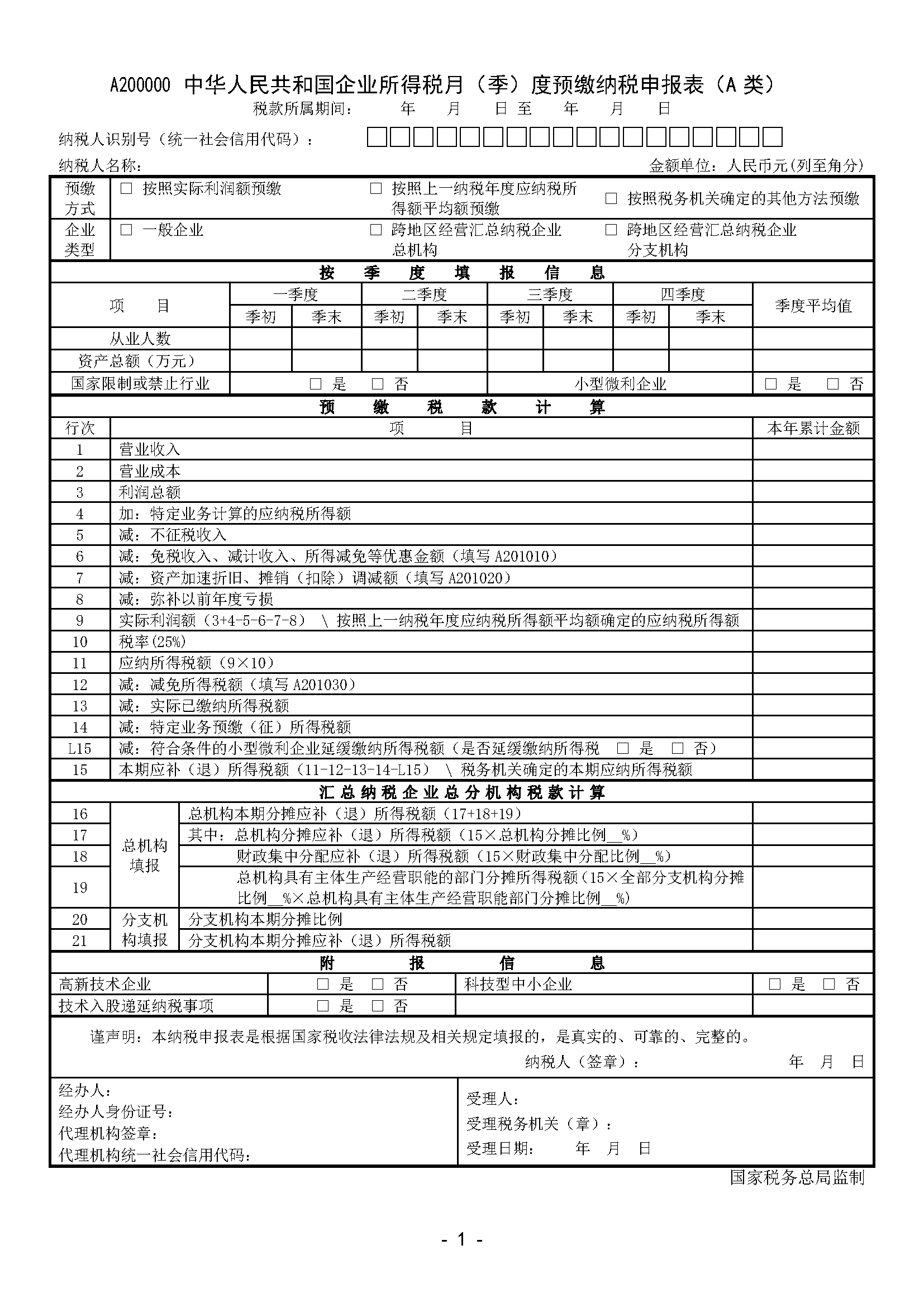
中华人民共和国企业所得税月(季)度预缴和年度纳税申报表
Form B is used for monthly or quarterly advance tax payments and for the annual tax calculation where the tax authorities have determined that the tax must be calculated on the basis of an assessed taxable income rather than actual profits. This method may be applied where the tax authorities cannot reliably determine the company’s taxable profit based on its actual income and expenses.
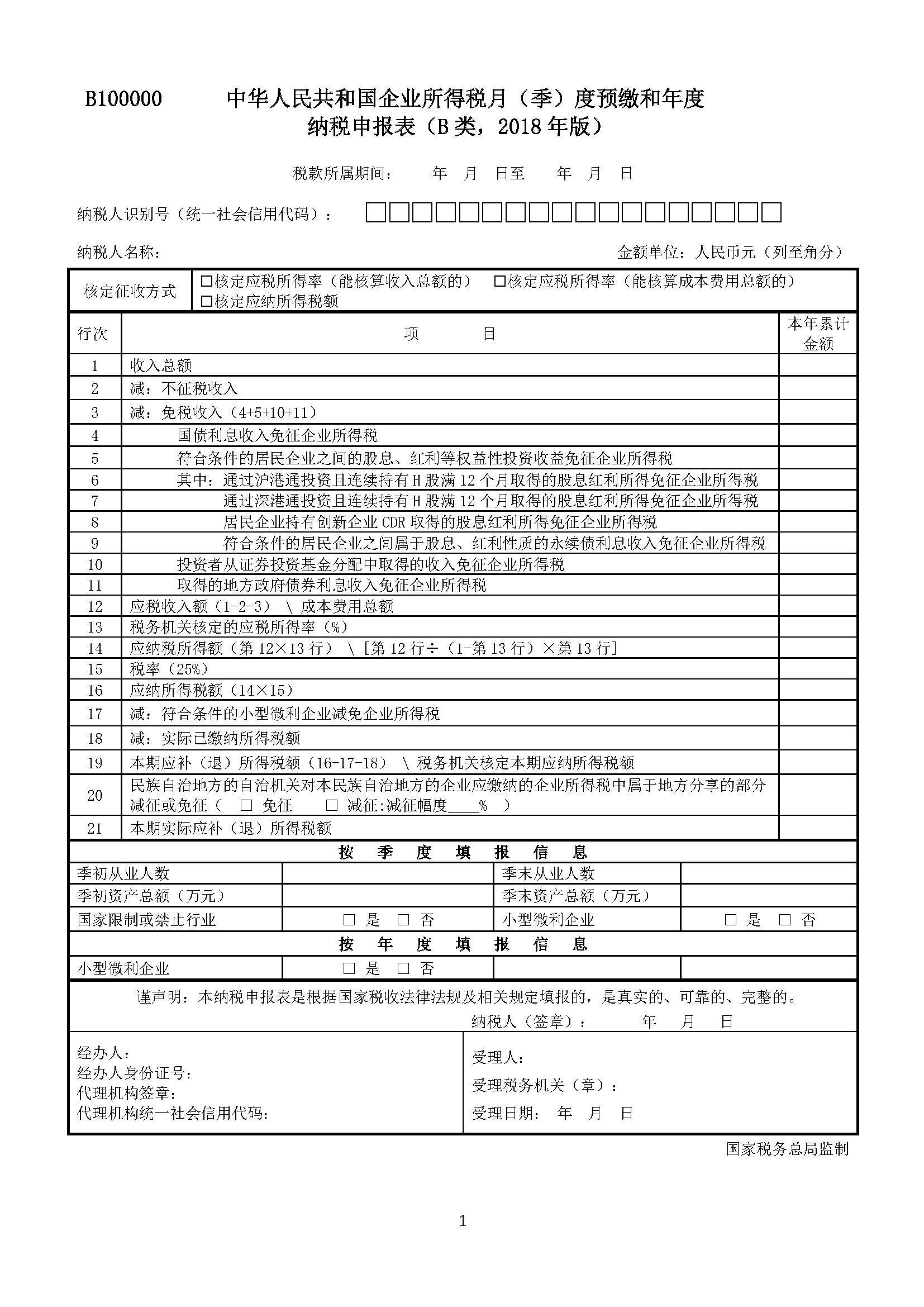
中华人民共和国企业所得税年度纳税申报表
The annual return must be filed within five months after the end of the tax year (generally by 31 May, as the tax year coincides with the calendar year). The final tax reconciliation is carried out at the same time.
The final tax liability is determined on the basis of the annual financial statements. If the advance tax payments are lower than the amount of tax assessed, the difference must be paid. Any overpayment may be credited against future tax liabilities or refunded in accordance with the applicable procedure.
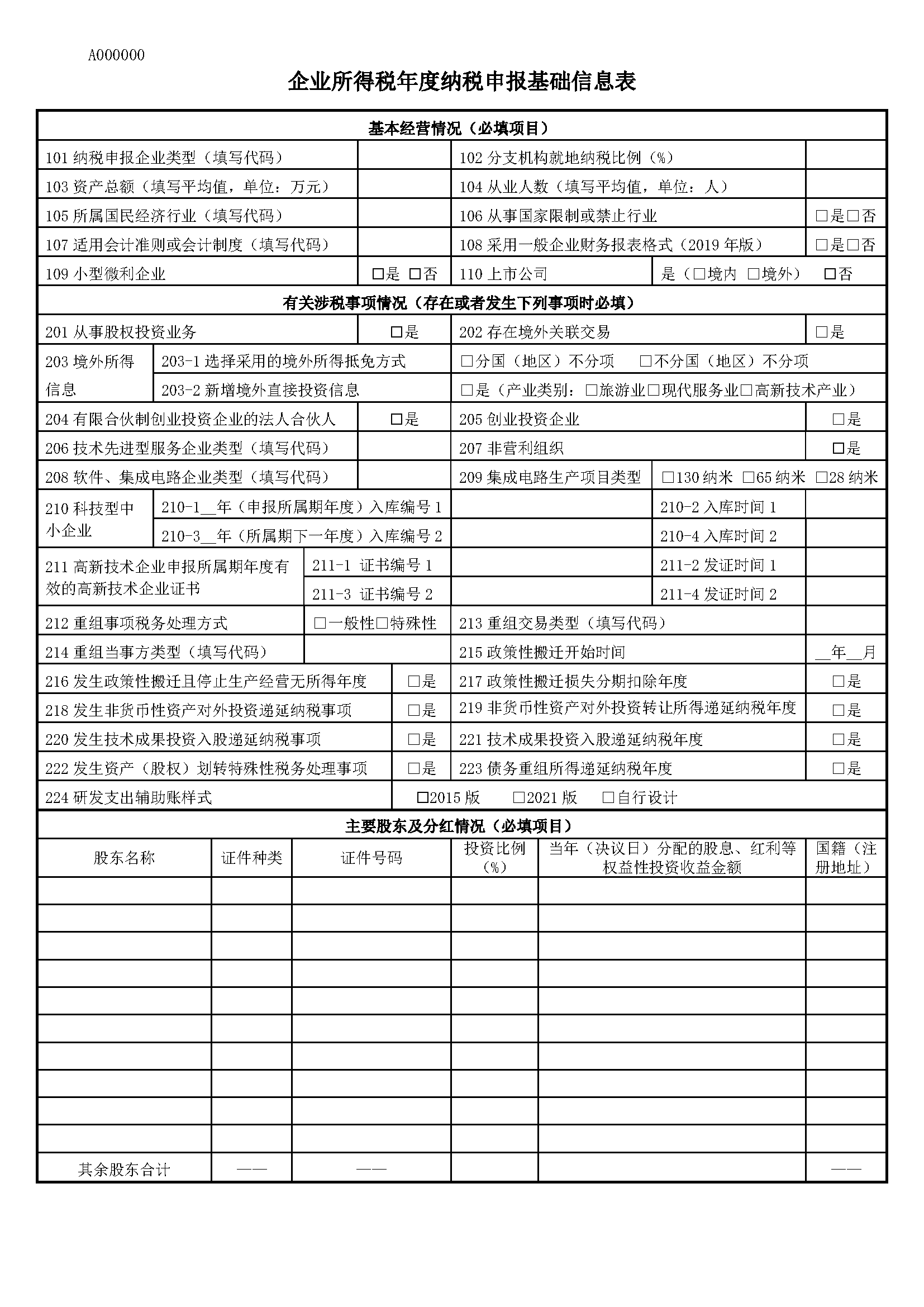
增值税及附加税费申报表
This return is used to calculate and pay VAT and the related surcharges and fees. It is generally filed monthly, although a quarterly tax period may apply to certain taxpayers. The return must be submitted by the deadline set by the tax authorities, generally by the 15th day of the month following the reporting period.
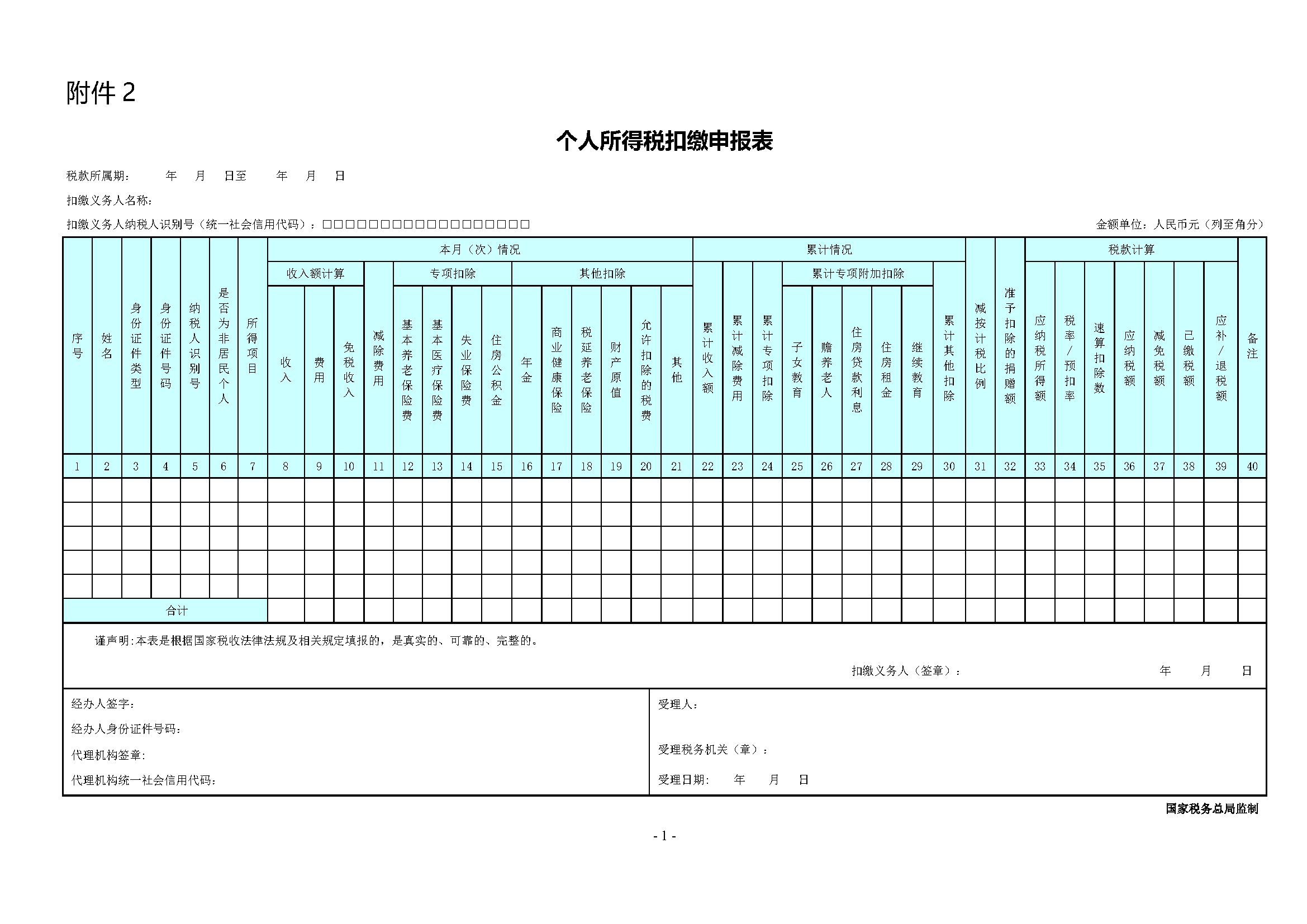
个人所得税扣缴申报表
This return is used to calculate and report Individual Income Tax withheld from payments made to employees.
In practice, foreign companies in China often engage a local accountant or a specialised accounting firm to prepare and file their tax returns.
This is particularly relevant because tax returns must be filed in Chinese, using China’s tax administration system and in compliance with local tax calculation and reporting requirements.
Transactions between related parties must comply with the arm’s length principle.
The tax authorities are entitled to adjust the terms of such transactions if they result in a reduction of the taxable income.
The generally accepted transfer pricing methods are used to determine the arm’s length price, including the comparable uncontrolled price method, resale price method, cost plus method, transactional net margin method, profit split method and other methods consistent with the arm’s length principle.
China’s transfer pricing documentation system is based on a three-tiered approach and generally follows the recommendations of BEPS Action 13, subject to certain national specificities.
| Requirement | Main conditions |
| Master File | Required if the group prepares a Master File or the annual volume of related-party transactions exceeds RMB 1 billion. Must be prepared within 12 months after the end of the financial year of the ultimate parent company. |
| Local File | Required if the following thresholds are exceeded:
Generally, it must be prepared by 30 June of the year following the reporting year. |
| Country-by-Country Report (CbCR) | Must be filed by multinational groups with consolidated revenue exceeding RMB 5.5 billion or by a designated reporting entity. Filing deadline: 31 May of the year following the reporting year. |
China applies thin capitalisation rules that restrict the deduction of interest on loans from related parties where a company is financed predominantly through debt rather than equity.
For tax purposes, the following debt-to-equity ratios apply:
Interest expenses on related-party loans exceeding the applicable limit are not deductible for Enterprise Income Tax purposes unless the taxpayer can demonstrate that the financing arrangements comply with the arm’s length principle.
China applies controlled foreign company (CFC) rules to prevent profits from being shifted to low-tax jurisdictions through the use of foreign companies.
The CFC rules apply to Chinese tax resident enterprises that directly or indirectly control foreign companies.
A foreign company is considered controlled if:
Control may arise through:
When assessing control, the tax authorities take into account the aggregate ownership interests of related parties.
Tax consequences
Where the CFC rules apply, the undistributed profits of a foreign company may be included in the taxable income of the controlling Chinese enterprise in proportion to its ownership interest.
Accordingly, tax may become payable before dividends are actually received.
Exemptions
The CFC rules may not apply if:
China has an extensive network of international tax treaties. According to the State Taxation Administration of the PRC, as at the end of July 2025, China had signed double taxation agreements with 111 foreign jurisdictions, of which 108 had entered into force.
In addition, mainland China has concluded separate tax arrangements with Hong Kong and Macao, and an arrangement with Taiwan.
The main taxes payable by a company in China are Enterprise Income Tax (EIT) and Value Added Tax (VAT). In addition, local surcharges are levied on turnover, including the Urban Maintenance and Construction Tax and Educational Surcharges. A company may also be liable for property tax if it owns real estate, and customs duties on imports. Social insurance contributions for employees are also mandatory. The specific taxes and applicable rates depend largely on the industry, the size of the business and the availability of tax incentives.
Enterprise Income Tax is calculated and paid in advance on a monthly or quarterly basis, depending on the filing period assigned to the enterprise. The return for the relevant month or quarter must be filed within 15 days after the end of the reporting period.
At the end of the year, the enterprise conducts an annual tax reconciliation and determines its final tax liability, taking into account advance payments already made. The annual return must be filed within five months after the end of the tax year, generally by 31 May of the following year.
For the purposes of the Enterprise Income Tax incentive, a special category of small low-profit enterprises (小型微利企业) applies. A company must meet all of the following criteria:
The number of employees and the value of assets are determined based on quarterly average figures.
Yes. Losses that meet the statutory requirements may be used to reduce taxable profits in subsequent periods, subject to the applicable carry-forward time limits.
Yes. If an error is discovered after a tax return has been filed, the taxpayer may submit an amended tax return to correct the information previously reported.
If the correction results in additional tax being due, the outstanding amount must be paid together with any applicable late payment interest or other charges prescribed by law. If the correction results in an overpayment, the taxpayer may apply for a refund or use the applicable tax credit mechanism.
Where a DTA is in force between China and the country in which the income recipient is resident, a foreign company may apply the reduced rate provided for under the agreement, subject to its conditions. To qualify, the company must provide documents confirming its tax residence and compliance with the other requirements of the DTA.
Prior approval from the tax authorities is generally not required. The taxpayer may apply the treaty relief directly and retain the supporting documents in case of a tax audit.
Salaries, bonuses, remuneration for employment and certain types of royalties are grouped together as comprehensive income and taxed at progressive rates ranging from 3% to 45%:
| Annual taxable income (RMB) | Tax rate |
| Up to 36,000 | 3% |
| 36 001 – 144 000 | 10% |
| 144 001 – 300 000 | 20% |
| 300 001 – 420 000 | 25% |
| 420 001 – 660 000 | 30% |
| 660 001 – 960 000 | 35% |
| Over 960 000 | 45% |
The tax base is calculated after deducting the standard annual allowance of RMB 60,000, mandatory social insurance contributions and statutory deductions.
China applies the six-year rule. Under this rule, an individual who is not domiciled in China but qualifies as a tax resident by staying in China for 183 days or more in a calendar year is generally exempt from IIT on most foreign-source income until the six-year period of continuous tax residence has elapsed.
Property Tax is levied annually on real estate and land used for commercial purposes or leased out.
The tax base is determined using one of the following methods:
Individuals are exempt from Property Tax if the property is used exclusively as their private residence and is not rented out.
Deed Tax is levied on the acquisition, gift or exchange of land-use rights and real estate ownership rights.
Rate: 3–5%.
Taxpayer: the person acquiring or receiving the relevant rights.
Dividend income is generally subject to tax at a rate of 20%.
Dividends are taxed on the gross amount received, without any deductions.
Dividend income from shares traded on the Shanghai, Shenzhen and Beijing Stock Exchanges may qualify for a 50% or 100% reduction in the taxable amount, depending on the holding period.
Interest income is generally subject to a flat tax rate of 20%.
Interest is taxed on the gross amount received, without deductions.
Certain types of interest income are tax-exempt, including interest on bank savings deposits, government bonds issued by the Ministry of Finance and approved education savings funds.
Income derived by an individual from granting the right to use patents, trade marks, copyrights, know-how and other intellectual property is classified as income from the use of rights.
Individual tax resident of China: Royalties are treated as comprehensive income (综合所得) and are subject to progressive tax rates of 3–45% upon annual reconciliation. Tax is withheld at a provisional rate of 20% from the amount remaining after deducting 20% for expenses (or RMB 800 instead of 20% where the payment does not exceed RMB 4,000). The final tax liability is determined through the annual tax reconciliation.
Individual non-resident of China: Royalties are taxed upon each payment and are not included in the annual tax reconciliation. The taxable amount is calculated after deducting 20% for expenses, and the applicable rate is determined under the monthly tax rate schedule for comprehensive income. The Chinese payer is responsible for withholding the tax.
Capital gains derived from the disposal of capital assets, such as securities, equity interests, land-use rights, buildings, equipment, vehicles and other assets, are generally subject to a flat tax rate of 20%.
Gains from the sale of real estate are also subject to tax at 20%, calculated after deducting the relevant expenses and taxes.
Individuals are generally exempt from tax on gains from the sale of their sole private residence if they have lived in the property for at least five years.
From 1 January 2026 to 31 December 2027, where an individual sells their private residence and purchases a new home in the same city within one year of the sale, they may qualify for a partial or full refund of the Individual Income Tax paid on the gain from the sale.
Capital gains from the sale of shares traded on the Shanghai, Shenzhen and Beijing Stock Exchanges are generally exempt from Individual Income Tax.
Participation in the social insurance system is mandatory for both employers and employees.
| Type of insurance | Employer | Employee |
| Pension insurance | 16% | 8% |
| Medical insurance | 5-10% | 2% |
| Unemployment insurance | 0,5-0,8% | 0,2-0,5% |
| Work-related injury insurance | 0,2–1,9% | 0% |
| Maternity insurance | Generally included in the employer’s medical insurance contributions | 0% |
Contributions are not calculated on the employee’s entire salary. Instead, they are based on the social insurance contribution base, which is subject to minimum and maximum limits (generally 60% to 300% of the average regional salary).
In addition to social insurance contributions, contributions are often made to the Housing Provident Fund (住房公积金), which is separate from the social insurance system. The contribution rate is also set by local authorities and generally ranges from 5% to 12% for both employers and employees.
China does not currently impose a separate inheritance tax or gift tax.
Stamp Duty is levied on enterprises and individuals when they enter into certain transactions or execute documents subject to tax in China. It may also apply to contracts concluded outside China if they are used within China.
Rates depend on the type of document or transaction and range from 0.005% to 0.1%.
Territorial scope: The preferential regime applies to individuals working in nine cities in Guangdong Province that form part of the Greater Bay Area.
Eligibility: The incentive is available to foreign professionals and professionals from Hong Kong, Macao and Taiwan who are recognised as:
Nature of the incentive:
Eligible individuals receive a subsidy compensating for the difference between the IIT actually paid in mainland China and the notional tax calculated under Hong Kong tax rules.
The effective tax burden may be reduced to 15%, compared with China’s standard maximum IIT rate of 45%.
Eligibility requirements: Specific requirements are established by the authorities of each city. Generally, applicants must:
Nature of the incentive: A special preferential IIT regime also applies to individuals working in the Hainan Free Trade Port. High-end and urgently needed talents are subject to an effective tax rate of 15%.
Eligibility requirements: The incentive is available to individuals who:
How the incentive applies:The incentive is applied at the end of the tax year. If the IIT calculated exceeds the amount corresponding to the effective rate of 15%, the excess is exempt from tax.
Until 31 December 2027, foreign individuals who are tax residents of China may benefit from a special tax regime for certain allowances and subsidies provided by their employers. This regime may be applied independently of the preferential tax regimes available in the Greater Bay Area (GBA) and the Hainan Free Trade Port (HFTP).
A foreign tax resident may choose one of the following two options:
The two regimes cannot be applied simultaneously. The chosen option cannot be changed during the relevant tax year.
Types of tax-exempt allowances
Where the special regime is selected, the following expenses may qualify for IIT exemption, subject to the applicable requirements:
This regime does not automatically exempt all allowances paid to foreign employees from IIT. The exemption applies only to the types of allowances and subsidies specified by law and is subject to the applicable conditions.
When carrying out a taxable transaction for the first time, an individual must provide a valid identity document and the required information either directly to the tax authority or through a withholding agent.
For foreign nationals employed in China, the required information is generally submitted to the tax authority by their employer, acting as the withholding agent. Foreign nationals who do not have a withholding agent deal with the tax authority directly.
Foreign nationals must provide a valid foreign passport. Depending on the individual’s status, they may also be required to provide a Foreign Permanent Resident ID Card of the People’s Republic of China (中华人民共和国外国人永久居留身份证) or a Foreigner’s Work Permit (中华人民共和国外国人工作许可证).
When applying for the first time, the individual must complete the Basic Information Form of Individual Income Tax (个人所得税基础信息表). The form includes, among other details, the individual’s full name, identity document details, nationality or region, date of birth, contact information and employment details. For foreign nationals, it also includes the date of their first entry into China, their expected date of departure and the basis on which they become liable for tax.
In China, individuals are required to file tax returns independently only in circumstances prescribed by law. The applicable return form and filing deadline depend on the type of income and the grounds for filing.
An individual must file a tax return independently if any of the following circumstances apply:
Business income is subject to a separate filing procedure: the taxpayer must file returns and make advance tax payments monthly or quarterly, with the annual tax reconciliation completed by 31 March of the following year.
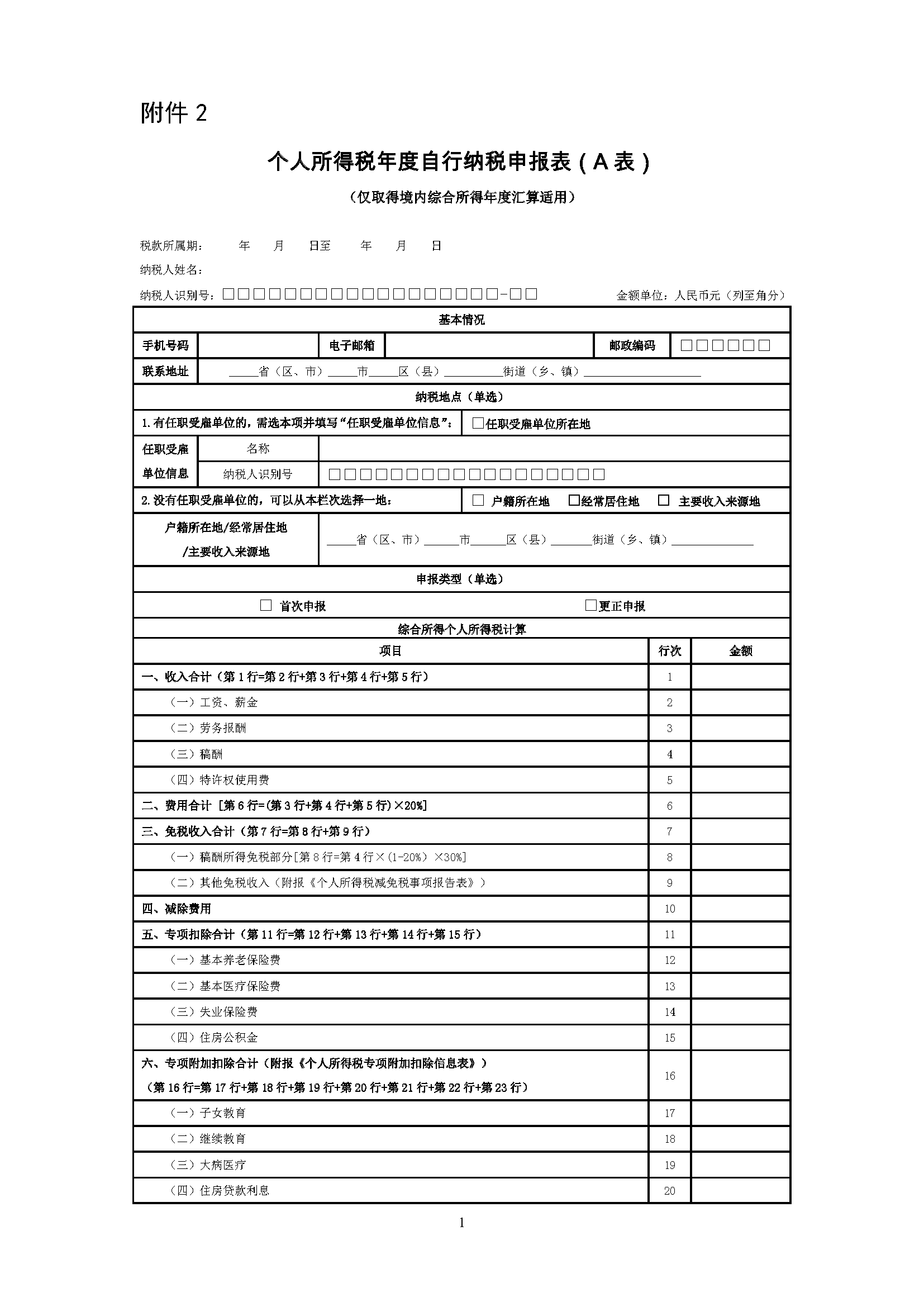
个人所得税年度自行纳税申报表
This return is filed by individual tax residents of China who are required to complete an annual reconciliation of comprehensive income. Comprehensive income includes wages and salaries, remuneration for personal services, author’s remuneration and royalties. The final amount of Individual Income Tax payable for the year is calculated taking into account tax already withheld, deductions and other adjustments provided for by law.
Filing period: from 1 March to 30 June of the year following the tax year.
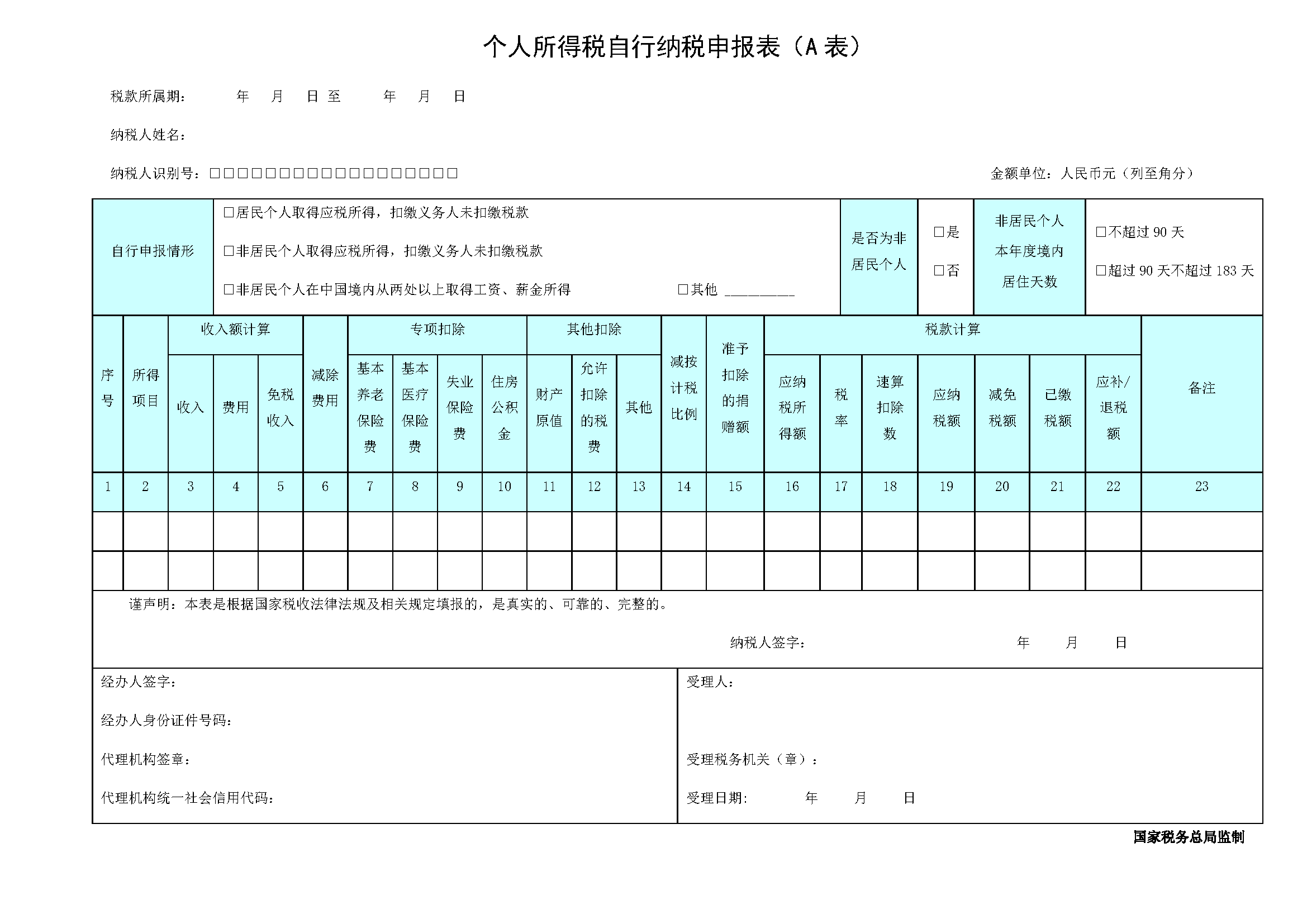
个人所得税自行纳税申报表
A self-filed return for specific circumstances requiring tax reporting during the year, for example, where a withholding agent has failed to withhold tax or a non-resident individual receives employment income from two or more sources in China.
Comprehensive income comprises four categories:
For a tax resident of China, salary is included in comprehensive income and taxed at progressive rates ranging from 3% to 45%. Throughout the year, the employer, acting as a withholding agent, withholds and remits Individual Income Tax (IIT) on a monthly basis. The calculation takes into account, among other things, the monthly standard deduction, special deductions, additional special deductions and other deductions provided for by law. Where required, an annual reconciliation of comprehensive income is carried out, taking into account the tax actually paid.
For non-residents, salary is taxed under the rules applicable to non-resident individuals. IIT is calculated and withheld monthly based on income received in the relevant month, taking into account the deductions permitted by law. Non-residents are not subject to the annual reconciliation of comprehensive income.
Yes. Any foreign national receiving income in China must have a Tax Identification Number (纳税人识别号). The TIN is used for tax registration and income reporting purposes.
For non-residents, IIT on salary is generally withheld and remitted to the state budget by the employer acting as a withholding agent. An individual may be required to file a return independently, for example, if the withholding agent has failed to withhold tax or the individual receives income from two or more employers.
For tax residents, the employer withholds IIT from salary and remits it to the state budget on a monthly basis. However, salary received by tax residents is included in comprehensive income, for which an annual reconciliation is required in the circumstances prescribed by law. The tax resident is responsible for filing the annual return because the employer does not have information about all the taxpayer’s income and personal deductions and is not involved in calculating the taxpayer’s comprehensive income for the year.
The annual reconciliation return may be filed independently through the tax authority’s mobile application or website, or the taxpayer may authorise their employer to file it on their behalf. The annual reconciliation takes place from 1 March to 30 June of the year following the tax year.
Yes. An individual who is a tax resident of a country that has concluded a DTA with China may benefit from a reduced tax rate or an exemption from tax in China under the agreement, provided that the relevant conditions are met. The procedure for claiming treaty relief depends on the type of income and the provisions of the applicable DTA.