

from USD 1 740

Taxation Principle
Territorial
Corporate Tax Residency Criteria
Place of incorporation or place of effective management and control
Tax Residency Criteria for Individuals
183 days of physical presence, permanent residence, or domicile
CFC Rules
None
Foreign Exchange Control
None
National Currency
Seychelles Rupee (SCR)
Tax Authority
Seychelles Revenue Commission (Seychelles Revenue Commission, SRC)
Tax Authority
Tax administration in the Republic of Seychelles is executed by the Seychelles Revenue Commission (SRC), which manages taxpayer registration, tax return processing, statutory compliance audits, debt collection, and the enforcement of non-compliance sanctions.
In alignment with FATF and OECD transparency standards, the authority administers the international automatic exchange of information (AEOI) frameworks and enforces domestic transfer pricing regulations.
Operational enforcement is governed by the Revenue Administration Act, with all corporate filings and disclosures processed through the electronic Seychelles Tax Portal.
Tax Laws of the Seychelles
The Republic of Seychelles enforces a territorial principle of taxation under which resident and non-resident entities are subject to tax exclusively on income derived from or sourced within the Seychelles.
Active commercial revenue generated by a resident company from offshore operations outside the Seychelles remains non-taxable, subject to specific regulatory anti-avoidance frameworks governing selected categories of passive income.
Corporate profits tax in the Seychelles is levied as Business Tax. Entities are subject to a progressive corporate tax structure based on net taxable income thresholds:
| Net Taxable Profit | Business Tax Rate |
| First SCR 1,000,000 | 15% |
| Exceeding Balance above SCR 1,000,000 | 25% |
The tax base is calculated as gross assessable revenue less permitted statutory deductions and commercial allowances.
Specialized industry sectors are subject to enhanced corporate tax rates. Financial institutions, insurance underwriters, telecommunication operators, and alcohol or tobacco manufacturers are taxed at 25% on the first SCR 1,000,000 and 33% on the exceeding balance.
Presumptive Tax Regime for Small Businesses
Small enterprises may elect for a simplified presumptive tax framework assessed on gross annual turnover rather than net accounting profit. The standard rate is fixed at 1.5% of gross turnover.
This regime is restricted exclusively to domestic small businesses with an annual turnover below SCR 1,000,000 and cannot be utilized by international corporate structures.
The Seychelles enforces a Value Added Tax (VAT) framework at a standard rate of 15%. VAT is levied on taxable supplies of goods and services executed within the domestic territory, alongside qualified import operations.
Designated transactions, including eligible export supplies, are subject to a 0% zero-rated framework.
Specific categories, such as qualified financial, medical, and educational services, remain fully exempt from VAT.
Dividends distributed to a Seychelles entity by another domestic corporate tax resident are fully exempt from the Business Tax base.
Dividends derived from non-resident entities are generally non-taxable under the territoriality principle, provided they do not fall within specific passive income tracking categories.
Selected foreign-sourced passive income streams, specifically dividends, interest, and royalties, are subject to strict economic substance regulations (ESR). The tax treatment is dictated by the precise classification of the revenue stream, the corporate classification, and verified compliance with the substance requirements.
Interest income generated by a Seychelles entity from a domestic tax resident constitutes Seychelles-sourced revenue and is included within the taxable base for Business Tax purposes.
Interest distributions executed by a Seychelles financial institution are subject to a 5% withholding tax on current, fixed, and demand deposits, while specialized banking products qualify for a 0% rate.
Interest derived from non-resident entities is classified as foreign-sourced income and remains non-taxable under the territorial framework.
Subject to compliance with ESR for designated corporate structures and passive asset streams.
Royalties received by a Seychelles entity from a domestic tax resident are classified as Seychelles-sourced income and integrated into the taxable Business Tax base.
Royalties derived from non-resident entities represent foreign-sourced income and are fully exempt from Business Tax in the Seychelles.
For corporate entities subject to economic substance frameworks, foreign-sourced royalties remain subject to strict operational substance benchmarks and domestic resource allocation requirements within the Seychelles territory.
Withholding tax is applied to specific categories of income derived from sources within the Seychelles and distributed to non-residents. The tax is deducted directly from the gross payout amount.
| Payment Type | Resident Recipient | Non-Resident Recipient |
| Dividends, Corporate Entity | 0% | 15% |
| Dividends, Individual | 0% | 15% |
| Interest on Current, Fixed, and Demand Deposits | 5% | 5% |
| Interest on Savings Accounts | 0% | 0% |
| Interest on Bearer Bonds | 5% | 5% |
| Royalties | – | 15% |
| Technical Service Fees | – | 15% |
| Management Fees Paid by a Financial Institution | – | 33% |
| Insurance Premiums | – | 5% |
These benchmarks represent the standard domestic withholding tax rates enacted under Seychelles legislation, excluding the application of double taxation treaties (DTAs). Where a comprehensive tax treaty is active, the effective withholding rate may be structurally reduced.
The Seychelles does not levy a distinct standalone Capital Gains Tax on the disposal of shares, securities, or alternative capital assets.
However, capital gains realized upon asset disposal may be integrated into the Business Tax base if the transaction is executed as part of ordinary commercial operations and classified as business income.
A one-off disposal of a long-term capital asset is generally exempt from taxation, whereas systematic trading in assets qualifies as a commercial business activity subject to standard corporate rates.
The Seychelles enforces a mandatory retirement scheme administered by the Seychelles Pension Fund (SPF).
| Contribution Type | Employee | Employer | Self-Employed |
| Mandatory Monthly Pension Contribution from the salary | 5% | 5% | 10% |
The corporate employer is contractually obligated to remit all mandatory monthly contributions to the Seychelles Pension Fund no later than the 21st day of the calendar month immediately following the payroll assessment period.
Stamp duty is levied on specific legal instruments and transactions, including operations involving real estate transfers, share allocations, asset disposals, and designated contractual agreements.
The final duty is calculated based on the transaction category and the fair market value of the transferred property. Dedicated exemptions and reliefs for qualified corporate transactions are allowed.
The Seychelles fiscal framework operates targeted preferential regimes and investment incentives calibrated to the operational scope and regulatory status of the enterprise.
The primary export-oriented framework is the International Trade Zone (ITZ) regime, designed for manufacturing, processing, and international trading operations.
Additionally, the specialized Companies Special Licences (CSL) framework caters to designated cross-border sectors, while priority industries qualify for targeted fiscal and customs concessions.
| Regime or Incentive | Key Parameters | Tax Advantages |
| International Trade Zone (ITZ) | Licensed manufacturing, processing, assembly lines, re-export operations, warehousing, and international trade | Comprehensive tax and customs exemptions, including full duty reliefs on qualifying imported raw materials and capital machinery |
| Companies Special Licences (CSL) | Corporate entities executing designated international business lines under a specialized regulatory license | Clear application of the territorial tax principle to qualified offshore revenues; compliance metrics scale based on activity class and license parameters |
| Sector-Specific Investment Incentives | Approved investment frameworks in priority macroeconomic sectors, including tourism, fisheries, agriculture, and educational infrastructure | Full exemptions or structural reductions on customs duties alongside specialized capital investment allowances under domestic investment laws |
| Enhanced Tax Deductions | Target operational sectors encompassing agriculture, fisheries, tourism, domestic transit, and marine cruise services | Statutory allowance to claim accelerated deductions on qualifying expenditures to optimize the net taxable Business Tax base |
Pure equity holding companies ( whose sole function is acquiring and holding equity stakes in other corporate bodies) qualify for a reduced economic substance framework. Compliance is verified across 4 benchmarks:
Non-compliance with ESR on remitted foreign passive income triggers the revocation of tax-exempt privileges. Consequently, the non-compliant revenue base is subject to standard Seychelles Business Tax rates of 15% or 25%.
Prior to launching an international corporate structure, businesses must systematically audit their operations across the following compliance chain: Corporate Status ➔ Income Classification & Source ➔ ESR Applicability ➔ Facility & Headcount Audit ➔ Core CIGA Verification ➔ Final Tax Treatment Optimization
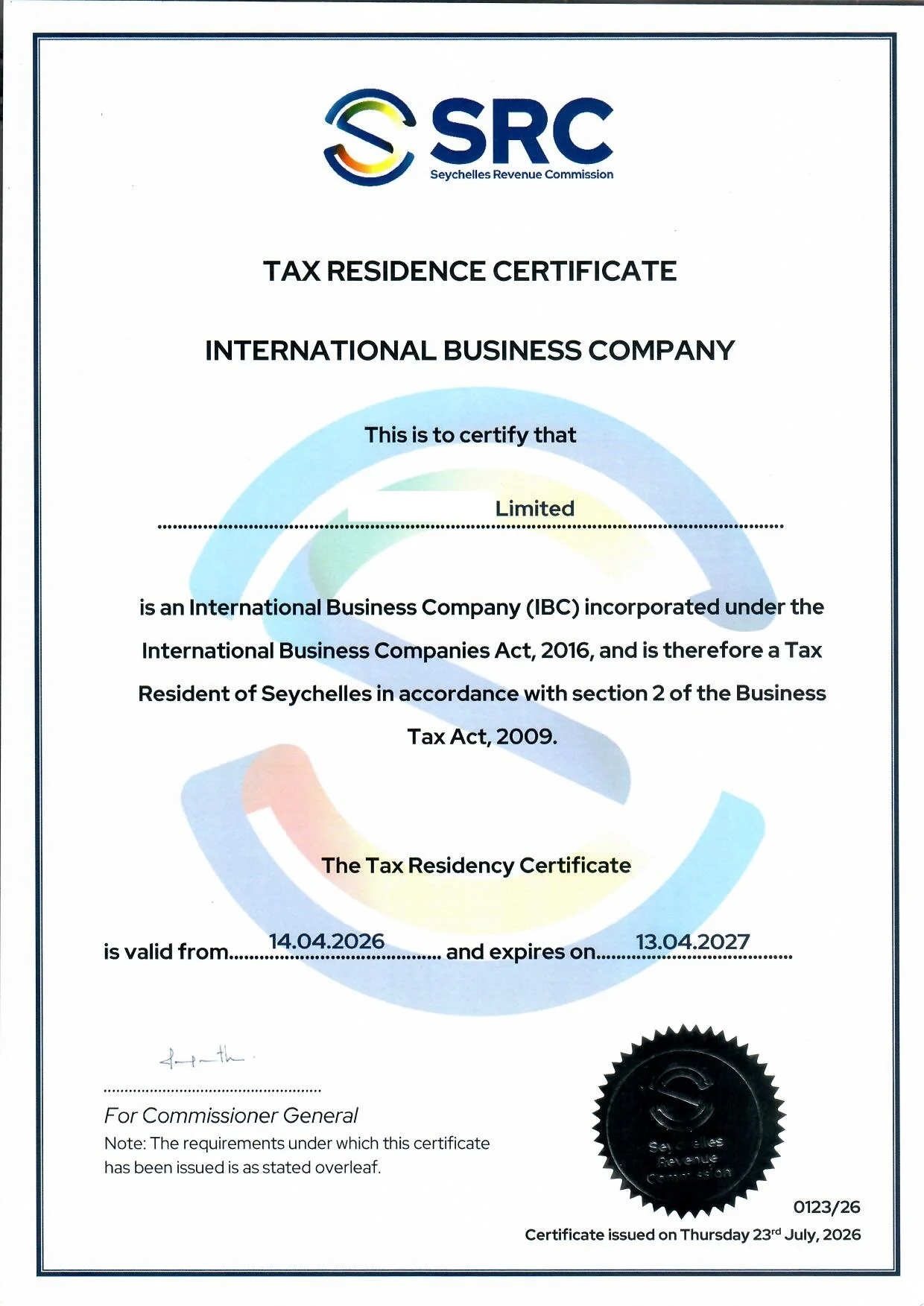
In August 2026, the Seychelles Revenue Commission suspended the issuance of Tax Identification Numbers (TIN) to International Business Companies (IBC) requesting tax credentials solely for presentation to foreign banking institutions.
The Seychelles Revenue Commission (SRC) recommends obtaining a Tax Residency Certificate if a foreign bank requests a tax identification number from a Seychelles company.
Taxpayer Identification Numbers (TINs) are issued exclusively to International Business Companies (IBCs) that:
Companies executing active business operations within the Seychelles and carrying domestic tax liabilities must formally register with the Seychelles Revenue Commission (SRC) within 28 days from the commencement of commercial activities. Upon successful compliance validation, the authority allocates a unique Tax Identification Number (TIN).
The onboarding process is executed electronically via the online Seychelles Tax Portal or directly at the regulatory headquarters.
Subject to structural operational criteria, the company must complete additional registrations for VAT, pay-as-you-earn (PAYE) staff withholding taxes, and alternative applicable fiscal schedules.
VAT registration is strictly mandatory if the aggregate value of an entity’s domestic taxable supplies reaches the statutory registration threshold of SCR 2,000,000 within any continuous 12-month period.
The formal application for mandatory registration must be submitted to the Seychelles Revenue Commission within 14 days from the date the threshold is breached.
Voluntary VAT registration is available to corporate structures executing taxable commercial operations with a gross annual turnover mapped between SCR 100,000 and SCR 2,000,000. Upon a voluntary filing request, the SRC conducts an enhanced compliance audit of the business operations, infrastructure, and physical commercial premises.
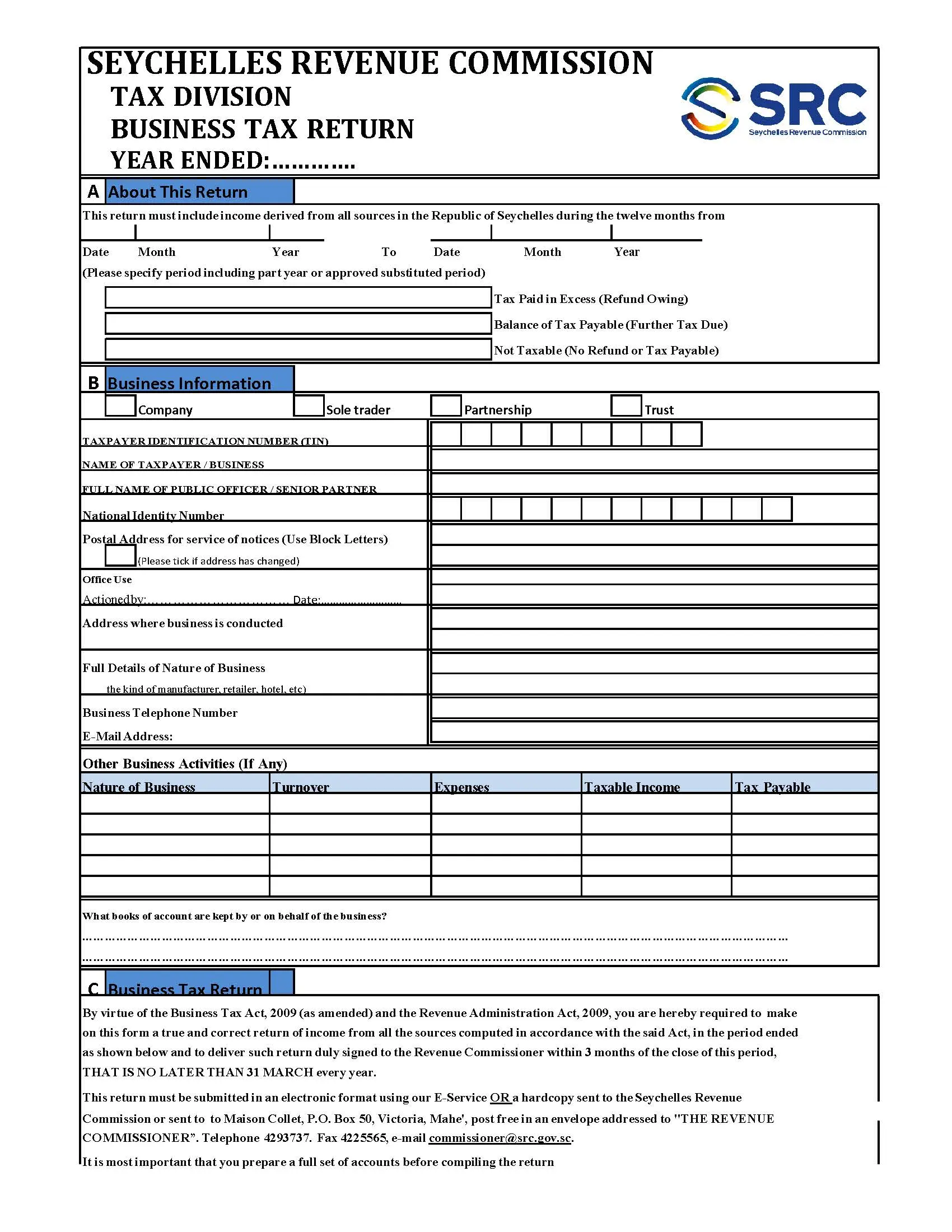
The first page provides essential business information, including:
It also includes a formal notice from the Seychelles Revenue Commission (SRC) requiring the return to be filed by 31 March of the year following the reporting year.
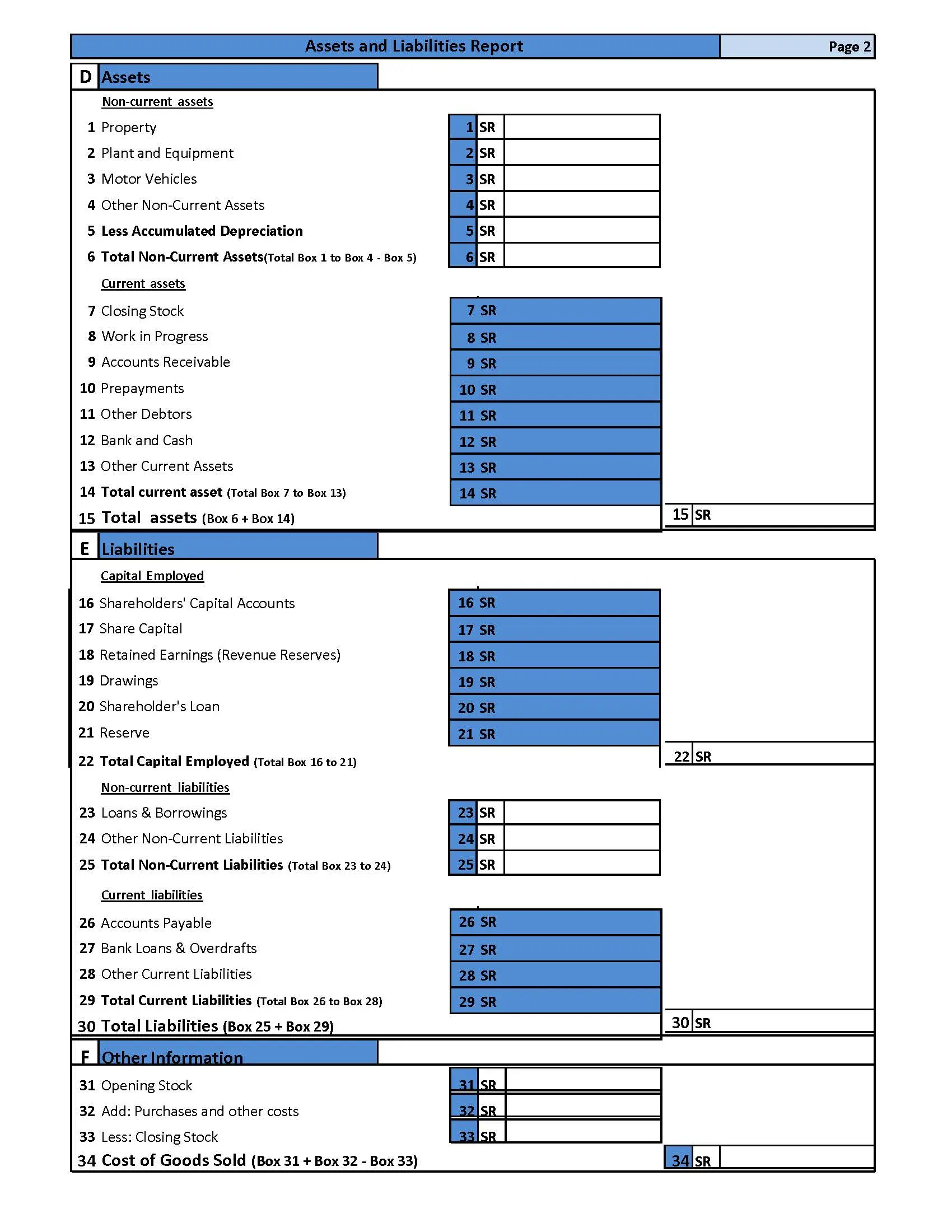
Page 2 contains the Assets and Liabilities Report, covering:
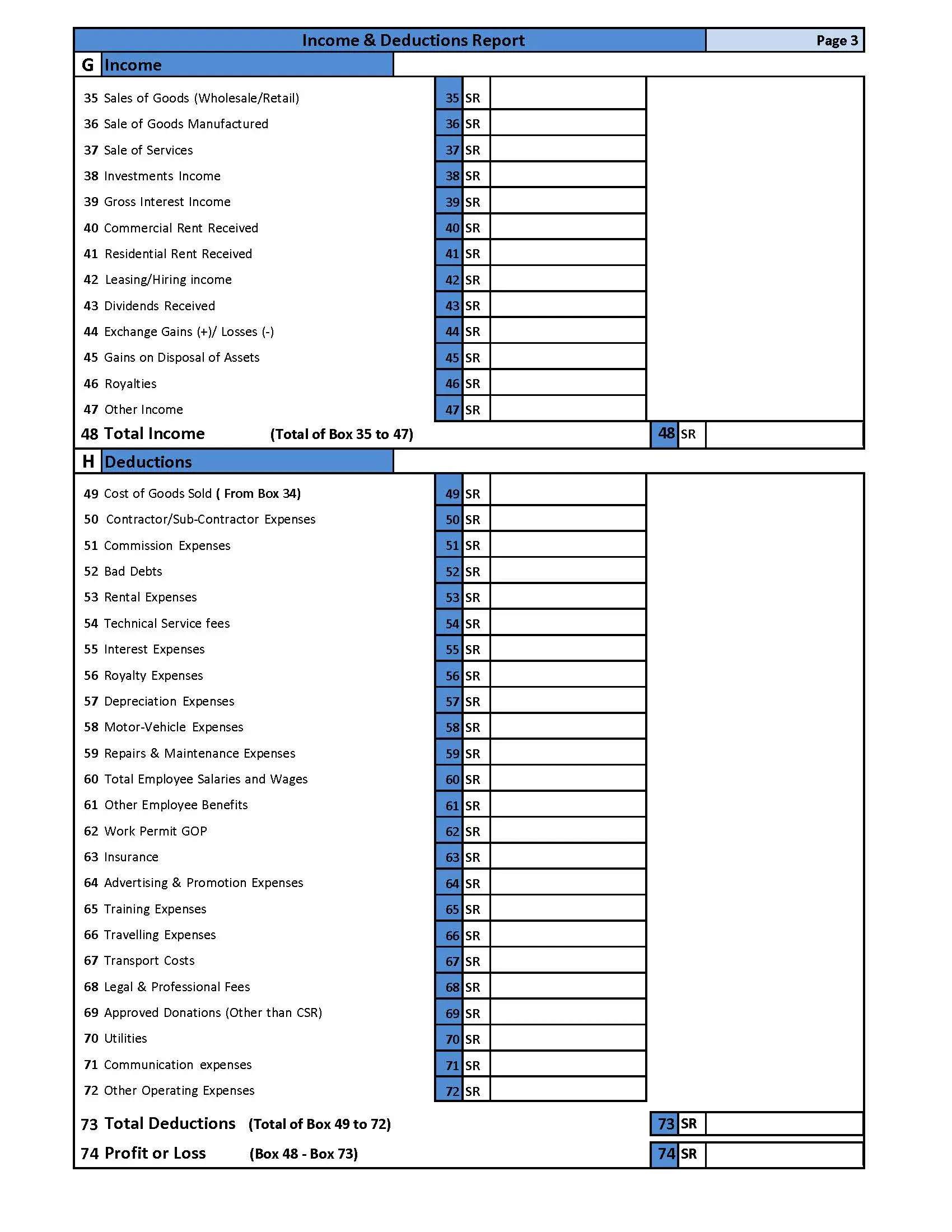
Page 3 contains the Income and Deductions Report, providing a detailed breakdown of the company’s income and expenses.
Income includes revenue from services, dividends, interest, royalties, rental income and foreign exchange gains or losses.
Deductions cover operating expenses, including salaries, rent, insurance, advertising, legal fees and depreciation.
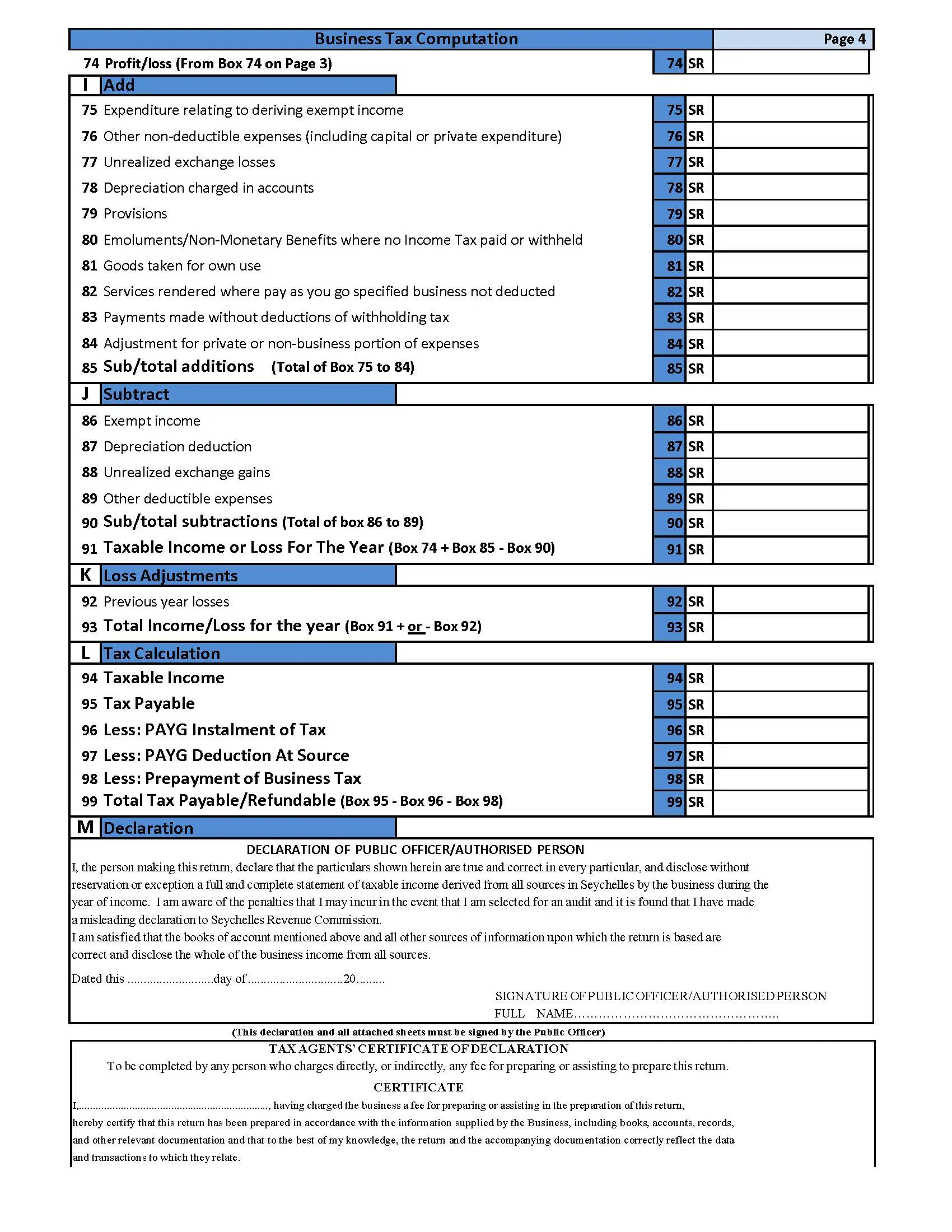
Page 4 contains the Business Tax Computation and Declaration, adjusting accounting profits for non-taxable income and non-deductible expenses.
The resulting calculation determines the final amount of tax payable or refundable.
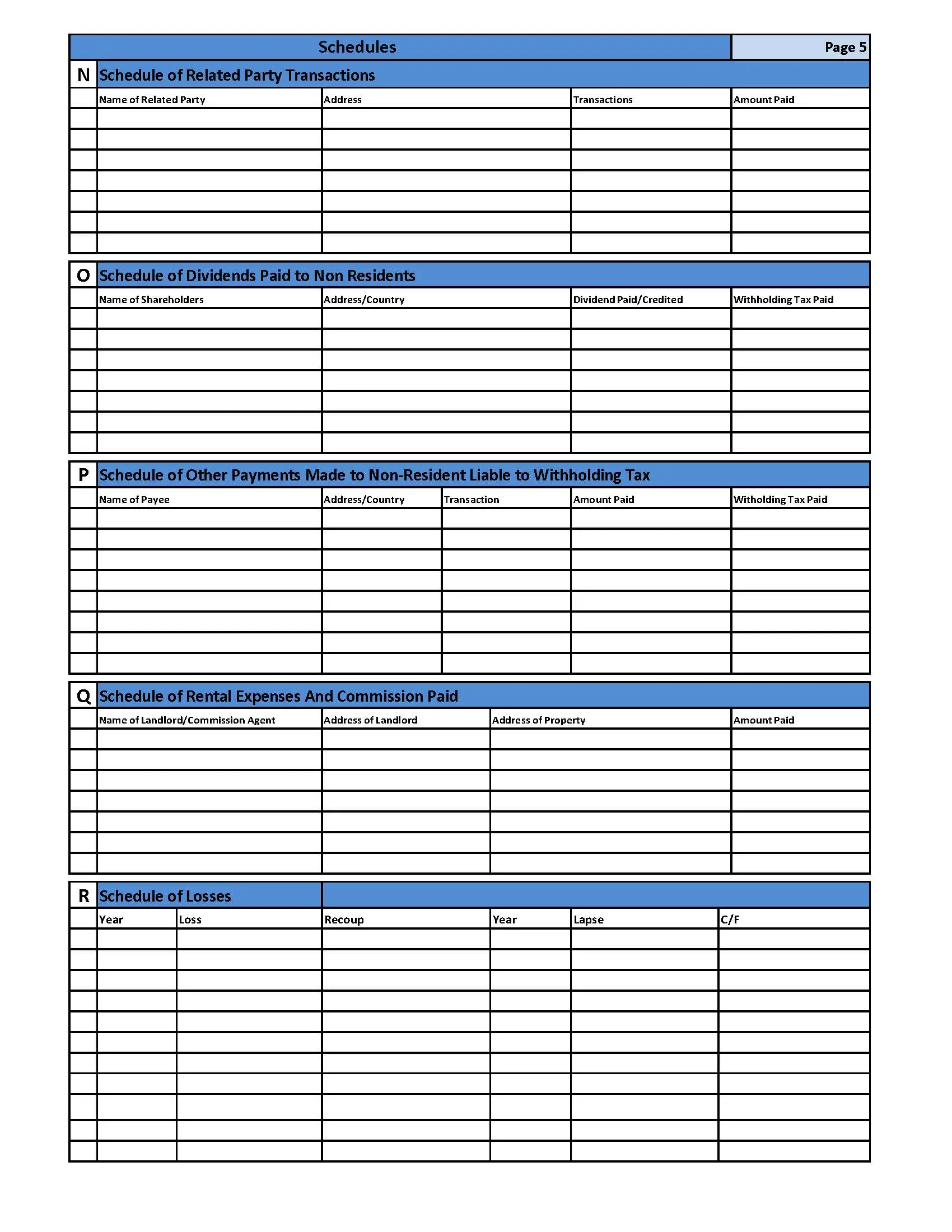
A Related Party Dealings Schedule (RPD Schedule) is required for companies with controlled related-party transactions exceeding the prescribed turnover threshold.
Other supplementary schedules report dividend payments to non-residents, payments subject to withholding tax, rental expenses, commissions and tax losses carried forward from previous years (Schedule of Losses).
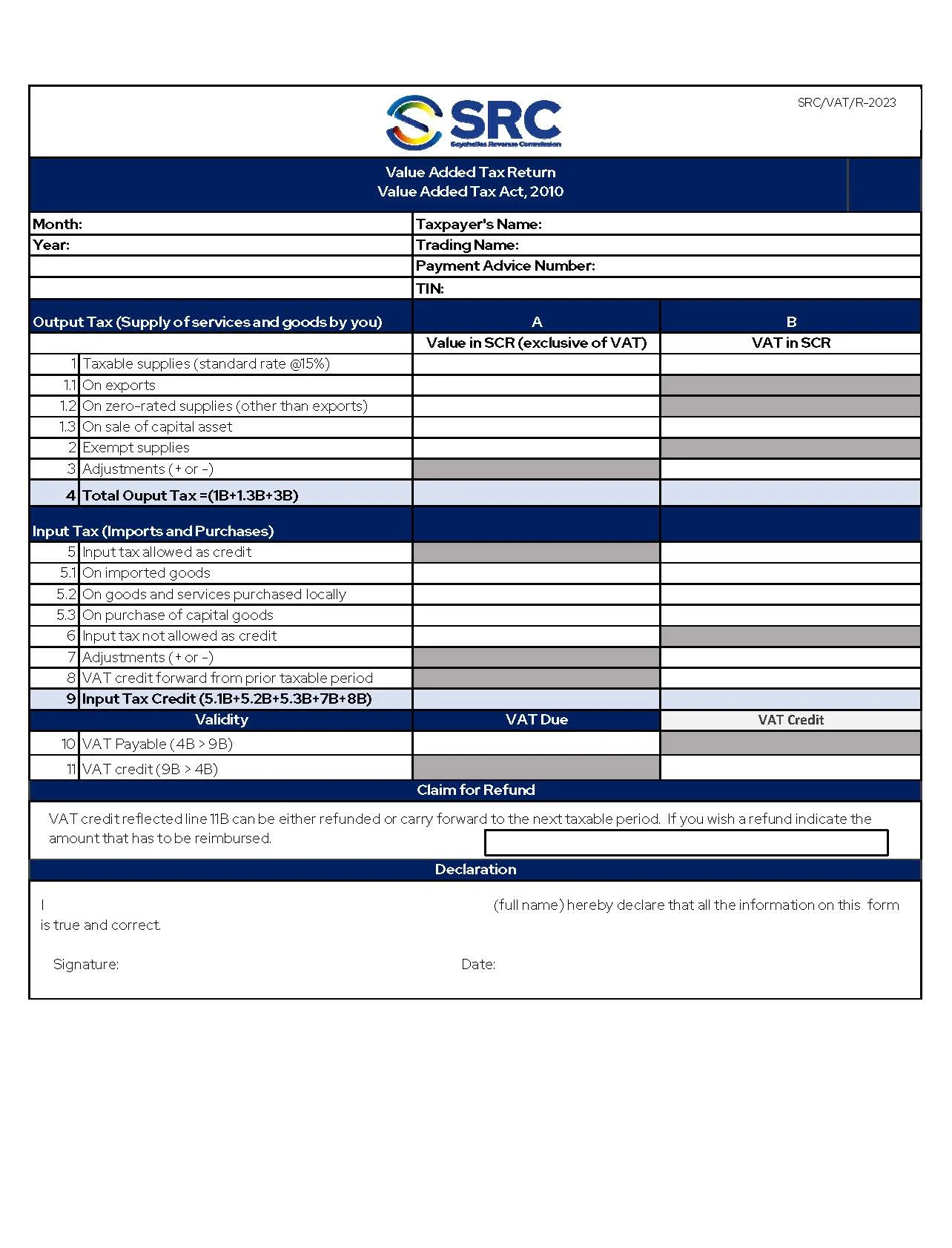
Filed monthly by businesses subject to mandatory VAT registration and quarterly by voluntarily registered businesses.
The return and any VAT payable must be submitted to the Seychelles Revenue Commission (SRC) by the 21st day of the month following the relevant reporting period.
Reports taxable and exempt supplies, output and input VAT, and the resulting amount of VAT payable or refundable.
On June 1, 2026, the Seychelles Revenue Commission launched a temporary Voluntary Disclosure Programme (VDP), allowing taxpayers to voluntarily report previously undeclared income, reporting errors, or compliance discrepancies to settle outstanding tax liabilities under preferential terms.
Participation requires that the disclosure is executed prior to the initiation of a formal tax audit or regulatory enforcement actions. The applicant must not be under active compliance investigations or have unresolved litigation involving tax or financial infractions.
For members of multinational enterprise (MNE) groups, specific eligibility criteria mandate the submission of a specialized MNE questionnaire and country-by-country reporting schedules by June 5, 2026, with the final deadline to file the VDP application fixed at July 31, 2026.
While the VDP structurally reduces the punitive penalty burden, it does not exempt the participant from settling the primary tax liability and any applicable accrued interest. The program targets unreported commercial revenues, erroneous tax return declarations, and alternative uncorrected non-compliance violations.
Seychelles transfer pricing regulations target controlled transactions executed between associated enterprises. The framework regulates the distribution of goods and services, intra-group financing arrangements, corporate loans, interest allocations, royalty flows, intellectual property transfers, and alternative operations between connected parties.
Transactions must mirror the arm’s length principle, aligning with terms that would be contractually agreed upon by independent entities under comparable market conditions.
Regulatory audits assess the underlying economic substance and actual financial conduct of the counterparties rather than relying strictly on the written terms of the contract.
Taxpayers engaged in controlled transactions who generate a gross annual turnover exceeding SCR 1,000,000 must compile comprehensive transfer pricing documentation substantiating that the pricing structures of controlled operations satisfy the arm’s length standard.
In alignment with the Business Tax (Transfer Pricing Documentation) Regulations 2023, the required documentation must encompass:
Concurrently, entities executing controlled operations must submit a formal Related Party Dealings (RPD) Schedule to the Seychelles Revenue Commission (SRC). Enhanced disclosure criteria covering the entire matrix of controlled operations are triggered if the corporate structure meets at least one of the following financial thresholds:
Transfer pricing documentation is not submitted concurrently with the annual Business Tax Return. The compiled local file must be retained and produced within 21 days upon receiving an official regulatory request from the SRC.
Members of MNE groups with a consolidated group turnover exceeding EUR 100,000,000 are subject to enhanced reporting, mandating the compilation of a Master File structured in strict compliance with OECD Transfer Pricing Guidelines.
The Seychelles enforces Country-by-Country Reporting (CbCR) protocols in alignment with the OECD BEPS Action 13 package. Regulated under the statutory Revenue Administration (Country-by-Country Reporting Multinational Enterprise Groups) Regulations, the framework mandates the global disclosure of revenue allocation, profit margins, taxes paid, and employee headcounts across every tax jurisdiction where the corporate group maintains presence.
The statutory filing obligation targets exclusively MNE groups generating a consolidated group turnover exceeding EUR 750,000,000 in the immediately preceding financial period.
The Seychelles does not enforce Controlled Foreign Corporation (CFC) regulations.
Corporate interest expense deductions derived from debt financing are subject to statutory restrictions if the underlying leverage exceeds specified debt-to-equity ratios. Interest expenses directly attributable to the excess debt portion are disallowed as deductible expenses and are structurally reclassified as dividend distributions for corporate tax purposes.
The Seychelles operates with no foreign exchange controls.
The Seychelles maintains an advanced tax treaty network comprising 29 Comprehensive Double Taxation Agreements (DTAs) and operates in full integration with global OECD transparency standards.
The international exchange of tax information is executed via active Tax Information Exchange Agreements (TIEAs) alongside the Common Reporting Standard (CRS) framework. Consequently, the jurisdiction actively enforces the automatic exchange of financial and corporate banking data on a global scale.
Corporate income tax is levied as Business Tax under a progressive scaling framework. The initial band of net taxable profit up to SCR 1,000,000 is taxed at a rate of 15%. Any profit balance exceeding this threshold is subject to a standard rate of 25%.
This tax structure applies to all domestic enterprises operating within the Seychelles, as well as International Business Companies (IBCs) that derive revenue from onshore sources or operate as members of a multinational enterprise (MNE) group failing to satisfy the updated economic substance metrics on foreign passive income.
Companies operating within an MNE group that receive passive income (such as dividends, royalties, interest, or property rental revenues) must formally substantiate active economic substance within the Seychelles territory: local governance, proportionate operational expenditures, office space, and local headcount.
Violations result in the immediate revocation of tax-exempt privileges, rendering the offshore revenue taxable at the standard 15% – 25% rates. Pure equity holding structures qualify for a simplified framework, requiring only local strategic decision-making and proportionate corporate asset management outgoings.
Yes. The jurisdiction operates a Value Added Tax (VAT) framework at a standard rate of 15% on domestic goods, services, and import operations.
A 0% zero-rated framework applies to international shipping, exports, and cross-border logistics.
Full VAT exemptions are granted for qualified medical and educational services, banking and financial operations, basic food supplies, and the sale or long-term lease of residential real estate assets.
A Seychelles IBC operating strictly outside the domestic territory carries zero local VAT obligations.
No, annual tax filings are not universally mandated for all entities. An IBC generating revenue exclusively from offshore operations outside the Seychelles is exempt from taxpayer registration and annual Business Tax Return submissions. The statutory filing obligation is triggered solely when the entity derives income from sources within the Seychelles territory.
However, all IBCs (including dormant structures) must maintain accounting records and compile an annual financial summary, which is submitted exclusively to the licensed Registered Agent within the Seychelles.
The Seychelles applies a progressive personal income tax structure on employment income under the Income and Non-Monetary Benefits Tax Act 2010.
The tax is calculated, withheld, and remitted by the corporate employer on a monthly basis and depends on the employee’s citizenship status rather than their tax residency profile.
| Monthly Revenue Band (SCR) | Tax Rate for Citizens | Tax Rate for Foreign Nationals |
| Up to SCR 8 555.50 | 0% | 15% (on the total gross amount) |
| SCR 8 555.51 – SCR 10 000 SCR | 15% (levied on the amount exceeding SCR 8,555.50) | 15% (levied on the total gross amount) |
| SCR 10 000.01 – SCR 83 333 SCR | 20% (levied on the amount exceeding SCR 10,000) | 20% (levied on the amount exceeding SCR 10,000) |
| Above SCR 83 333 | 30% (levied on the amount exceeding SCR 83,333) | 30% (levied on the amount exceeding SCR 83,333) |
Specific statutory disbursements made by an employer for the benefit of an employee are fully exempt from personal income tax withholding
Immovable property tax in the Seychelles applies exclusively to foreign nationals (non-citizens).
The standard rate is fixed at 0.5% per annum assessed on the market value of the asset.
The tax is levied on residential real estate, encompassing private villas, condominiums, apartments, and the underlying plots of land. Commercial real estate and industrial properties owned by foreign nationals remain fully exempt from this tax schedule.
The tax is assessed as of January 1 and must be settled with the SRC no later than December 31 of the current calendar year.
Dividend distributions derived by an individual tax resident of the Seychelles are fully exempt from personal taxation.
The tax treatment of interest income is dictated by the source of the revenue and the account classification.
For domestic interest distributions, the paying institution is contractually obligated to withhold the statutory tax at source and remit it to the SRC.
Resident Individuals: interest generated from current and demand deposits is subject to a 5% withholding tax, while savings accounts and fixed-term deposits qualify for a 0% rate. Interest derived from government bonds and treasury securities is subject to a 0% tax framework.
Interest generated from offshore sources and received by an individual is non-taxable under the strict territoriality principle, subject to any withholding taxes levied in the country of origin.
The Seychelles does not impose a distinct standalone Capital Gains Tax on individuals.
Capital gains realized by a natural person upon the disposal of personal assets remain non-taxable. However, if the asset disposal is executed as part of routine commercial operations, the realized profits are reclassified as business turnover and integrated into the Business Tax base.
Revenues derived from leasing a residential building or any portion thereof designated exclusively for housing purposes are subject to a specialized residential rent tax at a flat rate of 3% of the gross rental income. Operational expenditures and property maintenance costs cannot be deducted from the tax base.
Individual landlords must complete taxpayer onboarding utilizing the dedicated Individual Registration Form – Residential Rent.
The lessor is contractually obligated to submit a monthly Business Tax Residential Rent Return and settle the calculated tax liability no later than the 21st day of the calendar month immediately following the collection of rental revenue.
The Seychelles enforces a mandatory retirement scheme administered by the Seychelles Pension Fund (SPF). The mandatory employee contribution is fixed at 5% of the gross monthly salary, with the corporate employer contributing an additional 5% to yield an aggregate 10% contribution rate.
For self-employed individuals, the mandatory statutory contribution is fixed at a flat 10% of gross earnings.
The Seychelles does not impose separate or standalone statutory taxes on gifts, wealth, or inheritances.
Stamp duty is levied on specific legal instruments and transactions, including real estate transfers, share allocations, asset disposals, and designated contractual agreements.
The duty is calculated based on the transaction category and the fair market value of the transferred property. Seychelles legislation provides dedicated exemptions and statutory reliefs for qualified corporate and personal transactions.
The Seychelles does not enforce CFC regulations.
The Seychelles do not operate a personal tax deduction system for individuals. Unlike many jurisdictions, expenditures incurred for dependent children, spousal maintenance, personal medical services, home loan mortgage interest, and alternative personal outgoings cannot be deducted to reduce the taxable employment income base.
Taxpayer registration with the SRC depends strictly on an individual’s employment and operational status:
| Taxpayer Status | Registration Protocol and Timelines |
| Employed Individual | Independent registration is not required. All compliance obligations rest with the hiring entity; the employer must register a new employee with the SRC within 7 days from the commencement of employment. |
| Sole Trader | The individual must independently register with the SRC within 28 days from the actual commencement of commercial activities. Registration allocates a unique 9-digit Tax Identification Number (TIN). |
An annual tax return required for sole traders, with a filing deadline of 31 March following the relevant tax year.
Provides a detailed breakdown of business income and operating expenses for the assessment of business tax liability.
Mandatory filing applies even where no income was generated or the business incurred a loss (nil return).
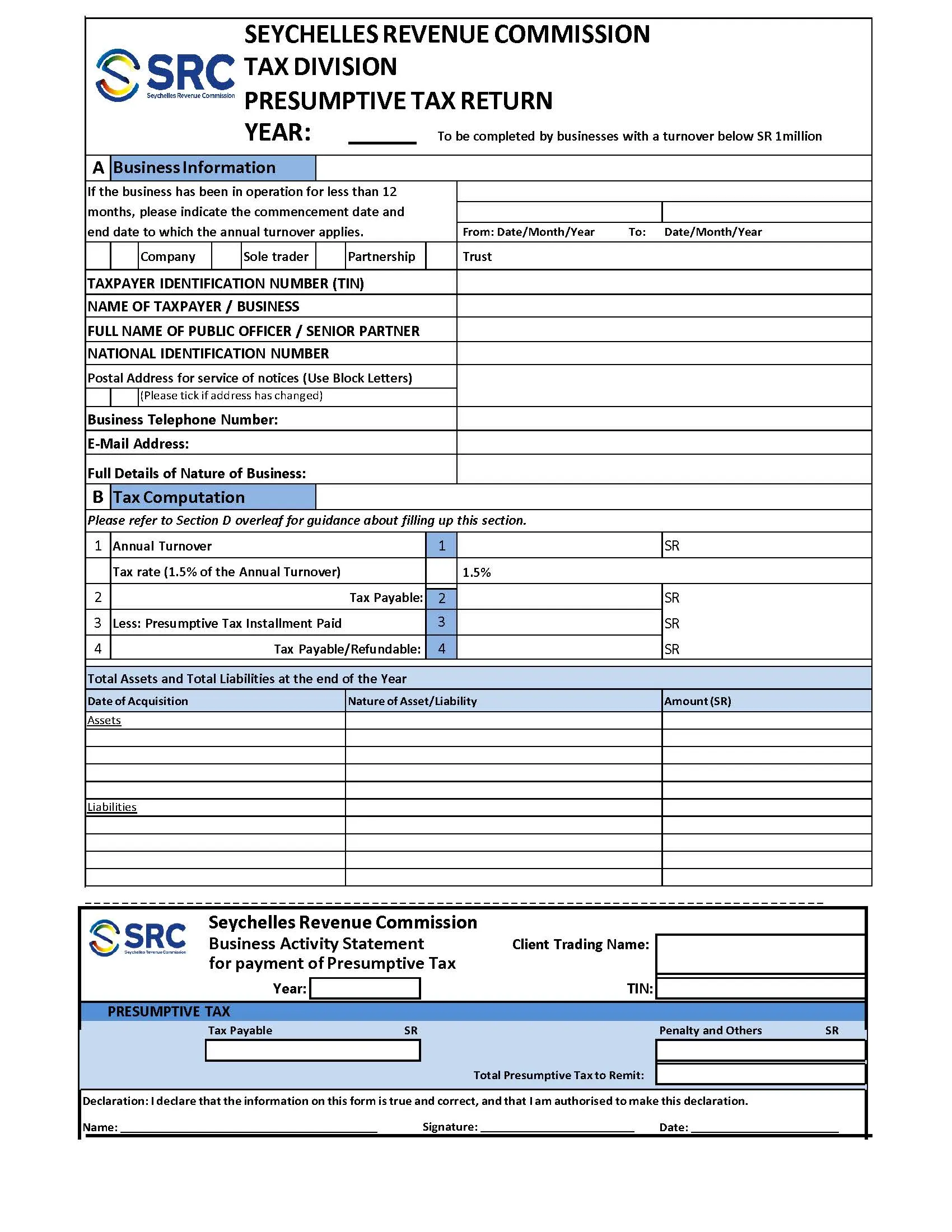
A simplified annual tax return for local microbusinesses with an annual turnover below SCR 1 million.
Requires reporting of total business turnover without detailed expense records or supporting documentation.
Tax is calculated at a fixed rate of 1.5% of the declared turnover.
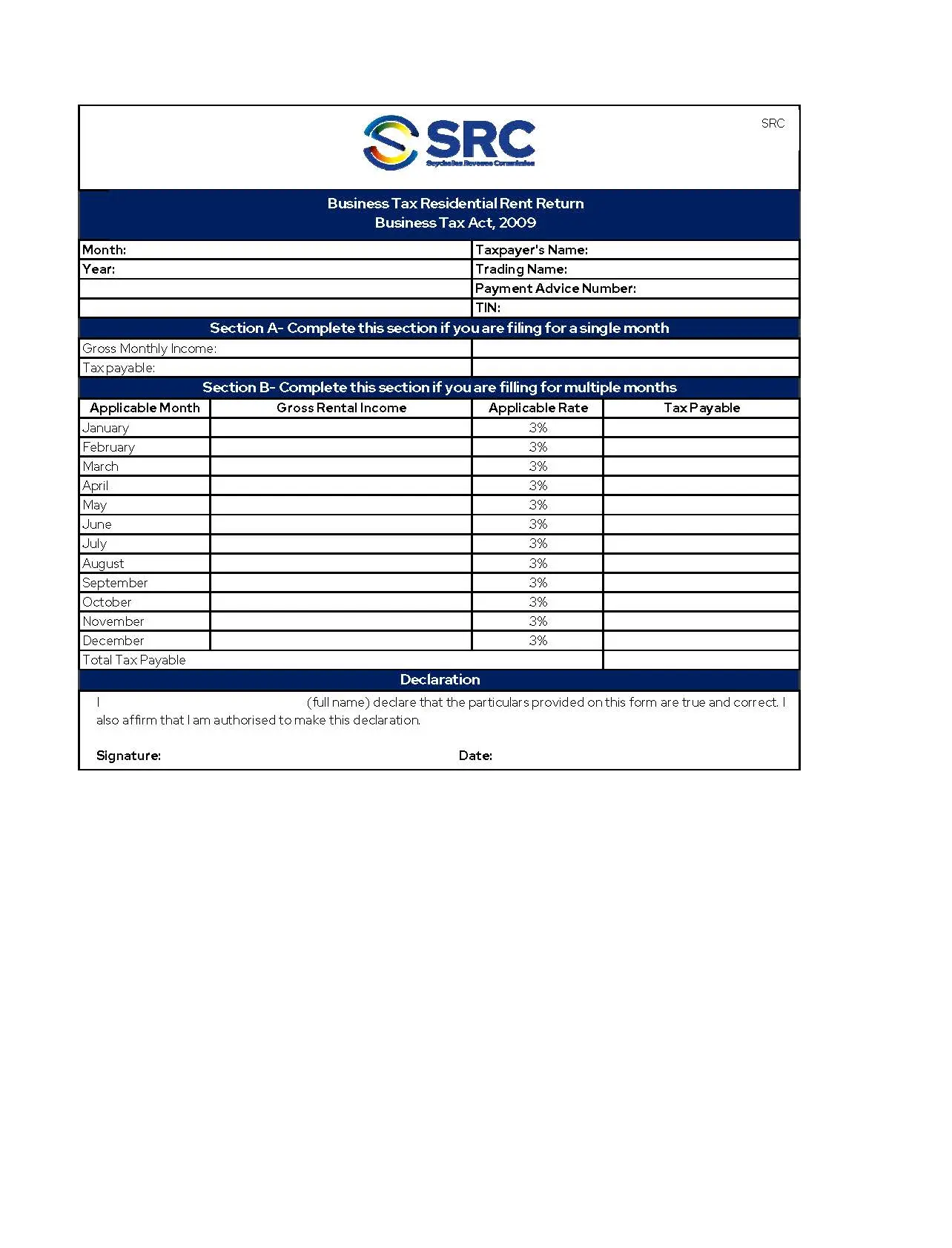
A specialised tax return for individuals deriving income from residential property rentals in Seychelles.
Provides for the assessment of tax at a fixed rate of 3% on gross rental income.
Enables separate reporting of residential rental income from other business income earned by the individual.
An individual achieves tax residency status by satisfying at least one of three statutory conditions: physically residing in the country for 183 days or more within any continuous 12-month window, maintaining a permanent home or domicile in the Seychelles without holding a permanent residence abroad, or holding official status as an “ordinarily resident” individual.
A distinct characteristic of the Seychelles fiscal framework is that personal income tax scaling is dictated by citizenship rather than tax residency status. Foreign nationals (non-citizens) are entirely excluded from the preferential 0% tax bracket and are subject to a flat 15% tax from the first rupee earned, whereas Seychelles citizens qualify for a tax-exempt threshold on monthly incomes up to SCR 8,555.50.
Yes, immovable property tax applies exclusively to foreign nationals. The statutory rate is fixed at 0.5% per annum assessed on the fair market value of the asset.
The tax is levied strictly on residential properties, while commercial buildings and industrial real estate remain fully exempt from this fiscal schedule.