Accounting & Bookkeeping Services
Maintenance of accounting records and systematic archiving of documents
Price
200 USD/hour

Accounting & Bookkeeping
Mandatory. Accounting records must be retained for at least 10 years.
Financial Statements Preparation
Annually
Accounting standards
Chinese Accounting Standards (CAS)
Consolidated financial statements
Required where a company has subsidiaries (if applicable under CAS)
Nil Return Filing
Even if a company has no business activity, it must maintain accounting records and submit mandatory reports
Filing financial statements with the company registry
No
Submitting financial statements to the tax authorities
Yes. Financial information is submitted as part of the annual enterprise income tax filing
Statutory audit
Required only for certain categories of companies
Dormant company status
Chinese law does not provide for an official dormant company status
Tax returns
Filed according to the deadlines applicable to each tax, which may be monthly, quarterly and/or annual
Annual corporate report
Filed annually between 1 January and 30 June
Accounting records are maintained in accordance with Chinese Accounting Standards (CAS).
The company collects all documents evidencing business transactions carried out during the reporting period. These include:
Based on its accounting records, the company prepares annual financial statements in accordance with the applicable accounting standards.
The financial statements are audited by an independent audit firm authorised to conduct audit activities under the laws of the PRC.
During the audit, the auditors examine accounting records, assess the internal control system, verify the proper application of accounting standards and express an opinion on whether the financial statements are reliable. An audit report is issued upon completion of the audit.
Deadline: by 30 April of the year following the reporting year
For companies whose shares are listed on stock exchanges in China, publication of the annual report follows completion of the statutory audit. Disclosure requirements are governed by the Securities Law of the People’s Republic of China, regulations issued by the China Securities Regulatory Commission (CSRC) and the rules of the relevant stock exchange.
The annual report includes audited financial statements, the auditor’s report, information on corporate governance and the internal control system, details of the activities of the company’s governing bodies, material events and other information subject to mandatory disclosure.
Deadline: by 31 May of the year following the reporting year
The annual financial statements form the basis for preparing the annual Enterprise Income Tax Return.
The return is filed electronically with the State Taxation Administration (STA).
Together with the final tax return, the company must submit financial information (financial statements and/or the relevant financial forms) to the extent required by tax legislation.
Deadline: by 30 June of the year following the reporting year
The annual corporate report is filed with the State Administration for Market Regulation (SAMR) through the National Enterprise Credit Information Publicity System (NECIPS).
Some of the information contained in the annual corporate report must be publicly disclosed and is accessible to any interested party through NECIPS.
All companies registered in mainland China are required to prepare financial statements in accordance with the Accounting Law of the PRC, Chinese Accounting Standards (CAS) and other regulations issued by the Ministry of Finance of the PRC.
Financial statements must provide a true and fair representation of the company’s financial position, financial performance, cash flows and changes in equity. They are prepared on the basis of accounting records and supporting source documents and serve as a key source of information for business owners, investors, creditors, government authorities and other interested parties.
Financial statements may be prepared by the company itself or with the assistance of a specialised accounting firm.
The company’s management and legal representative are responsible for the accuracy of its financial statements and the organisation of its accounting.
The People’s Republic of China has a fixed reporting period applicable to all legal entities. Under the Accounting Law of the PRC, the financial (reporting) year coincides with the calendar year, running from 1 January to 31 December.
Accounting and financial reporting in mainland China are carried out in accordance with Chinese Accounting Standards (CAS), which are developed and issued by the Ministry of Finance of the PRC. The CAS framework is broadly aligned with International Financial Reporting Standards (IFRS), but incorporates certain features reflecting Chinese legislation, the regulatory framework and national accounting practice.
Companies registered in the PRC are generally required to apply Chinese accounting standards, irrespective of whether their parent companies use IFRS or other international standards.
The core of the CAS framework is the Accounting Standards for Business Enterprises, ASBE (企业会计准则), which are applied by most commercial entities, including foreign-invested enterprises (FIEs).
Certain small businesses may apply a simplified accounting framework under the Accounting Standards for Small Business Enterprises, ASSBE (小企业会计准则).
These standards are intended to reduce the administrative burden on smaller businesses. They provide simplified rules for the recognition and measurement of assets and liabilities, require fewer disclosures and impose less complex bookkeeping requirements.
The official currency for submitting annual financial statements to the government authorities of the PRC is the Renminbi (RMB).
Where a company’s principal business activities, transactions and settlements are conducted in a foreign currency, it may be permitted to use that currency as its functional currency for day-to-day accounting. At the end of the reporting period, the financial statements must be translated into RMB.
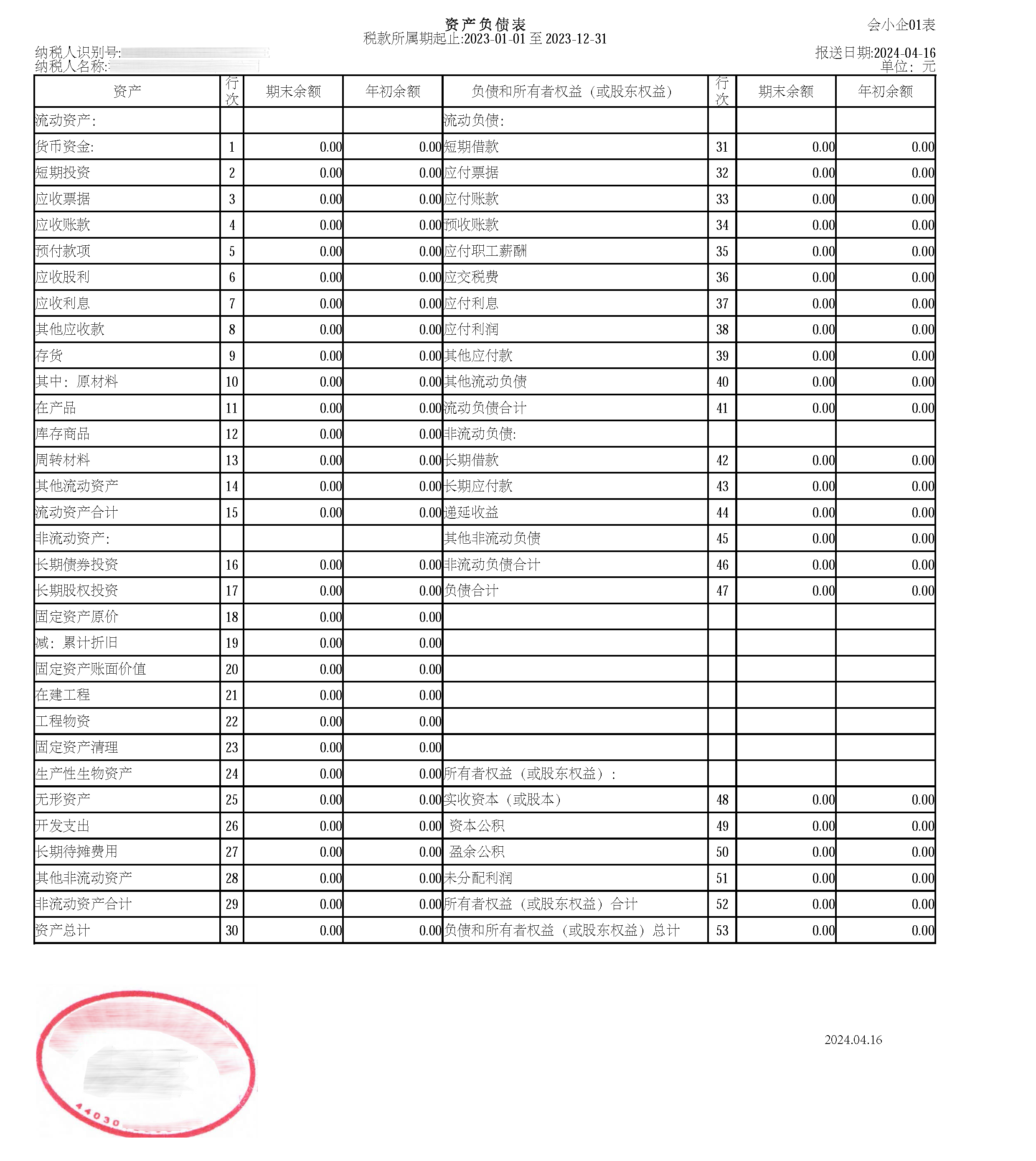
资产负债表
Reflects the structure and composition of the company’s assets, liabilities, and equity as at the reporting date.
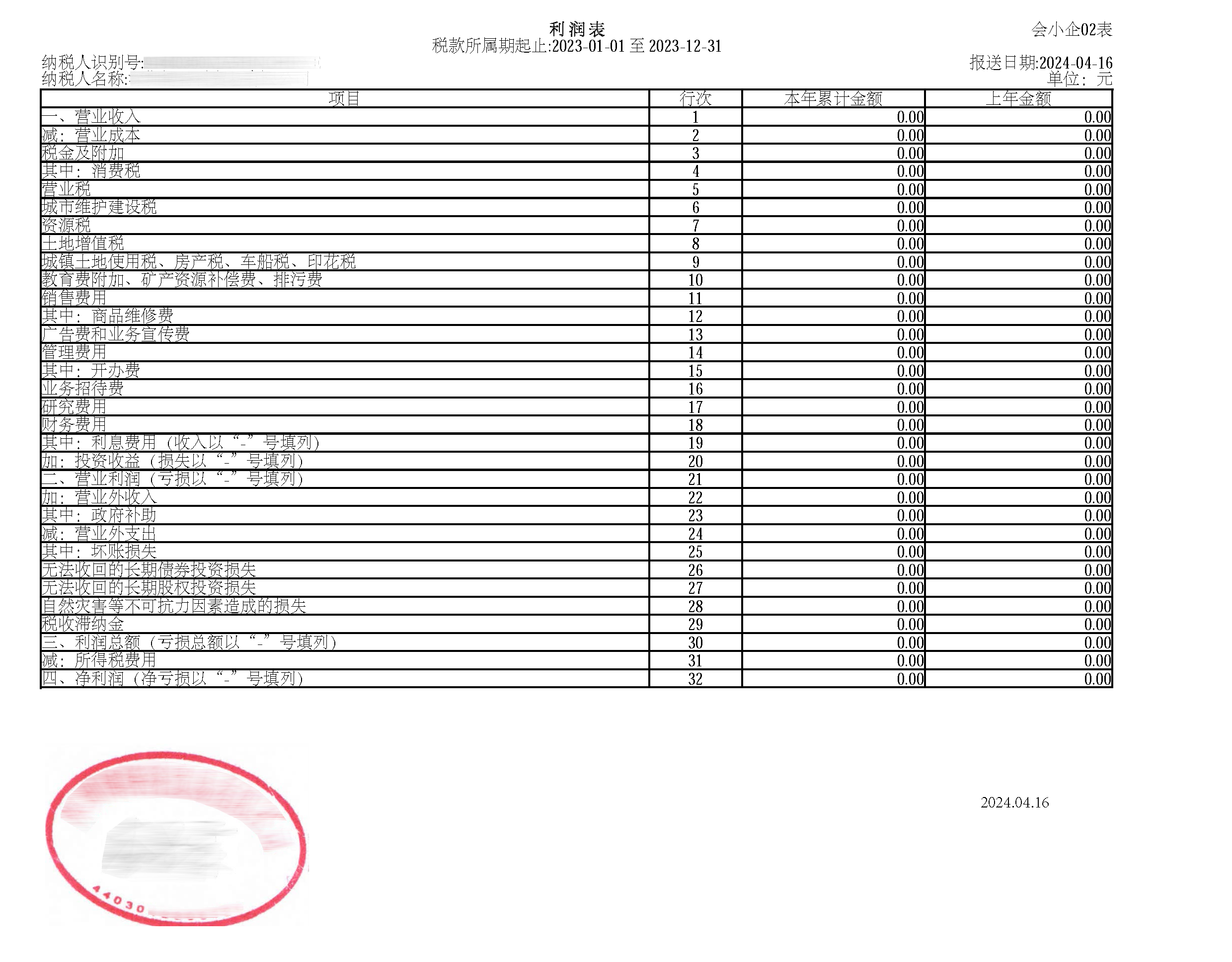
利润表
Provides information on the company’s income, expenses and financial performance for the reporting period.
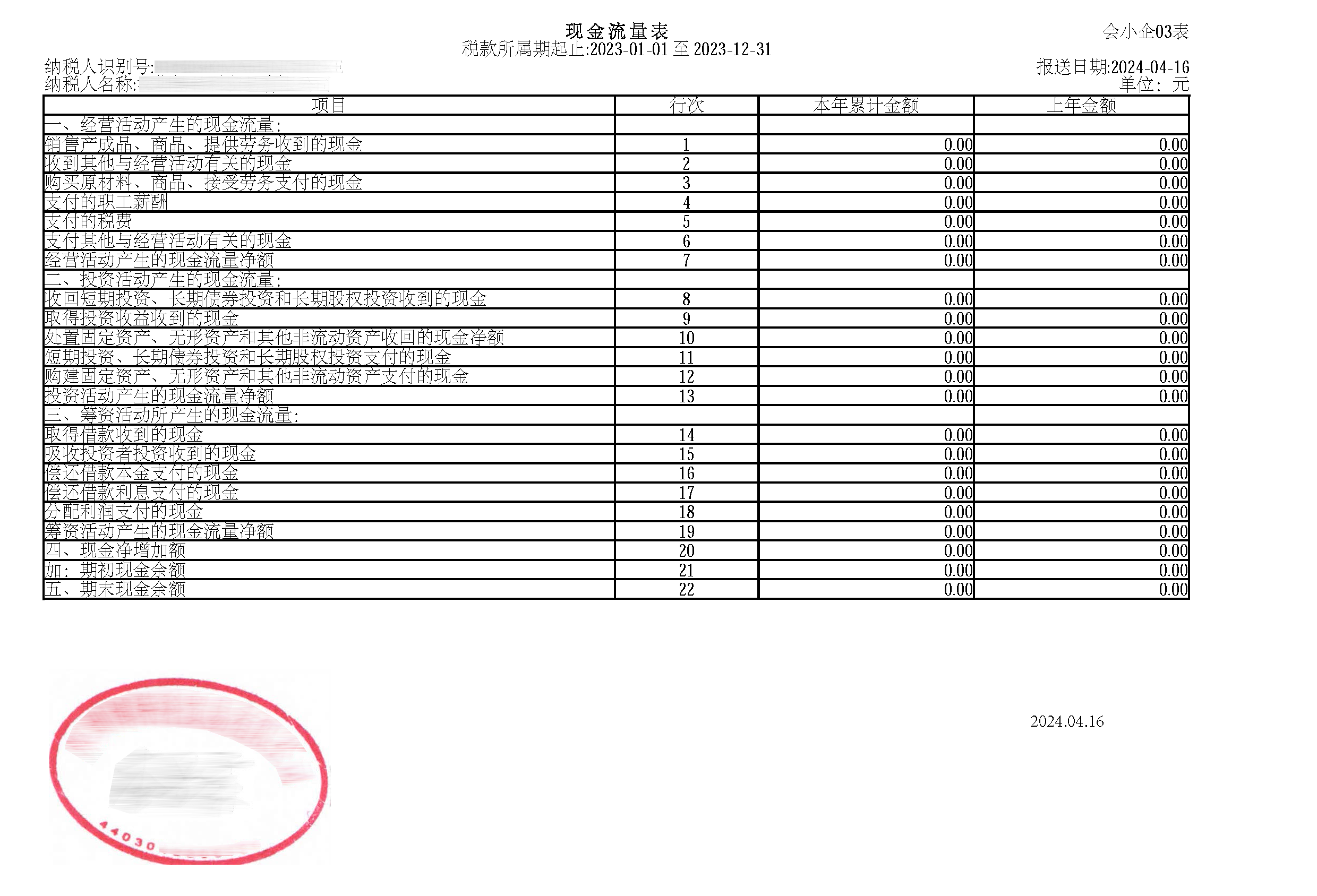
现金流量表
Shows cash inflows and outflows from operating, investing and financing activities.
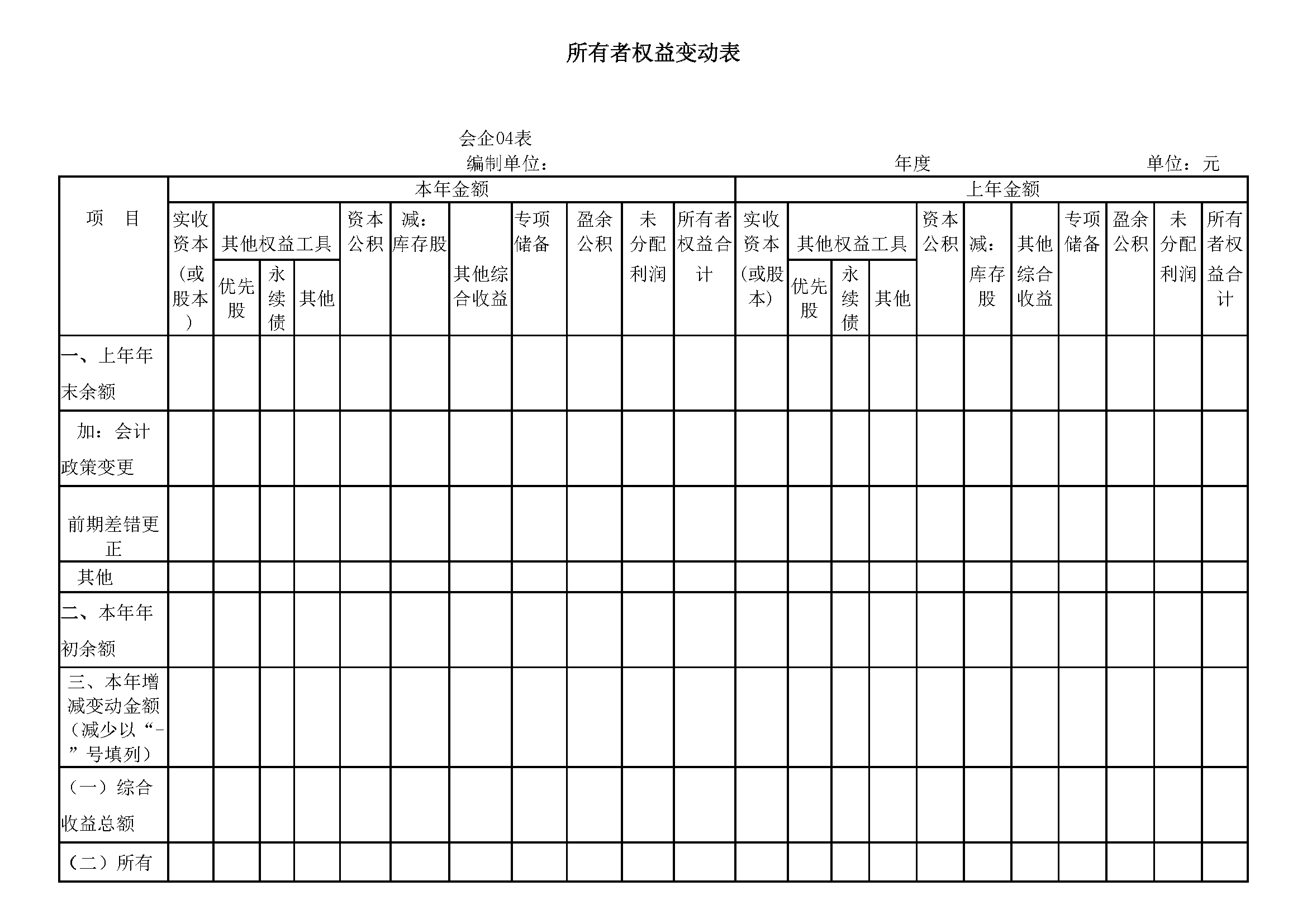
所有者权益变动表
Shows changes in the company’s equity during the reporting period, including profit generated, dividends distributed and other changes in equity.
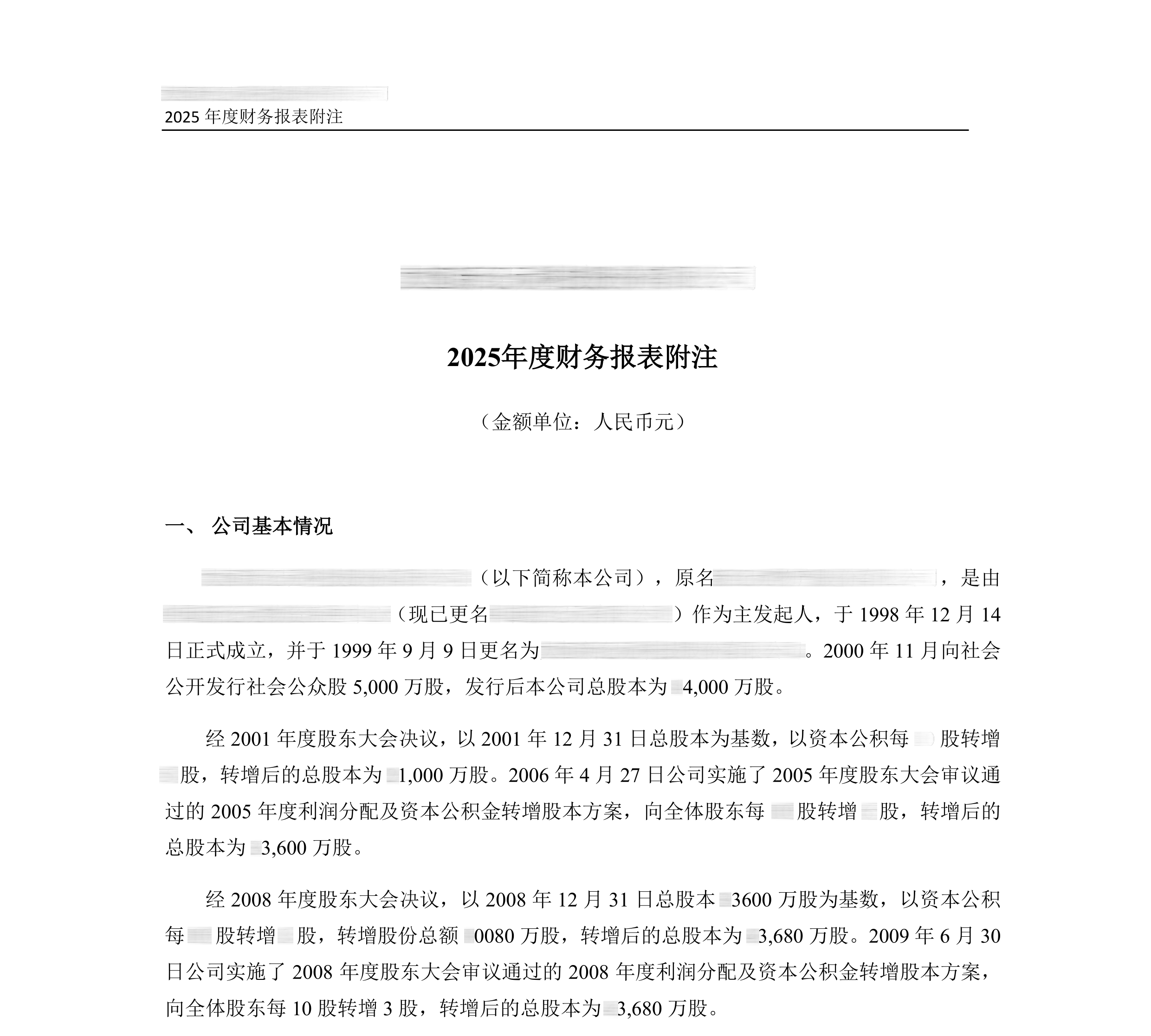
财务报表附注
Form an integral part of the financial statements and provide information on the company’s accounting policies, related parties and other matters necessary for a proper understanding of its financial position.
If a company controls one or more other entities, it is required to prepare consolidated financial statements in accordance with the Accounting Standards for Business Enterprises (ASBE).
The consolidation requirement applies irrespective of whether the subsidiaries are located in China or overseas.
The need for consolidation is determined by applying the control principle, rather than relying solely on the level of ownership interest. A company is considered a parent if it has the ability to:
When preparing consolidated financial statements, intragroup transactions and balances must be eliminated. These include intragroup sales, outstanding balances, dividends, income and expenses, so that the financial statements present the results of the group as a single economic entity.
The calculator provides an estimate of the cost of accounting and audit services for a company. The fee depends on the business turnover, the number of invoices and transactions, the format in which source documents are provided and the scope of services required.
Standardised tax invoices known as fapiao (发票) are recognised as official supporting documents for business expenses in China.
The following categories of companies are subject to mandatory annual audits of their financial statements:
1. Foreign-invested enterprises, including wholly foreign-owned enterprises and joint ventures.
Exception: Representative offices of foreign companies.
They are not subject to a mandatory audit of their financial statements but must comply with the annual financial and tax reporting requirements.
2. Public companies whose securities are listed on stock exchanges in mainland China.
3. Companies operating in certain regulated sectors
(including banks, insurance companies, companies engaged in securities and derivatives trading, investment fund management companies, financial guarantee companies and others).
4.All state-owned enterprises (SOEs) and enterprises with state ownership interests.
5.Companies for which an audit is mandatory under sector-specific regulations or as a condition of obtaining or maintaining a licence.
Financial statement audits in China are conducted by accounting firms licensed to carry out audit activities under the laws of the PRC. Audits are performed by Certified Public Accountants, CPAs (注册会计师) who hold valid professional qualifications and are members of the Chinese Institute of Certified Public Accountants, CICPA (中国注册会计师协会).
Branches of international audit networks, including the Big Four, may conduct audits provided that they are registered and operate in China in compliance with national legislation and hold the required licences.
Financial statement audits in China are conducted in accordance with the audit legislation of the PRC, regulations issued by the Ministry of Finance of the PRC and the Chinese Standards on Auditing, CSA (中国注册会计师审计准则), which are largely harmonised with the International Standards on Auditing (ISA).
Where a company is subject to a mandatory annual audit, the audit must be completed before the relevant financial reporting or disclosure obligations are fulfilled, including the filing of the annual tax return or publication of a public company’s annual report.
A standard audit typically involves several successive stages:
1. Engagement of an audit firm
The company appoints an auditor and agrees on the scope of the audit, the timetable and the list of documents required.
2. Provision of documents
The company provides the auditor with its financial statements, accounting records, source documents, bank statements, tax returns, contracts, corporate documents and other materials required for the audit.
3. Performance of audit procedures
The auditor examines the accuracy of the accounting records, checks whether the financial statements comply with the applicable accounting standard (ASBE or ASSBE), reviews material transactions, assesses the internal control system and, where necessary, sends enquiries to third parties, such as banks or counterparties, and obtains audit evidence.
4. Preparation of the auditor’s report
Upon completion of the audit, the auditor expresses an opinion on whether the financial statements are fairly presented. Depending on the findings, the auditor may issue an unmodified or modified opinion.
| Type of tax | Filing frequency | Who files |
| Value-Added Tax (VAT) | Monthly for general VAT taxpayers; quarterly for small-scale VAT taxpayers |
VAT taxpayers |
| Individual Income Tax (IIT) | Monthly | Employers, acting as withholding agents |
| Enterprise Income Tax (EIT) | Advance returns: quarterly, within 15 days after the end of the relevant period.
Annual return: within five months after the end of the tax year |
All enterprises liable for EIT |
| Real Estate Tax | Generally quarterly, subject to local requirements | Property owners |
| Urban Land Use Tax | Generally quarterly, subject to local requirements | Users of land plots |
| Stamp Duty | As the tax liability arises | Parties to taxable transactions |
| Withholding Tax | When income is paid to a non-resident | Chinese organisations and other withholding agents making payments to foreign legal entities or individuals |
The Annual Enterprise Income Tax Return (中华人民共和国企业所得税年度纳税申报表) is a key component of China’s tax reporting system.
Filing the return involves an annual tax reconciliation (汇算清缴), during which the company’s final tax liability for the reporting year is calculated. This procedure is necessary because Enterprise Income Tax is paid in advance during the year. At year-end, the company must recalculate its tax liability based on its actual income and expenses, applicable tax incentives, carried-forward losses and other adjustments prescribed by Chinese tax law.
Who must file: All companies registered in mainland China, regardless of whether they have conducted business or generated profits, as well as non-resident enterprises operating in China through a permanent establishment, where required under the applicable tax legislation.
Filing deadline: Within five months after the end of the tax year, i.e. by 31 May of the following year.
If a company ceases operations, is liquidated or undergoes a reorganisation before the end of the tax year, the taxpayer must submit the relevant tax returns and complete the final tax settlement within 60 days of the cessation of operations or the occurrence of the relevant event.
Filing procedure:
If a company has not conducted any business, generated any income or incurred any tax liability in respect of a particular tax during a reporting period, it is generally required to file a nil tax return (零申报).
A nil return confirms that there was no taxable amount for the relevant period. It is filed using the same procedure and within the same deadlines as an ordinary tax return.
Even if a company has no business activity, it is still required to maintain accounting records.
Prolonged filing of nil tax returns may attract the attention of the tax authorities and lead to a tax inspection.
Following the entry into force of the Foreign Investment Law of the PRC, the separate annual reporting requirement to the Ministry of Commerce (MOFCOM) was abolished.
Foreign-invested enterprises (FIEs) are required to provide information about their ownership structure. Such information is currently submitted as part of the annual corporate report through the National Enterprise Credit Information Publicity System (NECIPS) and transmitted to the competent government authorities through inter-agency information exchange.
Under the laws and regulations of the PRC, certain categories of companies are subject to reporting and other compliance obligations involving the State Administration of Foreign Exchange (国家外汇管理局).
These may include:
Depending on the nature of their activities, companies may be required to provide information on overseas investments, foreign exchange transactions, capital flows and other matters prescribed by China’s foreign exchange regulations.
In many cases, companies interact with SAFE through their servicing banks, which act as foreign exchange control agents and submit the required information to the competent authorities. Some information is also provided to SAFE through inter-agency data exchange.
В соответствии с Законом КНР о статистике юридические лица обязаны представлять статистические сведения государственным органам статистики в случаях и порядке, предусмотренных законодательством.
Under the Statistics Law of the PRC, legal entities are required to provide statistical information to government statistical authorities in the cases and in accordance with the procedures prescribed by law.
The scope of statistical reporting depends on the company’s business activities, size, industry and other criteria established under the national statistical reporting system. In practice, reports are submitted primarily electronically through specialised information systems operated by the National Bureau of Statistics of China, NBS (国家统计局) or its local branches.
Companies conducting transactions with related parties are required to disclose information about those transactions as part of their annual Enterprise Income Tax return. Where the thresholds prescribed by law are met, they must also prepare transfer pricing documentation (a Master File, Local File and/or Special Issue File). This documentation is retained by the taxpayer and submitted to the tax authorities upon request.
For certain categories of public companies, the board of directors is required to prepare an annual Internal Control Self-Assessment Report (内部控制评价报告). The report discloses the results of the company’s assessment of the effectiveness of its internal control system, risk management and compliance with legal requirements. Where required by law or stock exchange rules, the report is accompanied by a separate auditor’s report on internal control.
Employers registered in China are required to calculate and pay contributions under the mandatory social insurance system, which covers pension insurance, medical insurance, unemployment insurance, work-related injury insurance and maternity insurance. They must also make contributions to the Housing Provident Fund (住房公积金).
During the year, employers generally submit information about their employees, payroll and social insurance contributions on a monthly basis through the electronic systems of the tax authorities or social insurance authorities.
In addition, employers in many regions of China are required to complete an annual adjustment of the social insurance contribution base (社保年度申报). As part of this procedure, the company reports the actual payroll for the preceding year, which is used to recalculate the contribution base for the following contribution period. Following the transfer of social insurance contribution collection and administration functions to the tax authorities, the State Taxation Administration (STA) automatically cross-checks the submitted information against the data contained in Individual Income Tax (IIT) returns.
Yes. Even if a company has not conducted any business activities during the reporting year, it is still required to maintain accounting records, prepare financial statements and comply with the statutory tax and corporate reporting requirements. Where there have been no transactions, a nil tax return is generally filed.
No. All companies registered in mainland China are required to maintain accounting records and prepare financial statements in accordance with Chinese Accounting Standards (CAS). Where necessary, a company may also prepare financial statements under IFRS or other international standards for its owners, investors or parent company. However, this does not replace the statutory financial statements prepared under CAS.
No. In China, the financial year of all enterprises is fixed as the calendar year.
If the parent company uses a different financial year, the Chinese subsidiary is still required to maintain accounting records and prepare financial statements in accordance with Chinese requirements for the period from 1 January to 31 December.
Not for statutory reporting purposes, unless it holds the required audit licence in the PRC. Where a Chinese company’s annual financial statements are subject to a statutory audit, they must be audited and signed by an audit firm licensed to conduct audit activities in China. Foreign auditors may participate only in preparing reports for group reporting or internal purposes.
A company may switch to a fully digital archive if the system used ensures the reliability and integrity of the data. This includes protection against unauthorised alterations, backup facilities, retention of an audit trail and the ability to provide the documents and associated metadata to the tax authorities or auditors upon request.
In practice, this generally requires the use of an ERP or accounting system that meets the requirements of the relevant Chinese regulatory authorities, as well as compliance with the rules governing electronic document management and data retention.
If these conditions are not met, the company must retain paper copies of its accounting documents, including source documents, accounting vouchers and fapiao invoices, for the prescribed retention periods.
An extension of the deadline for filing an annual tax return is possible, but only in exceptional circumstances and where there are valid grounds. The company must apply to the competent local tax authority before the statutory filing deadline expires.
Extension of the filing deadline allows the company to defer the submission of its tax return, but does not defer payment of the tax. It is available only in cases of force majeure that make it impossible to file the return or collect the necessary documents within the prescribed period. The decision is made by the local tax authority. The extension is generally granted for one month.
Deferral of tax payment allows the company to postpone payment of the tax after filing the return. It is available only where valid grounds exist, such as force majeure resulting in substantial losses or a shortage of funds after the payment of wages. The application must be approved by the provincial-level tax authority. The maximum deferral period is three months.
If a return is filed late without an approved extension, the company may be subject to administrative fines and other tax enforcement measures.
If a company discovers an error after filing its financial statements or tax returns, it may make the necessary corrections. The procedure depends on the nature of the error and the type of report concerned.
As a rule, errors in tax returns are corrected by filing an amended tax return. Any additional tax due and the applicable late payment surcharges must also be paid, where necessary.
If the error affects the financial statements, the company must make the appropriate adjustments to its accounting records in accordance with Chinese Accounting Standards. In certain cases, it may also be necessary to resubmit the financial statements or notify the relevant government authorities.