GSL / Offshore / Offshore / South & Southeast Asia / Indonesia

Company Registration in Indonesia - Business Starting & Setup

Company registration in Indonesia provides an entry point to the largest markets in Southeast Asia. Foreign investors can utilize structures with full foreign ownership, known as PT PMA. Our team delivers comprehensive support across all stages of the incorporation process, from selecting the optimal legal form, obtaining necessary business licenses, and liaising with local regulators to opening corporate bank accounts, accounting, and tax filing. The standard company registration timeframe is 2 to 5 weeks. Our practical expertise and deep understanding of the local regulatory landscape ensure that your incorporation process is handled efficiently and aligned with your long-term business goals.

Expand description »

Service Packages

Pros and Cons of Doing Business in Indonesia

Benefits of Company Registration in Indonesia

  • Large Domestic Market and Access to ASEAN

A population exceeding 270 million and a growing middle class drive high demand for goods and services. Stable economic growth and active foreign investment attraction are further supported by free trade zones and export incentives, providing seamless access to all ASEAN markets.

  • Full Foreign Ownership

In a wide range of industries, 100% foreign participation is fully permitted through a foreign direct investment company (PT PMA).

  • Compliant Whitelisted Jurisdiction

Indonesia is a fully cooperative jurisdiction and is not blacklisted by major international bodies, including the EU, FATF, and OECD.

  • Local Onshore Banking Setup

It is entirely feasible to establish a corporate structure where the country of incorporation aligns with the country of bank account opening, matching the compliance demands of most international counterparties. However, a personal visit to the bank by the director or shareholder is mandatory.

  • Tax Incentives for Priority Sectors

Significant tax holidays, allowances, and government support are available for manufacturing, digital technologies, and green energy projects.

  • Flexible Corporate Structure Requirements

Non-residents can act as shareholders and executive officers, and the participation of foreign legal corporate entities is fully permitted.

  • Double Taxation Treaty Network

Indonesia maintains an extensive network of double taxation treaties, simplifying cross-border calculations and minimizing tax friction.

Challenges of Indonesia Registration

  • High Share Capital Requirement

Foreign direct investment companies face substantial statutory capital requirements, with a mandatory minimum authorized share capital of 10 billion IDR.

  • SME Protectionism

The domestic regulatory framework aggressively protects small and medium-sized enterprises, restricting foreign investors from entering lower-tier trading and service sectors.

  • Foreign Equity Restrictions

Certain strategic industry sectors remain partially or completely closed to foreign capital. Investors must screen their business activities against the Positive Investment List to determine eligibility and maximum permitted shareholding thresholds.

  • Standard Corporate Tax Burden

Companies are subject to standard corporate income tax and VAT regimes, with mandatory statutory reporting compliance enforced even for entities with zero operational activity.

  • No Corporate Redomiciliation

The Indonesian corporate legal framework does not recognize inbound or outbound corporate redomiciliation (cross-border migration).

Under the Investment Law (Law No. 25/2007), all foreign direct investments in Indonesia must be structured via the incorporation of a local legal entity. Consequently, establishing a standard commercial branch office capable of trading and generating local revenue is legally prohibited for foreign companies. Exceptions are strictly limited to the construction sector (BUJKA – a foreign corporate branch allowed to participate in high-value tenders exclusively via joint ventures with local entities) and branches of foreign commercial banks subject to central bank regulations.

Governing Laws and Authorities

Company registration and operation are regulated by the following key laws:

  • Law No. 40 of 2007 concerning Limited Liability Companies (UU PT) (with respect to corporate governance).
  • Law No. 25 of 2007 concerning Investment (with respect to foreign capital requirements for PT PMA).
  • Omnibus Law No. 6 of 2023 on Job Creation (risk-based licensing and digitalization).
  • Limited Liability Companies Law No. 40/2007 (UU PT) governs corporate structuring and governance.
  • Investment Law No. 25/2007 regulates foreign capital mandates for PT PMA structures.
  • Job Creation Omnibus Law No. 6/2023 implements risk-based licensing and digitized administration.

The regulatory oversight for foreign-owned companies is shared between the Ministry of Law and the Ministry of Investment.

Ministry of Law of the Republic of Indonesia

Kementerian Hukum Republik Indonesia

The Directorate General of General Legal Administration (Ditjen AHU) under the Ministry of Law is the official government body responsible for approving company registrations and maintaining the statutory corporate registry via its centralized online platform, the SABH module (Sistem Administrasi Badan Hukum). This specific section of the AHU system manages corporate filings for limited liability companies, foundations, and associations.

While public registry searches are accessible to external users, data entry, initial company formation, and mandatory filing updates can only be executed by a licensed Indonesian notary public.

The official registry portal ahu.go.id is strictly protected by geographical blocking (geoblock) and can only be accessed from within Indonesia or via an Indonesian VPN node.

Ministry of Investment and Downstreaming / BKPM

Kementerian Investasi dan Hilirisasi / BKPM

The Ministry of Investment (officially renamed as the Ministry of Investment and Downstreaming; formerly known as the Investment Coordinating Board, BKPM) serves as the principal state regulator supervising and coordinating all inbound foreign direct investments (FDI) and domestic investments across the jurisdiction.

Key Functions of the Ministry
  • Enforces minimum investment plan mandates for foreign direct investment companies. The statutory requirement stands at 10 billion IDR for each distinct business activity code (KBLI), with at least 25% paid up as authorized share capital. In specific sectors, grouping multiple related KBLI codes under a single investment plan is permitted.
  • Verifies foreign equity eligibility against the Positive Investment List, determining whether the chosen activity allows 100% foreign ownership or is subject to restrictions, such as mandatory local partnerships or maximum foreign equity caps restricted to 49% or 67%.
  • Manages corporate onboarding through the centralized Online Single Submission (OSS) platform. The system issues core operational credentials, including the Business Identification Number (NIB), standard commercial licenses, and certificates of compliance, tailored to the specific risk tier of the business (low, medium-low, medium-high, or high risk).
  • Supervises the mandatory quarterly submission of the Investment Activity Report (Laporan Kegiatan Penanaman Modal – LKPM), which serves as the primary government oversight tool. All foreign investment companies must declare actual capital inflows, local job creation, machinery procurement, and adherence to the project implementation timeline. Failure to submit LKPM reports results in the administrative revocation of the company’s business licenses.
  • Coordinates the corporate quota for hiring expatriates (RPTKA). While the Ministry of Manpower officially issues the work permits, the Ministry of Investment must formally endorse the company’s operational need for foreign specialists based on the overall scale of the verified investment plan.

Corporate Structure of a PT PMA Company

Public Access

Director

Minimum 1 director

Individual only

Resident or non-resident

! A non-resident director must obtain a valid work permit and residency visa (KITAS) to manage operations within Indonesia.

Director data is entered into the state registry (AHU) and is accessible to third parties via a paid official registry extract.

Public Access

Board of Commissioners

Minimum 1 individual

Resident or non-resident

Performs a supervisory function over the director and bears joint and several liability

The sole commissioner cannot simultaneously act as the sole director.

Commissioners’ data is entered into the state registry and is accessible to third parties via a paid official registry extract.

Public Access

Shareholders

Minimum 2

Individual or corporate, resident or non-resident

Shareholder data is entered into the state registry and is accessible to third parties via a paid official registry extract.

Non-Public

Beneficial Owner

Mandatory disclosure is required, and data is accessible only to authorized users upon a statutory fee payment (disclosing full names and correspondence addresses).

The registry operates on a conditionally closed basis.

Ultimate Beneficial Owners Register

The UBO register in Indonesia is officially called Data Pemilik Manfaat (Beneficial Ownership Data) and is integrated into the AHU Registry system, hosted on a dedicated subdomain bo.ahu.go.id.

The general public can only access compliance status indicators, verifying whether the company has successfully filed its mandatory UBO declaration. Detailed ownership records, including passport data, are restricted strictly to state authorities. Private parties may request this information only upon demonstrating a legitimate legal interest under public information disclosure rules.

The UBO declaration must be submitted to the Ministry of Law annually, even if the beneficial ownership structure remains unchanged. Failure to file results in an immediate administrative block on any future corporate charter amendments.

Although the state UBO registry is legally closed to direct public downloads, commercial corporate intelligence aggregators offer paid ownership reports. They compile this data based on public shareholder chains; therefore, the actual name of the ultimate beneficiary will only appear if they hold shares via direct ownership.

Criteria for Determining Beneficial Ownership in Indonesia

A beneficial owner in Indonesia is defined as an individual (natural person) who satisfies at least one of the following criteria:

  • holding more than 25% of the company’s shares;
  • controlling more than 25% of the voting rights;
  • receiving more than 25% of the annual net profits;
  • holding the right to appoint or remove directors or members of the board of commissioners;
  • holding the right to exercise control over the company without formal ownership (via private agreements).

Share Capital and Shares of a PT PMA

Minimum Authorized Capital
10 billion IDR, the mandatory minimum investment plan (~ $630,000 USD). This amount is multiplied by the number of distinct business activity codes (KBLI).
Minimum Issued / Paid-up Capital
25% of the authorized capital must be paid up upon incorporation via shareholder contributions or reinvestment of profits. Capital can be utilized to cover operational expenses.
Share Types
The issuance of bearer shares or shares with no par value is strictly prohibited.

12-Month Paid-up Capital Utilization Obligations

The paid-up share capital cannot be withdrawn from the company’s bank account within 12 months from the date of deposit. However, there is no rigid freezing of funds; the company is fully permitted to spend the capital on asset acquisition, office lease, construction, and operational expenses. This commitment is undertaken by the company based on a self-declaration submitted during the business license application process.

Company Registration Procedure for a PT PMA

1

Determining the Company Name and Structure

  • To reserve a corporate name, at least 3 options must be submitted for a uniqueness check via the online AHU system.
  • Names must be written in Latin characters, start with the abbreviation “PT”, contain at least 2 words, reflect the core business activity, and cannot be identical to an existing company name.
  • Identification of shareholders, board of directors, and commissioners (a valid passport copy is required for each individual).
  • Distribution of shares among the shareholders.
  • Types and geographical regions of the proposed business activities.
2

License Selection and Risk Assessment

All business activities in Indonesia are classified into specific activity codes known as KBLI. Only a portion of these codes currently permits the registration of a foreign direct investment company (PT PMA). Furthermore, all business activities in Indonesia are categorized by risk level (low, medium-low, medium-high, or high risk).

Foreign investors must screen their project against the Positive Investment List, which outlines sectors that are fully or partially closed to foreign investment.

3

Preparation of the Incorporation Document Package

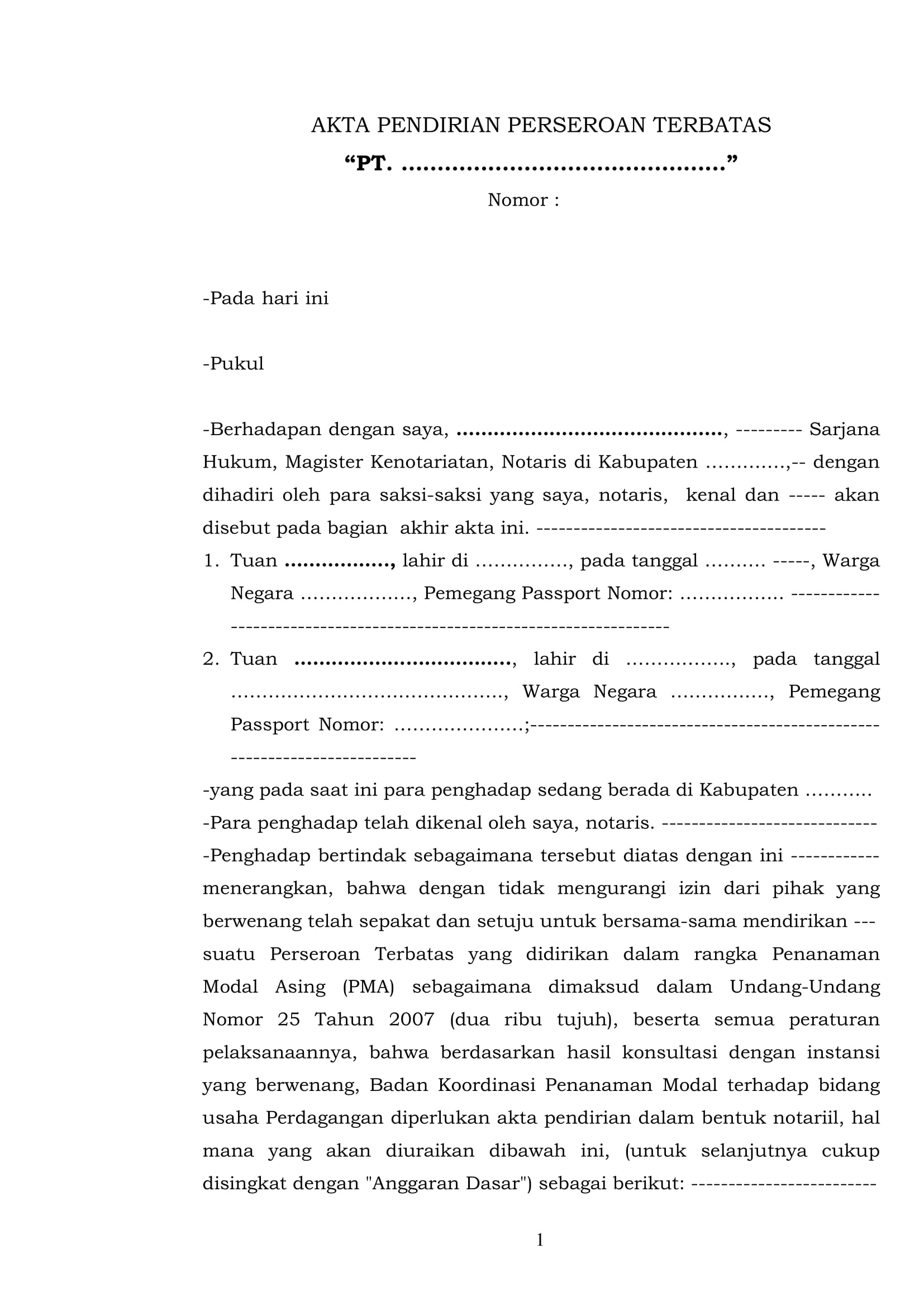
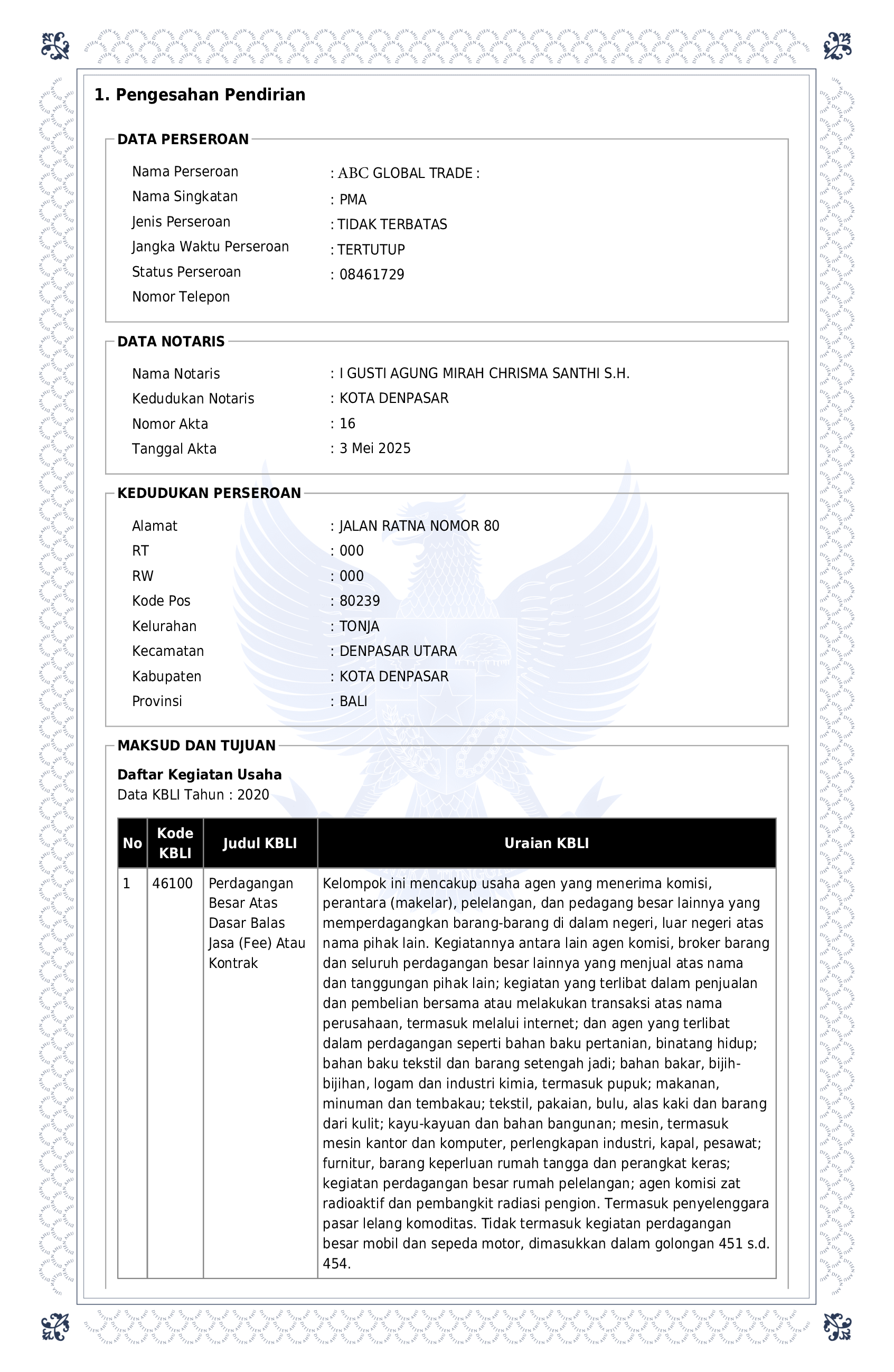
The company’s Articles of Association are drafted in the form of a notarized Deed of Establishment in the Indonesian language. The Deed of Establishment defines the primary corporate structure, business activities according to KBLI codes, the amount and distribution of share capital, and the procedures for convening meetings of shareholders, directors, and commissioners. The Deed of Establishment can be amended or supplemented via a special corporate resolution.

4

Approval of Company Registration

The notary public submits the Deed of Establishment to the Ministry of Law online via the AHU portal for official registration in the state registry.

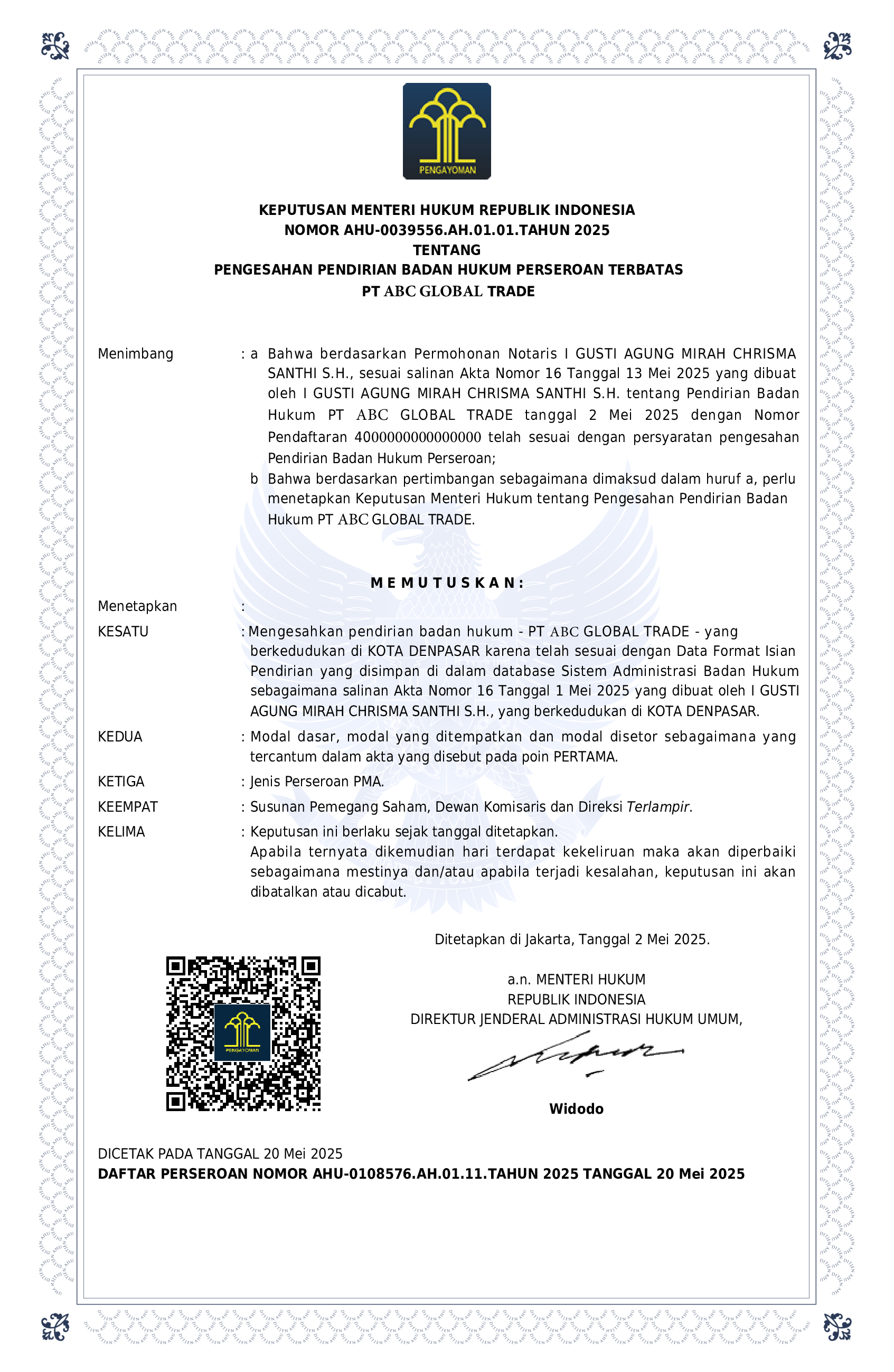
The Ministry issues the Certificate of Approval of Incorporation (SK Kemenkumham), from which date the company officially begins its legal existence.

5

Obtaining the Business Identification Number (NIB)

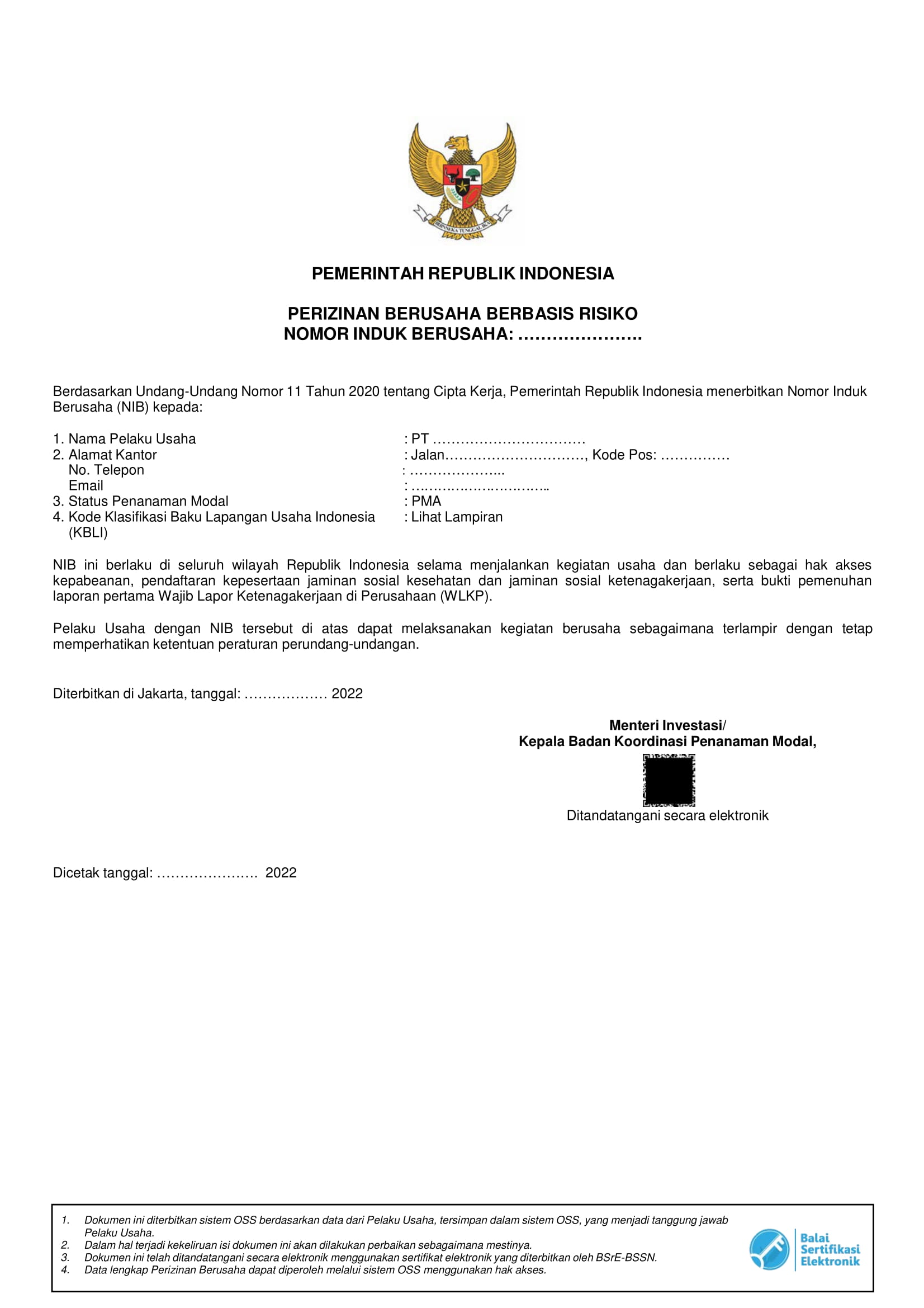
Data from the Ministry of Law is automatically integrated into the centralized state system known as OSS. OSS (Online Single Submission) is the unified licensing platform that issues the company’s Business Identification Number (NIB, Nomor Induk Berusaha).

The issuing authority is the Ministry of Investment (formerly the BKPM). The NIB serves as the official corporate registration number, a basic business license, and registers the company within the customs and social security frameworks.

6

Automatic Tax Registration

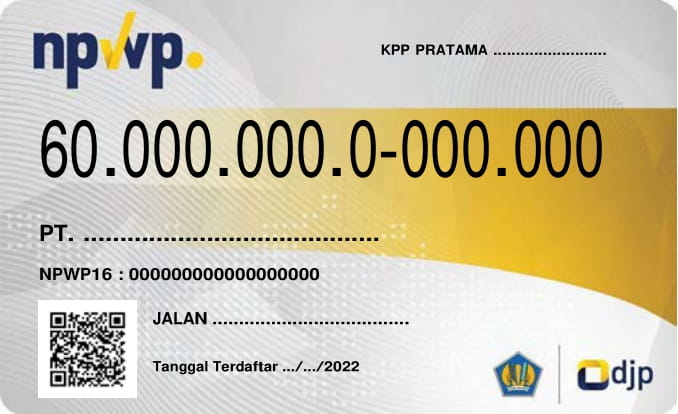
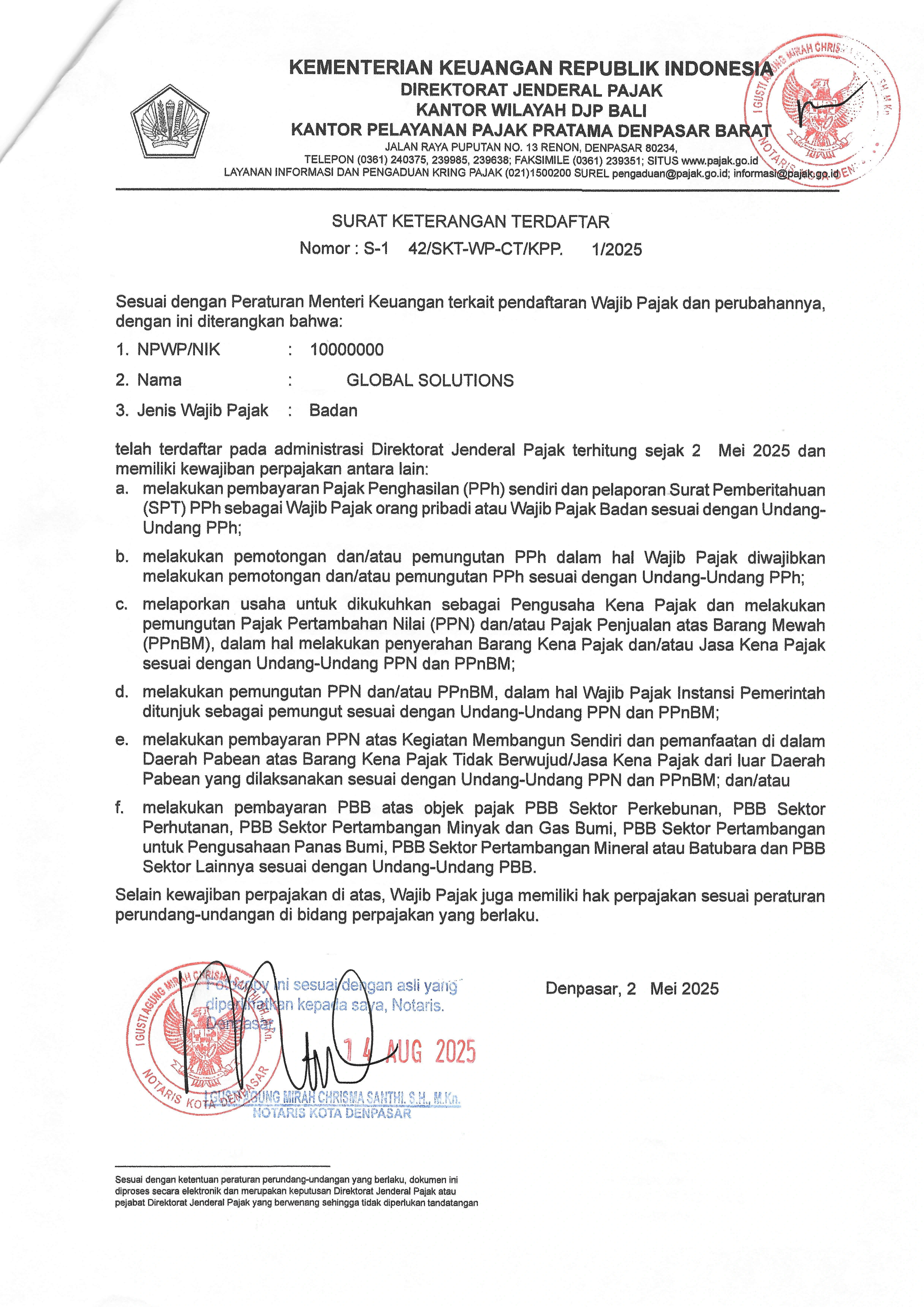
The company’s Tax Identification Number (NPWP, Nomor Pokok Wajib Pajak) is generated automatically along with the NIB through the OSS platform. A separate visit to the tax office is not required. The company receives via email:

  • the Tax Registration Card (NPWP) and
  • the Certificate of Tax Registration.
7

Commercial and Sectoral Licenses

Depending on the risk tier assigned to the chosen KBLI codes and the industry sector, additional operational licenses may be required, which are issued by profile ministries via the OSS system. The company receives:

Risk-Based Business License specifying the company’s identification data and permitted Indonesian economic activities (KBLI).

8

Account Opening and Capital Deposit

  • Opening a corporate bank account with a local bank requires the submission of the tax ID (NPWP), the business identification number (NIB), and the Deed of Establishment. At least 25% of the authorized share capital must be deposited into the account. The personal physical presence of the director is mandatory.
  • Subsequently, an account can be opened with an overseas bank, which will require apostilled corporate documents, proof of address, and beneficial ownership records (typically disclosing owners holding ≥10% of shares).
9

Apostilling Corporate Documents

For future use outside of Indonesia, the core corporate documents of the company must be apostilled. The apostille is usually affixed to certified copies of the company documents to grant them legal validity in foreign jurisdictions.

Documents are then translated into the target language with notary certification.

Company Registration Timeframe
10 business days, plus time for specialized licensing if required
Remote Registration
Available without travel
Shelf Companies
Available

Corporate Documents

Company Registration in Indonesia

Setting Up a Company (PT PMA) in Indonesia.
from USD 8 810

Setting Up a Company (PT PMA) in Indonesia. Service offer

Business Licensing in Indonesia

All business activities in Indonesia are regulated under specific classification codes known as KBLI. The Positive Investment List, enacted under Presidential Regulation No. 10/2021 (amended by No. 49/2021), dictates which business sectors are fully open (100% equity), restricted (49%–67% foreign equity cap), or completely closed to foreign direct investment.

Sectors not explicitly restricted or prohibited are 100% open to foreign ownership and include:

  • Wholesale Trade (both domestic and international).
  • Large-scale Service Companies (e.g., establishing a small café is prohibited, whereas opening a large-capacity restaurant is fully permitted).
  • Technology Sectors (software development, web portals, and digital platforms).
  • Manufacturing and Industrial Enterprises.

The statutory minimum investment requirement of 10 billion IDR applies per KBLI code. Grouping related codes under a single investment plan is allowed, but requires a preliminary legal assessment.

The Indonesian Government prioritizes foreign direct investment strictly for large-scale business development. The domestic regulatory framework enforces aggressive protectionism over micro, small, and medium-sized enterprises (MSMEs), legally barring foreign investors from establishing lower-tier corporate structures.

2026 Bali Regional Investment Restrictions

The Bali Investment Department has officially closed KBLI code 70209 (management consulting) to foreign equity participation. Local authorities are currently reviewing restrictions on additional sectors, including real estate development, catering, wellness, and recreational services. Incorporating entities now requires compliance verification against both the national Positive Investment List and specific provincial-level directives.

Risk-Based Business Classification

The Indonesian risk-based licensing framework categorizes each 5-digit KBLI code into one of four distinct risk tiers. This classification dictates specific regulatory approvals and statutory compliance obligations for corporate operations:

  • Low Risk requires only a Business Identification Number (NIB). No additional operational licenses or sector-specific permits are needed. This tier covers standard trading operations, consultancy practices, software development, and holding companies.
  • Medium-Low Risk requires an NIB and a statutory Standard Certificate (Sertifikat Standar), which is initially issued based on a corporate self-declaration of compliance. This tier applies to non-specialized wholesale trade, real estate leasing, specific distribution sectors, and service-oriented firms.
  • Medium-High Risk requires an NIB and a verified Standard Certificate formally inspected and approved by the relevant sector-specific ministry. Examples include mid-to-large-scale hospitality operations and specialized manufacturing.
  • High Risk requires full statutory licensing from the profile state ministry, alongside strict compliance with employment quotas, production capacities, and technical audits.This tier governs heavy industry, energy sectors, specialized manufacturing, and virtual asset operations.

Critical Regulatory Update 2026

Following the transition to the national economic activity classification (KBLI 2025), enacted under Ministry of Statistics Regulation No. 7/2025 to align with the international ISIC Rev. 5 standard, all companies in Indonesia must review and update their registered codes within the OSS system.

This overhaul includes code consolidation, risk-tier reclassification, and the introduction of specialized codes for digital economy sectors and green energy. It also enforces strict mandates requiring ancillary income-generating codes to be re-registered as primary activities, which may necessitate formal amendments to the company’s Deed of Establishment.

If your company was incorporated prior to 2026, the statutory deadline to update corporate records and align charter documents with the new framework was June 18, 2026. If your entity has not yet completed this transition, immediate remediation is required to avoid administrative license suspension and blocks on expatriate work permit renewals.

Corporate Services & Pricing

Cost of Company Registration in Indonesia

The total cost of purchasing a company consists of registration fees, annual maintenance fees (payable one year in advance at the time of registration), the cost of the corporate documents package, and courier delivery to the destination.

Registration

Including the preparation and provision of original corporate documents, government fees, apostilled copies of such documents, share issuance documents, and the company seal, EXCLUDING compliance.
Price 4 800 USD

Annual Maintenance

payable from the first renewal onward; including provision of the registered office address and Company Secretary services; excluding financial reporting and accounting services; EXCLUDING compliance
Price 3 850 USD

Courier Delivery

DHL or TNT
Price 275 USD

Client Due Diligence / Compliance Fees

Payable in cases of: company registration, company renewal, company liquidation, transfer to a new agent, issuance of a Power of Attorney to a new attorney, change of director / shareholder / beneficial owner (except for changes to a nominee director / shareholder), signing of documents

Standard Rate for a Corporate Entity

includes compliance check for 1 individual
Price 440 USD

Each Additional Individual or Corporate Entity Being a GSL Client

Price 200 USD

Each Additional Corporate Entity Not Being a GSL Client

Price 263 USD

Compliance Check for High-Risk Category Companies

includes compliance check for 1 individual
Price 550 USD

Signing of Documents

per 1 document
Price 135 USD

Registered Office

All companies in Indonesia must maintain a registered office address. Using a simple registration agent’s address or a P.O. Box is legally prohibited; a verified physical location is required for receiving statutory notices, official correspondence, and tax documentation. The address must fulfill the following regulatory criteria:

  • Commercial Zoning Compliance: the address must be situated within a designated commercial zone according to local spatial zoning regulations (RDTR). Registering a company at residential houses, apartments, or villas is prohibited.
  • A physical company signboard displaying the official corporate name exactly as stated in the Deed of Establishment must be prominently installed at the entrance of the office or the business building.
  • The company must secure a formal lease agreement or property ownership certificate, along with official tax invoices or payment receipts for the rent.
Virtual Office Solutions

For startups, holding entities, and service-oriented firms classified under the Low Risk tier, renting a Virtual Office is the most cost-effective solution. This is a legitimate legal arrangement provided by certified business centers, granting the company an official registered address, mail handling services, a dedicated telephone line, and conditional access to meeting facilities. The virtual office provider is required by law to verify the tenancy to tax authorities upon request. However, a virtual office structure cannot be used to station physical staff.

Physical Office and Economic Substance

Companies engaged in import-export operations, international trade, tourism, or manufacturing are legally prohibited to use virtual offices and must lease a unique physical office space (warehouse or commercial unit). A dedicated physical office is a prerequisite for registering for VAT (PKP), without which customs clearance of cargo in Indonesia is impossible.

Compliance with economic substance mandates is heavily enforced via unannounced Field Verifications. The Directorate General of Taxes and the Directorate General of Immigration regularly conduct surprise inspections to verify the actual existence of working desks, signboards and local staff.

The following corporate records must be maintained at the registered office:
  • The original Deed of Establishment, operational licenses, and government registration certificates
  • Statutory registers of directors, commissioners, shareholders, and beneficial owners (UBOs)
  • Minutes of corporate meetings and shareholder resolutions
  • Financial statements, ledgers, and primary accounting records
  • Copies of monthly and annual tax returns and compliance reports.

Corporate Seal

While Indonesian corporate law does not regulate the design or usage of a corporate seal, standard local business practice among banks, notaries public, and government agencies mandates its application. The text of the seal must include the company’s official name and its legal form (PT PMA). All official corporate documentation must be executed with the joint application of the director’s signature and the corporate seal.

Investor & Working KITAS in Indonesia

Indonesia provides foreign entrepreneurs and specialists with a structured residency framework to ensure full operational compliance within the jurisdiction.

For short-term commercial entry, the Category C2 Business Visa permits a stay of 60 to 180 days. It prohibits local employment and is designed for market research, corporate negotiations, and partner scouting prior to incorporation.

Foreign Directors and Local Labor Mandates

While Indonesian corporate law permits the appointment of non-resident directors, their physical operations within the country impose strict immigration obligations based on equity status:

1. Equity-Based Directors owning a share of at least 10 billion IDR of the company’s capital are eligible to an Investor KITAS issued for a standard term of 2 years. This exempts the company from local labor hiring quotas.

The person holding an Investor KITAS is fully authorised to manage the company, sign contracts, and operate corporate bank accounts. However, it strictly prohibits engaging in day-to-day linear operational work (e.g., direct sales or manual services).

To mitigate severe regulatory risks during immigration audits, the company must officially employ Indonesian citizens in key operational and execution roles.

Performing unauthorized operational tasks under an Investor KITAS constitutes a serious statutory offense, resulting in financial fines, immediate deportation, and an entry ban.

2. Working KITAS is mandatory for foreign directors who function as hired executives without meeting the minimum required investment threshold. Managing the company remotely from abroad without a KITAS is legally permissible. However, a non-resident director cannot operate corporate bank accounts or execute physical operational duties, including mandatory tax representations.

Applicants for a Working KITAS must provide verified proof of expertise, including legalized university diplomas and professional certifications.

To protect the domestic market, the Ministry of Manpower enforces a strict staffing ratio: the company must employ between 3 and 10 Indonesian citizens for every 1 expatriate worker, depending on the economic sector.

Obtaining a valid residency permit (KITAS) is an absolute mandatory prerequisite by Indonesian banks to complete corporate bank account onboarding.


Need Assistance with Registration in Indonesia?

Residence Permit in Indonesia

Obtaining a residence permit in Indonesia. Organization and support of the procedure.
from USD 3 850

Obtaining a residence permit in Indonesia. Organization and support of the procedure. Service offer

What aт Indonesian Company is Best Suited For

Export-Import and Logistics

The largest economy in Southeast Asia with massive resource extraction (coal, nickel, palm oil) and a growing manufacturing sector. The Indonesian Government grants incentives for establishing local processing factories rather than exporting raw materials. Strategically located at the intersection of major maritime routes (Malacca Strait). Importing goods for local demand heavily includes cosmetics, foodstuffs (subject to Halal certification), and apparel.

Digital Technologies and E-commerce

One of the fastest-growing digital economy markets globally, driven by a population exceeding 275 million. Favorable environment for fintech projects, online platforms, and marketplaces. Foreign investors can maintain 100% ownership in e-commerce companies, excluding state-protected micro-retail. The market mandates obtaining a digital platform operator license (PSE) from the Ministry of Communication and Digital, alongside registering for local VAT upon exceeding sales thresholds.

Holding Company and Investments

Indonesian PT PMA structures are actively utilized as holding vehicles for local operational assets, including real estate in Bali, manufacturing plants, and startups. Indonesia maintains an extensive network of Double Taxation Agreements (DTAs). Dividends distributed within Indonesia between local corporate entities can be tax-exempt under Job Creation Omnibus Law conditions. However, tax authorities strictly evaluate corporate economic substance and share capital requirements.

Services, Tourism, and Real Estate (HoReCa)

The primary destination for private foreign capital, highly concentrated in Bali, Jakarta, and Lombok. This includes villa management, hospitality, restaurants, consulting, and property development. The sector is highly attractive due to strong profit margins and simplified Investor KITAS onboarding for founders. Legal operations strictly depend on selecting the correct KBLI codes during incorporation, as the tourism sector enforces rigid risk-based business certification and environmental permits.

Registering a company in Indonesia is highly recommended if your business requires a physical presence, local staffing, or local production, or when accessing the ASEAN market and maintaining low operational costs are key priorities.

Liquidation of a Company in Indonesia

Indonesia does not have an automatic company closure or registry strike-off process. Abandoning a company is impossible, as penalties for non-filing will accumulate, and directors and shareholders risk being blacklisted by immigration and tax authorities.

Shareholder Director and Commissioner Liability

Indonesian corporate legislation divides operational responsibilities as follows:

  • If a company undergoes liquidation or bankruptcy due to normal market factors, the management will not be liable for corporate debts.
  • Directors and Commissioners bear joint and several personal financial liability for all company obligations if an asset shortfall to cover debts resulted from proven negligence, gross errors, or wrongful actions.

To safeguard personal assets, top management must prove in court that they acted in good faith, within the legal framework, and exclusively in the best interests of the company.

Voluntary Liquidation

The voluntary liquidation of a PT PMA spans from 6 to 12 months and includes the following stages:

1. Adoption of Resolution and Registration with the Ministry of Law

Founders must adopt and notarize a resolution regarding company liquidation and liquidator appointment, followed by its registration with the Ministry of Law.

The liquidator is required to publish an announcement in the State Gazette, giving creditors 60 days to submit their claims.

2. Tax De-registration

The corporate Tax Identification Number (NPWP) is cancelled only after tax authorities verify the complete absence of outstanding tax obligations. Any existing tax debts must be fully settled.

A formal tax audit is mandatory during the company liquidation, even if the company had zero commercial activity, as the tax authority will thoroughly review all bank account transactions.

3. NIB De-registration

The Business Identification Number and sectoral licenses are cancelled via the OSS system, after which the Ministry of Law issues the final document confirming corporate dissolution.

At any stage of this process, the company director may be summoned by state authorities for clarifications and must be prepared to travel to Indonesia if required.

Grounds for Involuntary Liquidation

Beyond a voluntary investor decision, company liquidation in Indonesia can be initiated involuntarily. Core legal grounds include a court order if corporate assets are insufficient to cover bankruptcy expenses, the administrative revocation of the state business license by supervisory authorities, or a formal declaration of insolvency within bankruptcy proceedings.

Opening a Bank Account in Indonesia

Corporate bank account onboarding requires a mandatory in-person visit by the company director or shareholder, strict compliance checks, obtaining a local SIM card, and providing a verified physical corporate address.

Multi-currency accounts can typically be opened on the day of the bank visit, with full banking credentials issued within the following few days. Accounts are available in major global currencies like USD and EUR, alongside key Southeast Asian regional currencies.

While Indonesia is not legally bound by unilateral sanctions imposed by third countries, local financial institutions maintain a highly cautious compliance approach due to their reliance on USD clearing and international correspondent banking infrastructure.

In practice, this translates to enhanced due diligence protocols, thorough verification of supply chains, and elevated onboarding rejection risks for clients involved with sanction-sensitive goods, jurisdictions, or counterparties.

Popular Banks in Indonesia

Opening Personal and Corporate Accounts at Indonesian Banks
USD 2 500

Opening Personal and Corporate Accounts at Indonesian Banks Service offer

Annual Renewal and Maintenance

Quarterly Investment Activity Reports (LKPM)

Indonesian companies with foreign capital must prepare and submit Investment Activity Reports (Laporan Kegiatan Penanaman Modal, LKPM) to the Ministry of Investment and Downstreaming. These mandatory filings declare the following capital implementation metrics:

  • Procurement of machinery, alongside commercial real estate leases or acquisitions
  • Expatriate and local labor payroll expenditures
  • Corporate funding structures, specifying shareholder equity or retained earnings.

Investment reports must verify capital utilization strictly aligned with the registered KBLI codes stated in the company’s Deed of Establishment. Following the rollout of the Coretax administration system, which automatically cross-references and reconciles business activity codes, tax identifiers, and operational license numbers, any discrepancies trigger immediate automated corporate audits.

For all companies classified as large-scale businesses, LKPM reports are submitted through the OSS system quarterly, with filing deadlines on the 15th of April, July, October, and January.

All PT PMAs are automatically categorized as large-scale enterprises due to the statutory 10 billion IDR minimum capital mandate, making quarterly LKPM filings also mandatory.

This reporting compliance applies equally to pre-operational entities; such companies must file a “nil” report declaring zero investment progress.

Failure to submit LKPM filings for 2 consecutive quarters results in the administrative revocation of business licenses and the immediate suspension of the company’s NIB.

Annual Reporting to the Ministry of Law

Under Ministry of Law Regulation No. 49/2025, which entered into force in December 2025, every foreign investment enterprise is required to file an annual report, including key financial indicators, a comprehensive board of directors’ report, and a Corporate Social and Environmental Responsibility (CSER) disclosure if the business operations involve any environmental impact.

Annual report submission stands as a separate statutory requirement and involves the following compliance workflow:

  1. Convening an Annual General Meeting of Shareholders (RUPS – Rapat Umum Pemegang Saham) within 6 months from the financial year-end to formally approve the directors’ operational report and profit distribution.
  2. Adoption and signing of the annual report during the RUPS.
  3. Notarization of the annual report approval.
  4. Submission of the notarized deed to the SABH System within 30 days from the RUPS date.

The minutes may be requested by banking compliance officers, auditors, and tax inspectors during scheduled corporate due diligence reviews.

Penalties for Non-Compliance

Pursuant to Article 17 of Regulation No. 49/2025, failure to meet the annual report filing deadline triggers an automated written warning issued via the SABH platform.

If the reporting backlog is not fully remediated within 30 days of receiving the warning, access to the SABH registry will be completely blocked. Consequently, the non-compliant entity will be legally restricted from:

  • Executing administrative modifications, including mandatory annual updates (a foreign director whose appointment renewal cannot be processed in SABH is barred from acting on legal grounds).
  • Restructuring the board of directors or altering the shareholder registry.
  • Implementing corporate share capital increases.
  • Amending the company’s Deed of Establishment or corporate charter.

Employee Compliance Reports

Annual Beneficial Ownership Re-verification

An annual labor report must be filed with the Ministry of Manpower to declare total headcount and workplace conditions. The approval of corporate quotas for sponsoring new expatriate visas directly depends on this submission.

Furthermore, the company is legally required to register all employees (including foreign nationals holding a valid KITAS) within the state social security and pension system (BPJS Ketenagakerjaan), as well as the mandatory healthcare insurance framework (BPJS Kesehatan), making regular monthly contributions.

Financial Reporting and Bookkeeping

All companies with foreign capital in Indonesia must prepare financial statements in compliance with the Indonesian Financial Accounting Standards (Pernyataan Standar Akuntansi Keuangan, PSAK), issued by the Financial Accounting Standards Board and harmonized with IFRS.

Every company must maintain proper statutory bookkeeping, including the keeping of ledgers, accounting journals, and primary accounting records. These records form a mandatory baseline for generating financial statements.

The annual financial statements must be presented for approval to the shareholders during the scheduled Annual General Meeting (RUPS).

All accounting records and financial reports must be maintained in the Indonesian language and in Indonesian Rupiah (IDR).

PT PMA may formally petition the Directorate General of Taxes for permission to maintain their books in the English language and utilize USD as their functional currency. This application must be submitted to the tax authorities at least 3 months prior to the commencement of the relevant financial year.

Tax Filings and VAT Compliance

Since 2025, Indonesia has operated a fully centralized tax administration system known as Coretax, enacted under Ministry of Finance Regulation No. 81/2024. Within the Coretax, every company maintains a Taxpayer Account Management ledger that records all transactions, tax settlements, payroll data, and VAT credits in real time. The platform automatically cross-references a company’s operational business activity codes from the OSS database with its designated tax identifiers from the Directorate General of Taxes.

If the Coretax system detects that revenue is being generated from an unmapped sector or a code not matching the OSS registration, it immediately flags the discrepancy and triggers an automatic corporate audit.

Upon identifying a reporting mismatch, the system generates an official Request for Clarification, technically known as SP2DK. Pursuant to Ministry of Finance Regulation No. 111/2025, the SP2DK is a formal, high-level statutory enforcement tool rather than a minor administrative notification. The company must provide a comprehensive legal and financial response within a strictly enforced statutory deadline.

The Coretax platform automatically pulls pre-populated invoicing and clearance data directly from corporate counterparties and customs authorities to generate draft tax returns. While this automation minimizes manual data entry errors, accepting a pre-populated draft without preliminary verification shifts full legal and financial liability for any discrepancies onto the company.

Monthly Tax Obligations

Under the Coretax administration system, most withholding taxes are consolidated into the Unified Periodic Tax Return (SPT Masa Unifikasi), which encompasses the following specific codes:

  • PPh 21 Withholding tax on employment income (salaries, allowances, and benefits) and non-resident individuals.
  • PPh 23 Withholding tax on services and royalties paid to local third parties.
  • PPh 26 Withholding tax on dividends, interest, or service fees paid to foreign entities.
  • PPh 4(2) Final income tax applicable to specific revenue categories (e.g., real estate leases).

Tax liabilities under these codes must be settled by the 15th day of the following month, and the corresponding unified return must be filed by the 20th day.

Additionally, monthly provisional corporate income tax installments (PPh 25) must be paid by the 15th day of each month as a credit against the final annual tax liability. No separate monthly return is required for PPh 25.

The periodic VAT Return involves reconciling input and output VAT through automated, pre-populated data generated within the Coretax platform. Both VAT payment and return submission must be finalized by the last day of the month following the taxable period.

Furthermore, mandatory contributions to employee social security (BPJS Ketenagakerjaan) and healthcare insurance (BPJS Kesehatan) frameworks must be settled monthly by the 15th and 10th days, respectively.

Annual Tax Obligations

Annual Corporate Income Tax Return (SPT) can only be processed and filed via the centralized Coretax platform. This statutory filing requires full reconciliation of all annual financial metrics, verification of tax deductions, and cross-matching against the provisional corporate income tax installments paid throughout the year.

The Coretax system aggregates real-time transactional data from counterparties and customs authorities to generate a pre-populated draft return. If management accepts this draft without a preliminary corporate tax review, the company bears full legal and financial liability for any omissions or compliance errors.

Statutory Filing Deadline: April 30th of the next year.

Alongside filing an annual corporate income tax return, tax compliance for an Indonesian company mandates monthly reporting via the Coretax system covering all commercial transactions, payroll deductions, input/output VAT, provisional tax installments, and consolidated withholding taxes.

Indonesia Tax System

Indonesia operates on a worldwide taxation system for tax residents, meaning they are taxed on their global income. Non-residents are subject to tax exclusively on income derived from sources within Indonesia.

The Indonesian tax framework is characterized by a high degree of digital integration. The centralized Coretax administration system monitors transactions, invoicing, and tax settlements in real time, automatically cross-referencing counterparty data to eliminate non-compliant reporting.

Taxpayers must comply with a self-assessment system to calculate, declare, and settle liabilities. Concurrently, a significant portion of taxes on commercial transactions, service fees, royalties, and interest is collected via mandatory withholding at the source.

Corporate Income Tax (CIT)

0,5% – turnover tax for micro-businesses with an annual revenue under 4.8 billion IDR

22% – standard corporate tax rate

50% – deduction tax incentive applicable to the portion of taxable income proportional to a 4.8 billion IDR turnover threshold (available for companies with an annual turnover up to 50 billion IDR).

Capital gains are treated as ordinary corporate income and are subject to the standard CIT rate.

Personal Income Tax (PIT)

Progressive brackets ranging from 5% to 35% for tax residents.

Flat rate of 20% on Indonesian-sourced income for non-residents.

VAT (PPN)

12% standard VAT rate.

11% effective tax rate applied post-adjustments of the taxable base.

0% applicable to the export of goods and services.

Withholding Tax (WHT)

The statutory base rate for outbound payments to non-resident entities is 20%, applicable to dividends, interest, royalties, and service fees.

Under Double Taxation Agreements (DTAs), this withholding rate is typically reduced to 5% – 15%, and to 0% for qualifying cross-border service provisions.

Property Tax

For property transactions involving freehold status (Hak Milik), the buyer is subject to a 5% acquisition tax (BPHTB), while the seller incurs a 2.5% final transfer tax (PPh Final).

The applicable tax base is determined by the higher of the actual transaction value or the government-assessed valuation (NJOP). Purchasing a newly constructed property directly from a corporate entity triggers an additional standard VAT liability.

For property transactions under leasehold structures, both the assignment of lease rights and sub-leasing operations are subject to withholding tax levied on the total transaction amount. The statutory rate is fixed at 10% for local tax residents and 20% for non-residents, subject to applicable DTAs.

The annual property ownership tax (PBB) ranges from 0.1% to 0.5%, assessed directly on the property’s statutory valuation.

FAQ

Is a local resident director mandatory in Indonesia?

No, the law does not enforce local residency requirements for directors. However, having a director residing permanently in Indonesia is highly recommended to successfully clear unannounced state field verifications.

How much does it cost to incorporate a company in Indonesia?

The total setup cost depends on the company type and business activities. Turnkey incorporation packages start from $4,800, covering full entity setup, a one-year registered office address lease, corporate secretarial services, all statutory government fees, and legalized document translations.

Can a foreign national fully own a company in Indonesia?

Yes, foreigners can incorporate a company with up to 100% equity under the PT PMA structure. However, the entity must fulfill a mandatory minimum investment plan threshold of 10 billion IDR per registered KBLI code and comply with strict quarterly and annual reporting frameworks.

Which business sectors are restricted for foreign investment?

Foreign capital is barred from state monopolies and national security sectors, including media and broadcasting. Additionally, to protect local MSMEs, restrictions apply to small-scale retail, traditional crafts, domestic tourism, tour guiding, and traditional medicine.

Can I register an Indonesian company entirely online?

Yes, via the centralized OSS system, but full remote self-registration is impossible for foreigners. The process requires executing a notarized Deed of Establishment before a local notary and securing name approval from the Ministry of Law. The platform operates in Bahasa Indonesia and mandates uploads of sector-specific permits under a risk-based assessment framework.

Can my Indonesian company sponsor work permits for expatriates?

Yes, by securing a Working KITAS. However, the Ministry of Manpower enforces strict local-to-expatriate staffing ratios. Sponsoring foreign labor also incurs a mandatory government levy of $1,200 USD upfront per annual contract, alongside statutory local social security (BPJS) contributions and progressive payroll taxes.

RU EN